The Qashqai’s 1.5 dCi and 2.0 dCi engines are among the most DPF-sensitive diesels on UK roads. Here’s what the fault codes actually mean — and how to avoid an unnecessary replacement.
The Nissan Qashqai has been one of the UK’s best-selling diesel crossovers for over a decade. But the 1.5 dCi and 2.0 dCi engines powering those years of sales come with a well-documented DPF problem: they block faster than most drivers expect, and the fault codes they throw can be confusing. If your Qashqai is showing a DPF warning light, throwing a P2002 or P242F code, or stuttering in limp mode, this guide explains exactly what’s happening and what your options are.
Nissan Qashqai DPF problems are most commonly caused by short journeys preventing self-cleaning, a faulty differential pressure sensor, or EGR valve fouling. The P2002 code (DPF Efficiency Below Threshold) is the most frequent fault. A regeneration drive at motorway speeds often resolves early-stage blockages; a fully blocked filter needs professional cleaning, costing £150–£400.
Prices shown are a guide, not a quote. The final price can change depending on your vehicle, how complex the job is and other factors.
Reviewed and signed off by DPF Cleaner | Published 1 October 2026
Why Nissan Qashqai DPF Problems Are So Common
The Qashqai’s diesel engines — particularly the 1.5 dCi K9K and the later 1.5 dCi R9M — are tuned for economy and low emissions. That’s great on a tax sheet, but it means the engine runs at lower temperatures than older diesels, making DPF regeneration harder to complete on short or stop-start journeys.
A DPF cleans itself by reaching exhaust temperatures of around 570°C during sustained driving — a process called passive regeneration. On the motorway this happens automatically. But the Qashqai is predominantly a school-run, town-centre, and short-commute vehicle for most of its owners. Those journeys rarely get the exhaust hot enough, so soot accumulates faster than the engine can clear it.
EGR (Exhaust Gas Recirculation) valve fouling compounds the problem. The Qashqai’s diesel engines are known for EGR deposits, and a partially blocked EGR valve causes the engine to produce more particulates — which the DPF then has to trap. A blocked DPF and a fouled EGR valve very often arrive together. You can read more about this connection in our guide to how EGR valve problems affect your DPF.
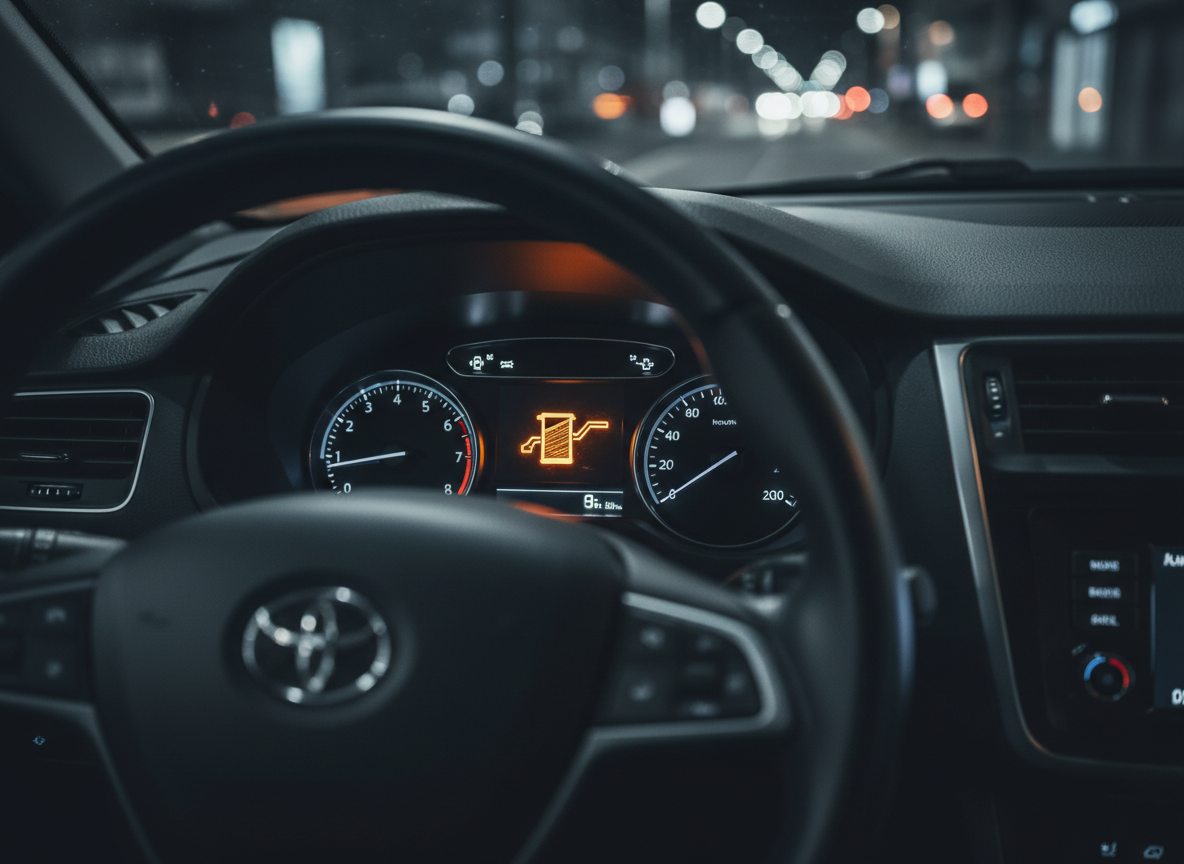
Warning Signs Your Qashqai DPF Is Failing
The Qashqai gives you several warning stages before a blockage becomes serious. Catching it early makes the difference between a straightforward regeneration drive and an off-car clean.
- Amber DPF warning light: The filter is filling up. A long motorway drive may clear it. Don’t ignore it and hope it goes away.
- DPF light + engine management light together: Blockage is past the point where a drive alone will fix it. Professional diagnostics needed.
- Limp mode (30 mph power limit): The engine has reduced power to protect itself. The DPF is severely blocked. Do not keep driving normally — you risk turbo damage.
- Increased fuel consumption: The engine is injecting extra fuel during attempted regenerations, and failing to complete them.
- White or sweet-smelling exhaust smoke: Unburnt fuel from failed regeneration attempts is passing through the exhaust system.
Important: If your Qashqai enters limp mode, do not force it back to normal driving. A severely blocked DPF creates back pressure that can crack turbos and damage injectors — both repairs that cost significantly more than a DPF clean.
For a deeper look at what happens when the DPF warning light is ignored, see our article on why ignoring the DPF warning light is a costly mistake.
Nissan Qashqai DPF Fault Codes Explained
When your Qashqai’s ECU detects a DPF problem, it stores an OBD fault code that a diagnostic scanner can read. These are the most common codes found on Qashqai diesel models:
| Fault Code | Meaning | Likely Cause |
|---|---|---|
| P2002 | DPF Efficiency Below Threshold (Bank 1) | Blocked DPF or faulty differential pressure sensor/pipe |
| P242F | DPF Differential Pressure Too High | Severely blocked filter, restricted pressure sensor |
| P0470 | Exhaust Pressure Sensor Circuit | Faulty DPF pressure sensor or sensor pipe |
| P0471 | Exhaust Pressure Sensor Range/Performance | Blocked or cracked pressure sensor pipe |
The P2002 code is by far the most common on Qashqai 1.5 dCi models built between 2013 and 2018. It doesn’t always mean the filter itself is destroyed — in a significant number of cases, it points to a blocked or damaged differential pressure sensor pipe rather than a fully clogged DPF. This is worth checking before spending money on a full clean.
Understanding what fault codes like these mean across all makes is covered in detail in our DPF fault codes guide.
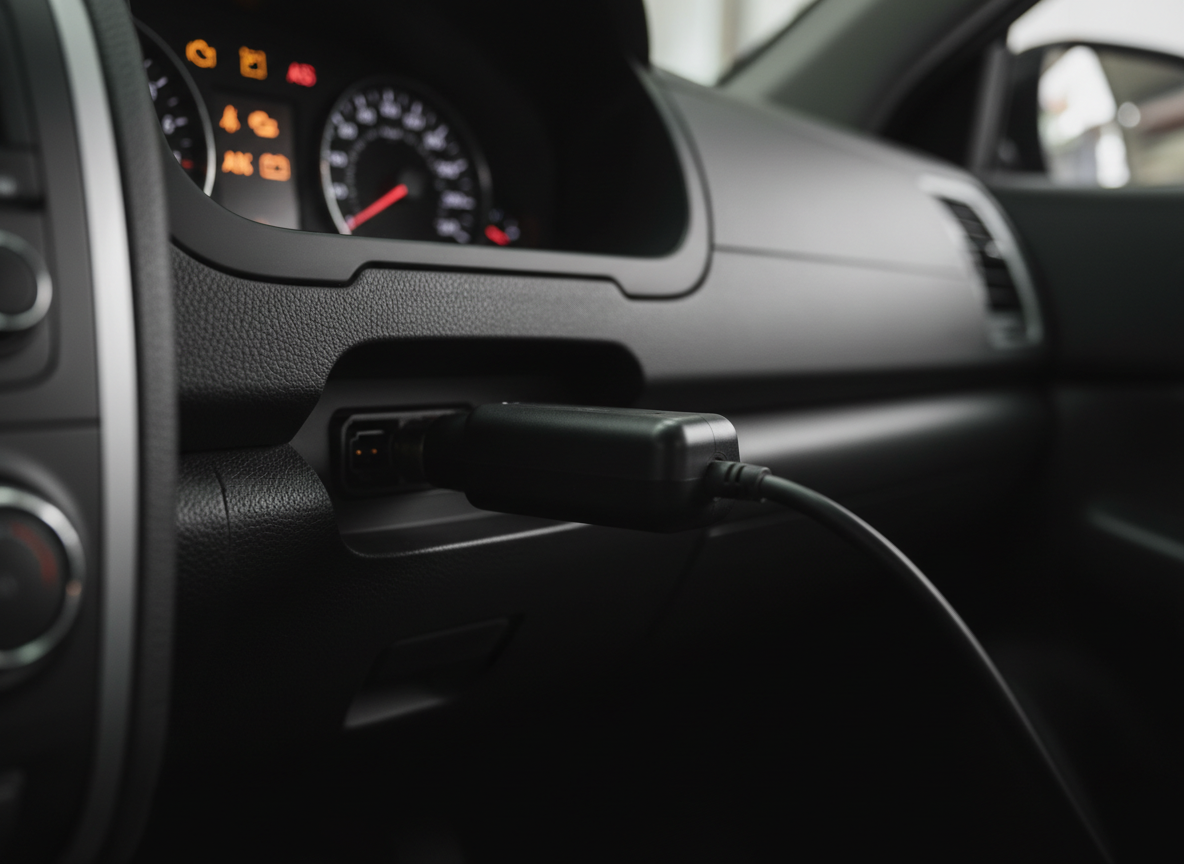
The P2002 Pressure Sensor Pipe Problem Unique to the Qashqai
Here’s something most guides don’t tell you: a large proportion of Nissan Qashqai P2002 codes are caused not by a blocked DPF filter, but by carbon build-up in the small metal pipe that runs from the exhaust to the DPF differential pressure sensor.
This pipe is narrow, sits close to the exhaust heat, and gradually blocks with carbon deposits. When it blocks, the sensor can’t read the pressure inside the DPF accurately — so the ECU sees abnormal readings and flags the fault. The physical DPF filter itself may be in perfectly good condition.
A competent diagnostic check should include inspecting this pipe before ordering a DPF clean. If the pipe is blocked, clearing it (sometimes with a flexible wire) can resolve the code without any further work. If the pipe is cracked or corroded, it needs replacement — a relatively inexpensive fix compared to off-car DPF cleaning.
That said, if the pipe is clear and the fault persists, the DPF filter itself needs proper diagnosis and likely professional cleaning. A pre- and post-clean flow test confirms whether the filter has recovered.
How to Attempt a DPF Regeneration Drive on a Qashqai
If the DPF warning light is amber and you haven’t yet seen limp mode, a regeneration drive is worth trying first. The process is well-documented in Nissan’s own owner manuals for 1.5 dCi and 2.0 dCi models (source: Hypermiler):
- Find a dual carriageway or motorway — you need a clear, sustained run.
- Drive at over 60 km/h (approximately 37 mph) — ideally 60–70 mph — with the engine under moderate load.
- Maintain this speed for 20–30 minutes without stopping.
- The exhaust temperature will rise to 570–670°C, burning off the trapped soot.
- The DPF warning light should extinguish during or after the drive.
Oil check after regeneration: The R9M engine (2013+ Qashqai 1.5 dCi) injects additional fuel during forced regeneration. Some of this fuel can pass into the engine oil, diluting it. Check your oil level and condition after any forced regeneration attempt — if the oil smells of diesel, change it.
If the warning light returns within a few days of a regeneration drive, or if the engine won’t complete regeneration at all (it fails part-way through and you see smoke), the filter is too blocked for a drive to fix. You need professional intervention.
When You Need Professional Qashqai DPF Cleaning
A failed regeneration drive, a persistent P2002 code after sensor pipe checks, or a filter that’s been ignored through multiple warning stages all point to the same outcome: the DPF needs professional cleaning.
At DPF Cleaner in Fenton, we offer three routes for Qashqai owners across Staffordshire and beyond:
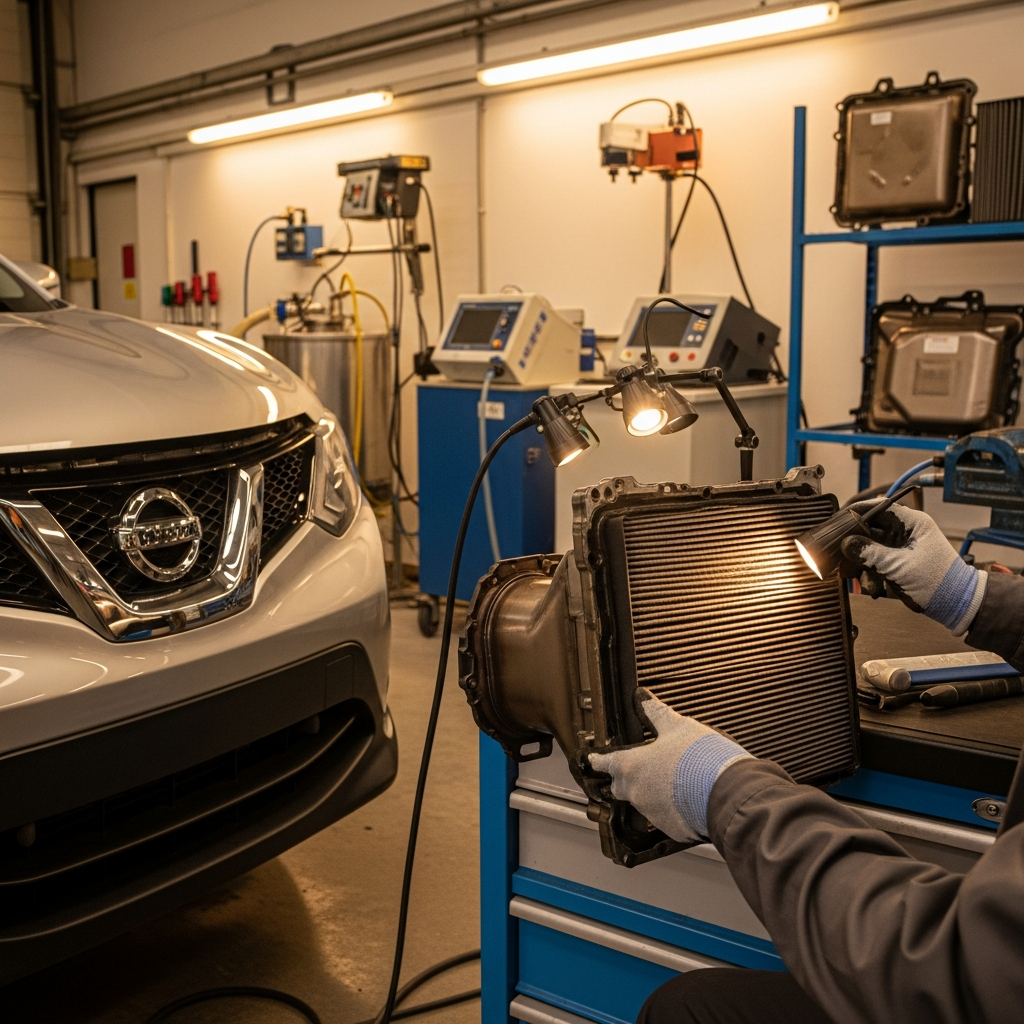
- On-car DPF cleaning: The filter stays in the vehicle. We use specialist cleaning fluid under pressure to break down soot and ash deposits. Best for moderate blockages. Quick turnaround.
- Off-car DPF cleaning: The filter is removed, flow-tested before and after cleaning, and returned to your vehicle. Our preferred method for severe blockages — it delivers the most thorough clean and gives measurable proof of recovery.
- Postal DPF cleaning: You (or a local garage) remove the DPF and send it to us. We clean and flow-test it, then return it next working day. Cost-effective for customers who aren’t local to Stoke-on-Trent.
Most Qashqai DPF cleans cost between £150 and £400. A new OEM DPF for the Qashqai typically runs £800–£1,500, making early professional cleaning a straightforward financial decision. Find out more about our DPF cleaning service or call us to discuss your Qashqai’s specific situation.
You can also read more about the cost comparison in our full DPF cleaning vs replacement costs guide.
Nissan Qashqai DPF Warning Light On? Let’s Sort It.
We diagnose and clean DPFs for Qashqai diesels at our Stoke-on-Trent workshop — or you can send your filter to us by post. Same-day on-car cleans available.
Helpful Next Reads
Blocked DPF and Limp Mode Explained
What limp mode means and how to recover safely →
DPF Fault Codes Explained
What P2002, P2452 and other codes actually mean →
Postal DPF Cleaning
Send your filter to us — returned next working day →
Frequently Asked Questions
What fault codes indicate DPF problems on a Nissan Qashqai?
The most common is P2002 (DPF Efficiency Below Threshold Bank 1), which typically points to a blocked filter or a faulty differential pressure sensor pipe. P242F (pressure differential too high) and P0470/P0471 (pressure sensor circuit faults) also appear regularly on 1.5 dCi and 2.0 dCi models.
Can I drive a Nissan Qashqai with the DPF warning light on?
An amber DPF light means you should attempt a motorway-speed regeneration drive immediately — don’t park up and ignore it. If the light turns red or the engine enters limp mode, stop driving. Continuing risks turbo and injector damage that costs far more than a DPF clean.
How do I force a DPF regeneration on a Nissan Qashqai?
Drive at over 37 mph (60 km/h) on a clear road for 20–30 minutes. The 1.5 dCi and 2.0 dCi engines will attempt active regeneration, raising exhaust temperature to 570–670°C to burn off soot. Check your engine oil after — fuel dilution can occur during regeneration.
How much does Nissan Qashqai DPF cleaning cost in the UK?
Professional DPF cleaning for a Qashqai typically costs £150–£400. Off-car ultrasonic cleaning sits at the higher end. Postal DPF cleaning starts from around £150 if you can have the filter removed by a local garage. A replacement DPF typically costs £800–£1,500, making early cleaning the smarter financial choice.