
DPF Fault Codes Explained: What P2002, P2452 and Other Codes Actually Mean
Your warning light is on and the scanner is showing a DPF-related fault code. Here’s what the most common codes actually mean — and what to do before the problem gets worse.
A fault code alone doesn’t tell you what to do. It tells you what the car’s computer noticed — which is a starting point, not a diagnosis. This guide explains what the most common DPF fault codes mean, why they appear, and what actually needs to happen next.
Common DPF fault codes like P2002 (efficiency below threshold), P2452 (pressure sensor circuit), and P2463 (soot accumulation) are triggered when the DPF can’t regenerate properly or when sensors detect a blockage. Most require a proper diagnostic before any decision about cleaning or repair — clearing the code without addressing the root cause rarely fixes anything.
In This Guide
What Are DPF Fault Codes?
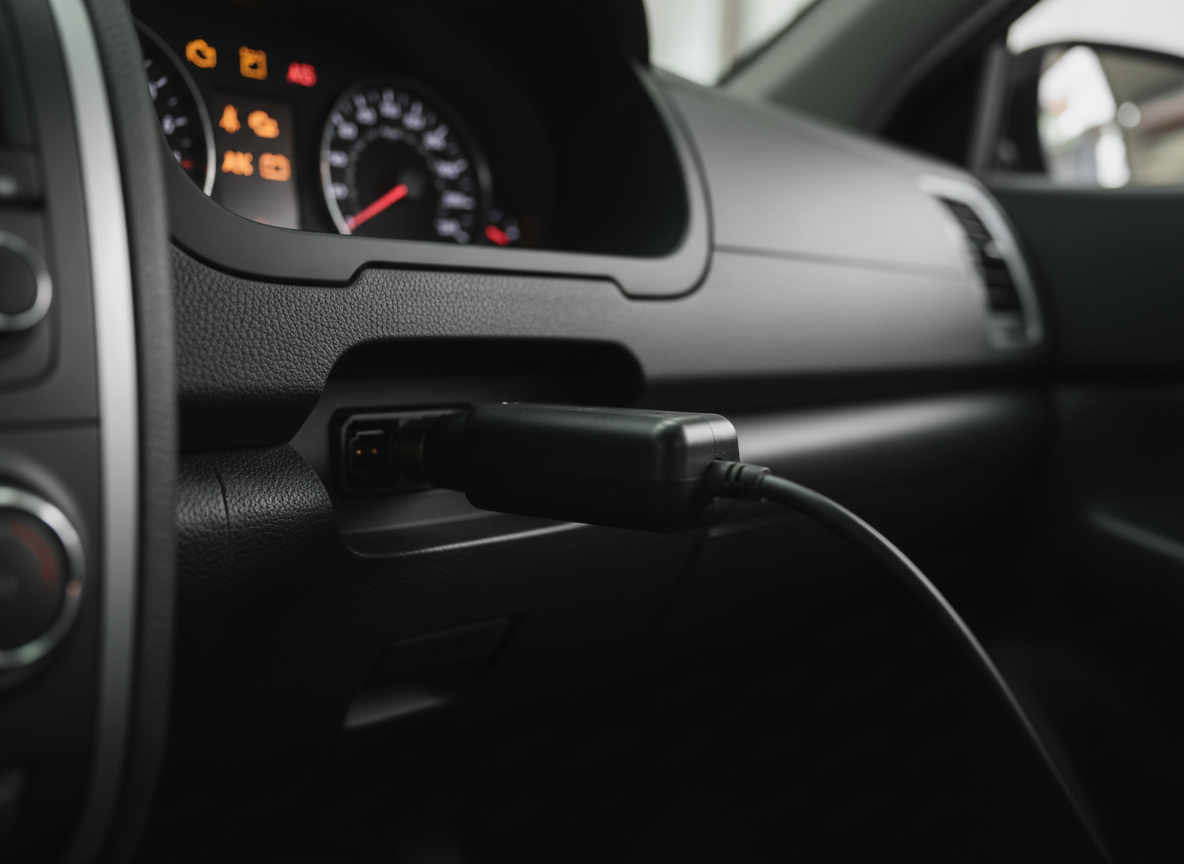
DPF fault codes are OBD-II diagnostic trouble codes (DTCs) stored by your engine control unit (ECU) when it detects a problem related to the diesel particulate filter or its associated sensors. They’re read using a diagnostic scanner — either by a garage or with a handheld reader plugged into the OBD port under your dashboard.
The key thing to understand is that a DPF code is an output from the car’s self-monitoring system. The ECU isn’t telling you what’s wrong — it’s telling you which threshold was crossed or which sensor reading looked abnormal. What caused that reading could be several different things, and that’s where a proper diagnosis matters.
DPF codes almost always appear alongside a warning light, and often (though not always) alongside a loss of performance, reduced throttle response, or the vehicle entering limp mode. The code stored in the ECU is the starting point for understanding what’s happening — not the end of the conversation.
Worth knowing: Not all diagnostic readers can access DPF-specific data. Basic cheap OBD readers can pull generic codes, but DPF back-pressure readings, soot load percentages, and regeneration status often need a more capable tool or a specialist diagnostic system.
P2002 — DPF Efficiency Below Threshold
P2002 is one of the most commonly seen DPF codes. The full description is usually “Diesel Particulate Filter Efficiency Below Threshold Bank 1” — which means the ECU has determined that the DPF isn’t performing as well as it should based on what’s going in versus what’s coming out.
What causes P2002?
There are a few different routes to this code. The most common is a partially blocked DPF that can no longer achieve a proper burn-off during passive regeneration — meaning soot is accumulating faster than the exhaust heat can clear it. It can also appear after a DPF has been cleaned or replaced if the adaptation values haven’t been reset, because the ECU is still comparing readings against its old learned baseline.
P2002 is also linked to EGR valve problems. If the EGR is sticking open or feeding excessive exhaust gas back into the intake, combustion quality drops and soot production increases, which overwhelms the DPF faster. In that scenario, addressing the DPF in isolation won’t solve the problem — the EGR needs attention too.
Can I keep driving?
For a short distance, usually yes — but P2002 is the kind of code that tends to get worse if ignored. If the DPF is blocked enough to trigger this code, the vehicle will attempt forced regeneration cycles, which put additional load on the engine. Left long enough, the soot load can reach a point where the DPF is no longer cleanable and needs replacing. Getting a diagnostic run sooner is always the better option.
P2452 — DPF Differential Pressure Sensor Circuit
P2452 relates to the differential pressure sensor (also called the delta-P sensor or back-pressure sensor) — a small sensor that measures the difference in pressure between the inlet and outlet side of the DPF. The code indicates a problem in the sensor’s electrical circuit rather than the DPF itself.
What causes P2452?
The most common culprits are a faulty sensor, damaged wiring to the sensor, or a blocked or kinked pressure pipe leading to the sensor. The pipes that carry exhaust gas to the sensor are small-bore tubes that run along the bottom of the car — they’re prone to corrosion and blockage, particularly on older vehicles or those that have been driven in wet or salty conditions.
A blocked pressure pipe is worth checking before condemning the sensor itself. If the pipe is blocked with soot or liquid contamination, the sensor receives the wrong pressure reading, which confuses the ECU — but the sensor itself may be working correctly.
Important: P2452 doesn’t necessarily mean your DPF is blocked. The DPF filter itself might be fine — the issue is with the sensor system measuring it. That said, you still need the code investigated, because without accurate pressure data, the ECU can’t manage DPF regeneration correctly.
Closely related codes
P2452 often appears alongside P2453 (sensor circuit range/performance), P2454 (sensor circuit low), and P2455 (sensor circuit high). These are sub-variants pointing to slightly different electrical fault types within the same sensor circuit. If you see a cluster of these, the sensor or its wiring harness is the likely focus.
P2463 — DPF Soot Accumulation
P2463 means the ECU has measured or calculated that soot levels inside the DPF have exceeded the acceptable limit. This is usually determined using pressure readings across the filter combined with calculated soot load values from the engine management system.
What causes P2463?
The most direct cause is a DPF that has become too heavily loaded with soot to regenerate on its own — either because the car is driven on too many short trips, because passive regeneration conditions aren’t being met, or because a failed active regeneration attempt has left soot loading very high. It can also appear when the DPF has reached the point where it’s partially blocked from ash accumulation over time, which reduces the available space for soot to burn off.
P2463 may also appear after a failed or interrupted forced regeneration. If the engine was switched off during an active regen cycle (which the driver may not have been aware of), the partially regenerated soot can harden and cause the next pressure reading to trigger the code again.
What needs to happen next?
P2463 usually means the DPF needs professional attention. Depending on how high the soot loading has gone, the vehicle may need a forced regeneration with live data monitoring, or if soot loading is severe, an off-car clean. The ECU data alongside the code — particularly the measured soot load percentage and the delta-P reading — will help determine which route is needed.
| Code | What it means | Primary cause | Action needed |
|---|---|---|---|
| P2002 | DPF efficiency below threshold | Blocked DPF, EGR fault, fuel quality | Diagnostic + DPF clean or regen |
| P2452 | Pressure sensor circuit fault | Blocked pipe, faulty sensor, wiring | Sensor inspection + pipe check |
| P2453 | Pressure sensor range/performance | Sensor drift, partial blockage | Sensor + DPF assessment |
| P2463 | Soot accumulation above limit | Blocked DPF, failed regen | Forced regen or professional clean |
| P244A | DPF restriction — ash accumulation | Long-term ash build-up | Off-car clean or replacement assessment |
| P2459 | DPF regeneration frequency | DPF regenerating too often | Investigate root cause — likely EGR or injector |
Other Common DPF Codes
P244A — DPF Restriction: Ash Accumulation
Where P2463 is about soot, P244A relates specifically to ash. Ash is the non-combustible residue left behind after soot burns — it accumulates in the DPF over time and can’t be cleared through regeneration. P244A suggests the ash load has built up to a point where it’s restricting flow. This is more of a long-term issue and often appears on higher-mileage vehicles. Off-car cleaning can remove ash that a regen can’t touch.
P2459 — DPF Regeneration Frequency
This code stores when the DPF is triggering regeneration cycles more frequently than expected. Rather than indicating a blocked DPF directly, it suggests something upstream is producing more soot than normal — injector issues, EGR problems, or fuel system faults are common culprits. If your car seems to be regenerating often (you might notice a hot exhaust smell at idle, or elevated idle speed), P2459 is worth investigating properly rather than just clearing and hoping it goes away.
P2008 / P246C — Injector or Fuel-Related
These codes sometimes appear alongside DPF codes but originate from the injector or fuelling system rather than the filter itself. An injector that’s slightly over-fuelling will produce more soot than the DPF can handle, causing repeated blockages. If DPF codes keep returning after cleaning, an injector or fuelling check is worth adding to the diagnostic scope.
What Should You Do When a DPF Code Appears?
Don’t just clear the code
Clearing a DPF code without understanding why it appeared means the underlying problem is still there. The code will return — often faster than before — and meanwhile the DPF could be accumulating more soot or further damage.
Get a proper diagnostic
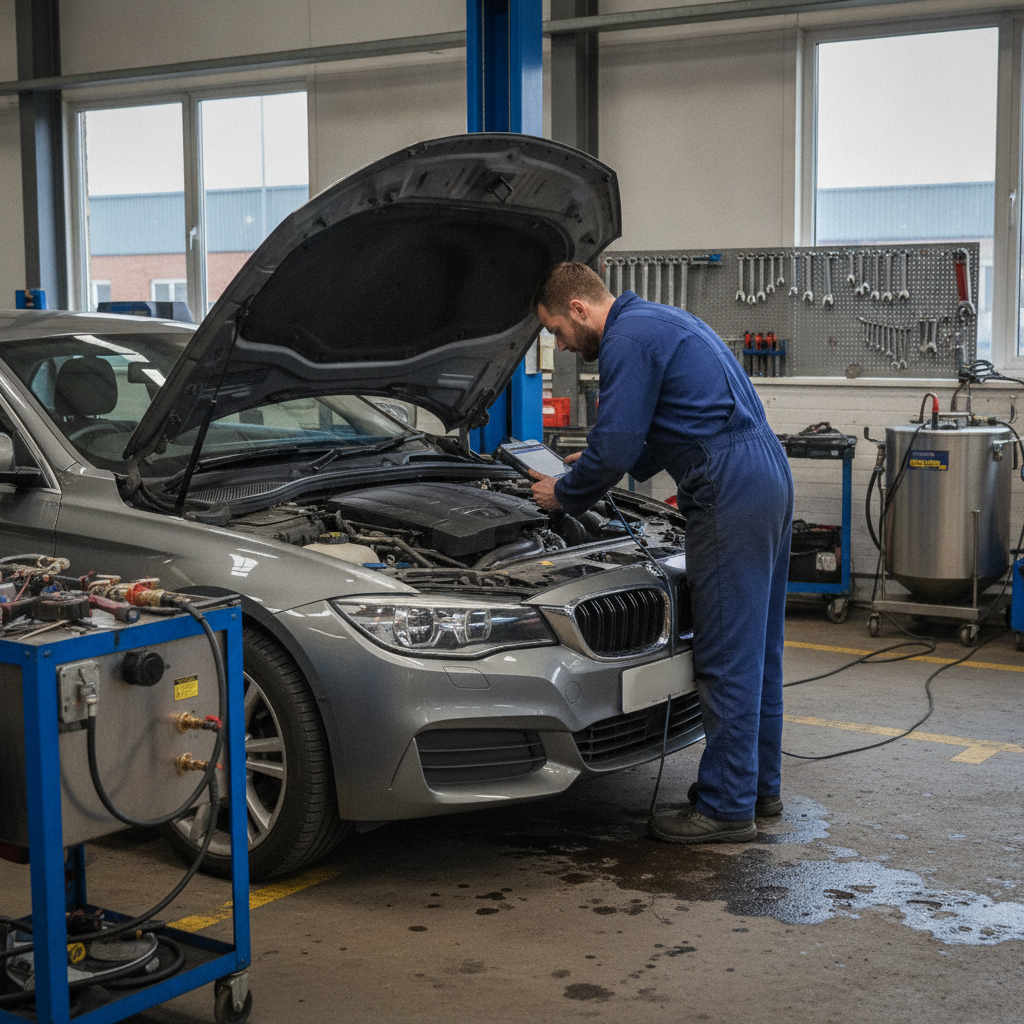
A basic code read is just the start. A full DPF diagnostic should include live data — back-pressure readings, soot load percentage, regeneration history, and fuel trim data. This tells you what the DPF is actually doing, not just that a threshold was crossed.
Choose the right next step based on data
A forced regeneration, an on-car clean, an off-car clean, or a sensor replacement — each of these is appropriate in different situations. The data from the diagnostic tells you which one is actually needed. Guessing wastes money and may not fix the problem.
Address root causes at the same time
If the diagnostic reveals an EGR fault, injector issue, or sensor problem alongside the DPF code, sorting the DPF in isolation won’t give you a lasting fix. The same conditions that blocked it will block it again.
Don’t ignore limp mode: If a DPF code has put your vehicle into limp mode — restricted RPM, reduced power — don’t try to drive it hard or for long distances. Limp mode is the ECU protecting the engine. Get it seen promptly.
Why Clearing the Code Doesn’t Fix the Problem
It’s a common mistake. Someone buys an OBD reader, reads the DPF fault code, clears it, and waits to see if it comes back. Sometimes it doesn’t come back for a while — which gives the impression the problem has gone away. It hasn’t.
DPF codes are stored because a threshold was exceeded. Clearing the code resets the stored data — but it doesn’t change the condition of the DPF, reset the soot load, or fix whatever caused the threshold to be crossed. If the DPF is partially blocked, it’s still partially blocked after the code is cleared. The ECU will simply re-measure and re-store the code when conditions are right.
What clearing does do is make future diagnosis harder. The regeneration history is cleared, the freeze-frame data (which captures conditions at the moment the fault stored) is lost, and any patterns in the data that would help identify the root cause disappear. A DPF specialist looking at the car after a code clear has less information to work with.
The better approach is to read the code, note the live data if your reader supports it, and take the car for a proper diagnostic without clearing anything first. That data is useful — don’t lose it.
What DPF Cleaning or Servicing Actually Involves
Once a diagnostic has identified that the DPF needs cleaning — rather than a sensor fix or a simple forced regen — there are a few routes depending on how blocked it is and what the condition of the filter looks like.
On-car DPF cleaning uses specialist cleaning agents introduced while the filter is still fitted to the vehicle, combined with a forced regeneration cycle. It works well for filters that are heavily sooted but structurally sound. The whole process is done in the workshop, without removing the filter.
Off-car cleaning involves removing the filter, thermal cleaning, and pressure-testing to restore flow rate. This is more thorough and is the right choice for heavily blocked filters, filters with high ash accumulation, or cases where on-car cleaning hasn’t given enough improvement. A flow test before and after confirms the result.
Postal DPF cleaning is available for customers outside the local area — the filter is removed, packaged, and sent to the workshop. It’s cleaned and flow-tested before being returned.
The right option depends on what the diagnostic shows. At DPF Cleaner in Stoke-on-Trent, the diagnostic always comes first — cleaning is the outcome of that process, not a blind first step.
For model-specific fault code breakdowns, see our dedicated guides — for example, our Nissan Qashqai DPF fault code guide covers the common P2002 and P242F codes in detail.
Got a DPF Fault Code? Start With a Proper Diagnostic
We read live DPF data — not just the code. Back-pressure, soot load, regen history. You’ll know exactly what the filter is doing and what needs to happen next, before any work is booked.
Helpful Next Reads
FAQs
Can I drive with a DPF fault code stored?
For short distances to get the car to a garage, usually yes. But driving for extended periods with a DPF fault risks pushing the soot load higher, and in some cases can trigger limp mode. If the car is already in limp mode, avoid motorway driving until it’s been seen.
Why does my DPF code keep coming back after clearing?
Because clearing the code doesn’t fix whatever caused it. If the DPF is blocked or a sensor has failed, those conditions will trigger the code again as soon as the ECU runs its checks. You need to address the root cause, not just the stored code.
Is P2002 serious?
It warrants attention, yes. P2002 means the DPF isn’t performing within expected limits — left alone, the soot loading will worsen and the eventual fix becomes more involved (and more expensive). It’s not an immediate emergency, but it’s not something to ignore either.
Does my car need a new DPF if it’s showing fault codes?
Not necessarily. Most DPF faults are caused by blockages that can be cleaned rather than physical damage that requires replacement. A proper diagnostic determines which one applies — replacement is the right answer in a minority of cases, usually where the filter substrate has cracked or melted.
Do I need a specialist diagnostic tool for DPF codes?
For basic code reading, a standard OBD reader is enough. But for the live data that really matters — soot load percentage, back-pressure values, regeneration cycle data — you need either a manufacturer-level tool or a specialist DPF diagnostic system. That level of data is what tells you what to actually do next.
0 Comments