
DPF faults
DPF Regeneration Failed – What To Do Next Before Replacement
Warning light still on? Limp mode active?
A failed regeneration does not automatically mean you need a new DPF.
This guide shows the exact next steps before costs escalate.
Repeated hard driving or multiple forced regens rarely fix the issue.
They often increase back-pressure and risk further damage.
Next step confirm soot loading and fault codes with diagnostics before attempting anything else.
Most common causes
- Short journeys that never reach regeneration temperature
- Sensor faults cancelling the process
- Engine faults preventing correct combustion conditions
- A filter too restricted to allow proper exhaust flow
What To Do Immediately If Regeneration Fails
-
Do not keep driving in limp mode unless absolutely necessary
-
Do not attempt repeated forced regeneration cycles
-
Avoid hard motorway “blast” attempts without diagnosis
-
Book a diagnostic check to confirm soot load percentage
If soot loading is high, continued driving increases turbo back-pressure and heat stress.
Early diagnosis reduces the risk of larger repair bills.
How Much Does It Cost To Fix A Failed DPF Regeneration?
Costs depend on what caused the failure.
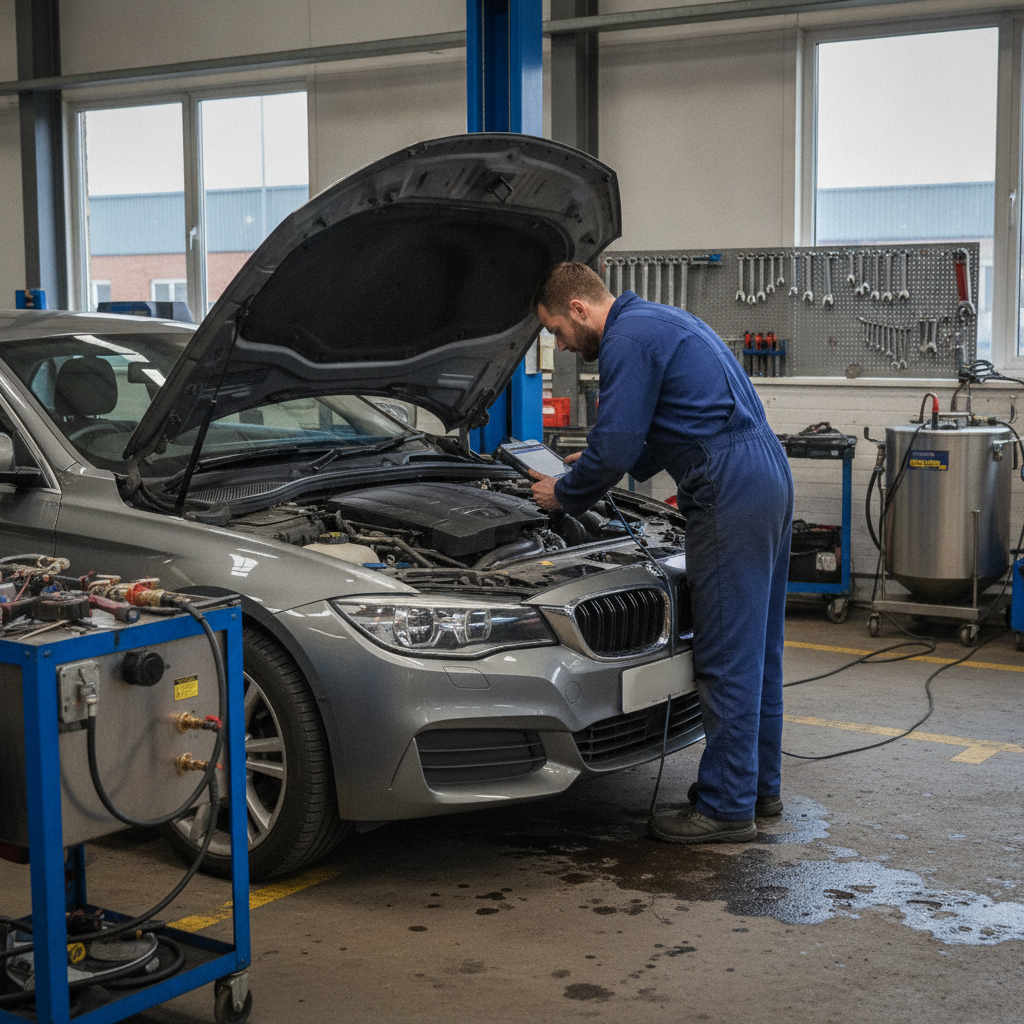
Diagnostics
Confirms soot load, pressure readings, and fault codes before any cleaning is attempted.
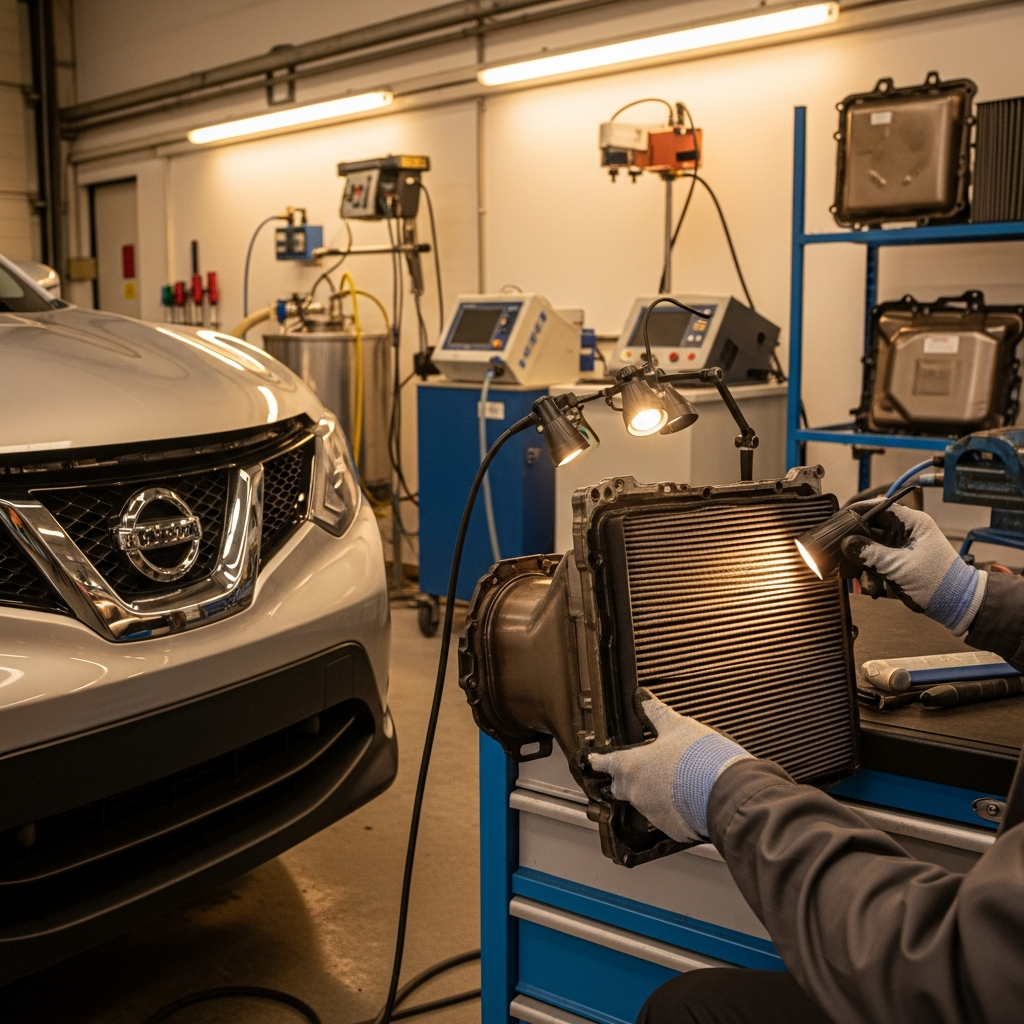
Professional DPF cleaning
Often restores normal flow when regeneration alone cannot complete.
Sensor repair
Faulty differential pressure or temperature sensors can cancel regeneration.
Replacement
Only required if the filter is physically damaged or structurally failed.
In most cases, professional cleaning is significantly more cost-effective than replacement.
See the full breakdown in our
DPF cleaning cost UK guide.
What DPF Regeneration Actually Means
Regeneration burns accumulated soot inside the filter.
If the process cannot complete, soot continues building until exhaust flow becomes restricted.
Passive regeneration
Occurs during steady driving when exhaust temperatures are high enough naturally.
Active regeneration
The ECU increases exhaust temperature to burn soot when a threshold is reached.
Why Regeneration Fails
Short journeys
The exhaust system never reaches the required temperature.
Soot accumulates faster than it clears.
Low fuel level
Many vehicles cancel regeneration when fuel is low.
Sensor faults
Incorrect differential pressure or temperature readings stop the ECU from completing regeneration.
Engine faults
Injector imbalance, EGR malfunction, turbo boost issues, or air leaks prevent proper combustion conditions.
The filter is too restricted
When restriction levels rise too high, exhaust flow drops and regeneration temperatures cannot be sustained.
Why DPF Regeneration Will Not Start At All
If regeneration never begins, the ECU is usually blocking it rather than failing at it.
Active regeneration is inhibited when fuel drops below roughly a quarter of a tank, when a
dashboard warning light or stored fault code is present, or when the wrong oil specification
or an overdue service has taken the vehicle outside its handbook conditions.
That is a different problem from a cycle that starts and then aborts. A healthy car initiates
active regeneration roughly every 300 miles and takes five to ten minutes to complete it, and a
partially blocked filter can often be cleared by around ten minutes at over 40mph. If nothing
happens at all on that sort of run, work through the conditions below.
Conditions that stop regeneration being requested
-
Less than a quarter of a tank of fuel. Active regeneration burns extra fuel to raise exhaust temperature, so most systems will not begin a cycle they may not be able to finish.
-
A warning light or stored fault code. An unresolved code in the engine management system is enough on its own to inhibit regeneration, so the underlying fault has to be repaired before a cycle can run.
-
Wrong oil specification or an overdue service. Both are recognised causes of regeneration being prevented. Check the oil specification in the vehicle handbook, not just the viscosity.
-
Low Eolys additive on FAP systems. On Peugeot, Citroën and other additive-based filters the fluid lowers the ignition temperature of the soot, and a low tank level will stop regeneration happening at all.
Fuel level and an unresolved warning light account for a surprising number of vehicles whose
regeneration never runs, and neither needs the filter touching.
Common Fault Codes After Failed DPF Regeneration
If regeneration has failed, your vehicle’s ECU will have stored one or more diagnostic trouble codes (DTCs). Reading these codes is the fastest way to understand what is actually going wrong — and prevents money being spent on the wrong fix.
P2002 — DPF Efficiency Below Threshold
Means the ECU has measured that the DPF is no longer filtering soot effectively. In most cases this indicates significant soot or ash accumulation. Professional cleaning resolves this in the majority of cases where there is no physical damage to the filter core.
P2459 — DPF Regeneration Frequency Too High
The ECU is triggering regen cycles far more often than normal. This usually happens because the engine is producing excess soot — caused by short journeys, EGR problems, or worn injectors. Cleaning the DPF alone will not resolve this code unless the underlying cause is also addressed.
P2458 — DPF Regeneration Duration Too Long
Regeneration is taking longer to complete than the ECU expects. This typically means the filter is heavily loaded and regeneration can no longer burn soot quickly enough. It is often stored alongside P2002 on vehicles used mainly on short journeys for an extended period.
Manufacturer-Specific Codes
Many manufacturers use proprietary codes in addition to the generic OBD-II codes above:
-
VW, Audi, Seat, Skoda (VAG group): Codes such as 008891 (DPF soot load exceeded) and 009009 (active regeneration duration too long) are common alongside P2002 and P2459.
-
Ford: P244A (DPF restricted or clogged) and P244B (DPF soot accumulation excessive) frequently appear after failed regens on Transit and Focus TDCi models. See our guide to Ford Transit DPF problems for the Transit-specific detail.
-
Mercedes-Benz: P2463 (DPF soot accumulation too high) is the most common code seen after repeated regen failures on Sprinter and Vito vans.
-
BMW: BMW DPF systems typically log fault 4810A4 or engine management warnings that require BMW-specific diagnostic tools to read accurately — standard OBD readers often miss them.
-
Peugeot and Citroën: These use the FAP (Filtre à Particules) system with Eolys additive. Codes relate to both the filter and the additive level — both must be checked before any cleaning is carried out.
Erasing fault codes without addressing the underlying fault will result in the same codes returning — often within hours of driving. A proper diagnostic check confirms the root cause before any cleaning or repair work begins. See our DPF diagnostic and cleaning service for details on what we check.
Signs Your Regeneration Has Failed
-
DPF warning light remains on
-
Limp mode or reduced engine power
-
Increased fuel consumption
-
Excess exhaust smoke or strong diesel smell
If back-pressure rises too high, turbo and injector stress increases.
This is where repair costs escalate.
Choosing The Right Fix
The correct solution depends on soot loading and filter condition.
-
Moderate soot loading – professional cleaning often resolves the issue
-
Sensor faults – repair first before cleaning
-
Repeated blockages – investigate underlying engine faults
-
Structural damage – replacement may be required
Learn how cleaning methods compare in our guide to
on-car vs off-car DPF cleaning.
Wondering if additives will help? Read
Do DPF cleaning additives work?
before spending money on quick fixes.
When Replacement Is Actually Necessary
Replacement is normally only required if the DPF substrate is cracked, melted, contaminated, or filled with ash beyond recoverable limits.
Most failed regenerations do not automatically mean replacement.
Preventing Repeat Failures
-
Include regular longer drives where possible
-
Use the correct low-SAPS oil
-
Fix engine faults quickly
-
Act immediately when warning lights appear
FAQs
Does failed regeneration mean I need a new DPF?
Not in most cases. Cleaning or fault repair resolves the majority of failed regeneration issues.
Can I keep driving after regeneration fails?
Only short distances and only if limp mode is not active. Continued driving increases risk.
Is professional cleaning better than additives?
Additives may help light soot build-up. They do not fix high restriction or sensor faults.
Need clarity before it gets worse?
Tell us your vehicle model and the symptoms you are seeing.
We will advise whether diagnostics, cleaning, or further investigation is the correct next step.
0 Comments