Used Car Buying Guide
A used diesel DPF check takes ten minutes at the kerb and can save you a four-figure bill three months later. Here is exactly what to look at, what to ask, and what should make you walk away.
Reviewed and signed off by DPF Cleaner· Published 29 October 2026 · Updated 29 October 2026
To check the DPF on a used diesel, pull the MOT history for emissions failures, look under the car for fresh weld marks on the filter, watch for soot in the tailpipe, confirm the DPF light comes on and goes out at ignition, and ask how the car was driven. Short-journey town cars are the risk.
Why the DPF is the check most buyers skip
Every used diesel checklist tells you the same things. Check the service history. Look for rust. Get it on a ramp. All fair advice — and all of it misses the single component most likely to cost you money in the first year of ownership.
Here is what most guides get wrong: they treat the diesel particulate filter as a pass/fail part. It is not. It is a consumable that records how the previous owner drove. A filter on a car that did motorway miles is barely started. The identical filter on a car that did a two-mile school run twice a day is loaded with soot and ash and is heading for a blockage regardless of what the seller tells you.
Nothing on the dashboard tells you which of those two cars you are standing next to. That is why a ten-minute DPF check is worth more than another lap of the paintwork.
Does the car have a DPF at all?
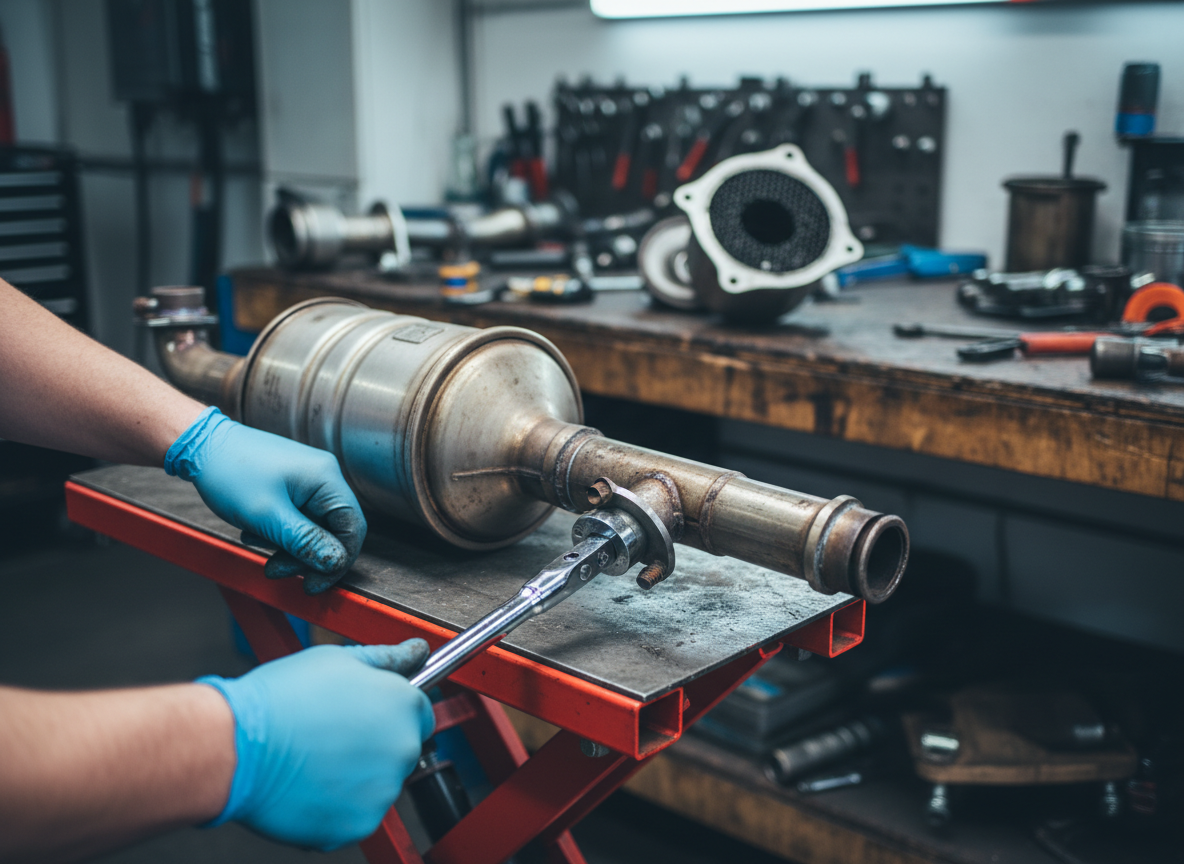
If it is a diesel built in the last decade or so, almost certainly yes. The DVSA notes that particulate filters have been in use for more than twenty years and have been fitted on all diesel vehicles since 2013 as part of the Euro 5 emissions standard. Plenty of Euro 4 diesels from 2009 onwards had them too.
That matters for one reason. If the car left the factory with a filter, it has to still be there. Since February 2014 an MOT tester inspecting a diesel exhaust has had to check whether a particulate filter is present, and a vehicle that should have one but does not should fail. There is no grey area to negotiate on this.
Quick tell: the V5C and the emissions sticker inside the driver’s door give you the Euro standard. Euro 5 or Euro 6 on a diesel means a filter should be fitted.
Read the MOT history before you travel
Do this from the sofa, before you spend a Saturday driving to see the car. The government’s MOT history service shows past pass and fail results, the mileage recorded at each test, which parts failed and which had minor problems, for car tests going back to 2005. All you need is the registration.
Three things to look for:
- Emissions failures or advisories. A diesel that has failed on emissions, or been advised on visible smoke, has an exhaust or combustion story behind it. Ask what was done about it.
- The mileage pattern. Three thousand miles a year on a modern diesel is a warning, not a selling point. Low annual mileage usually means short journeys, and short journeys are the main cause of DPF blockages.
- Gaps and recent tests. A test done a fortnight ago at a garage two hundred miles from the seller is worth a question.
None of this proves the filter is blocked. It tells you which questions to ask when you get there, which is the point.
The used diesel DPF check: five things to do at the car
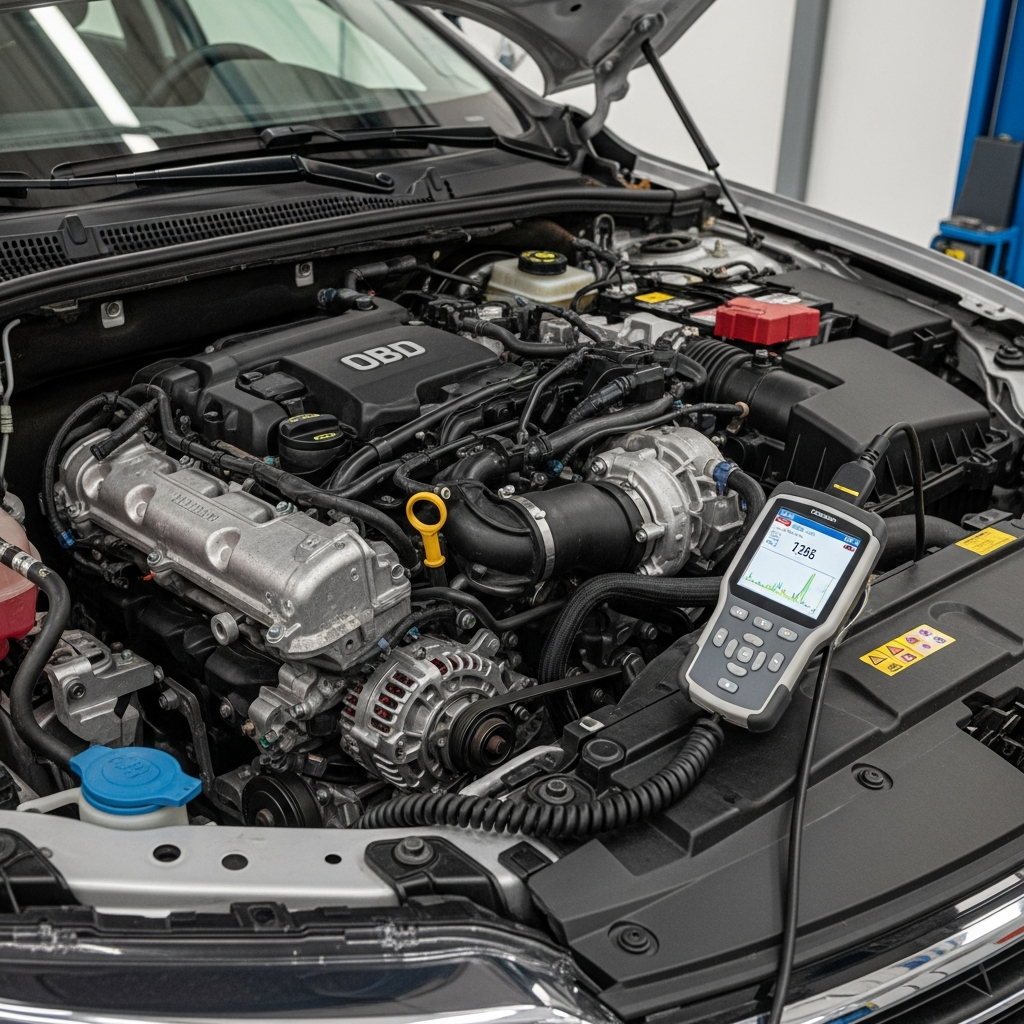
Ask the seller not to warm the car up before you arrive. A cold start tells you far more: rough running, blue or black smoke, a slow catch and a rattly idle all point at combustion problems that end up loading the filter. A car already sitting at temperature when you pull up is a car whose first thirty seconds you were not meant to see.
Turn the key to the second position without starting. The warning lights should all illuminate and then go out. If the DPF light never appears at all on a car that should have one, the bulb, the sensor or the software may have been interfered with. If it stays on, the filter is already asking for attention — our guide to what each DPF warning stage actually means explains how serious each one is.
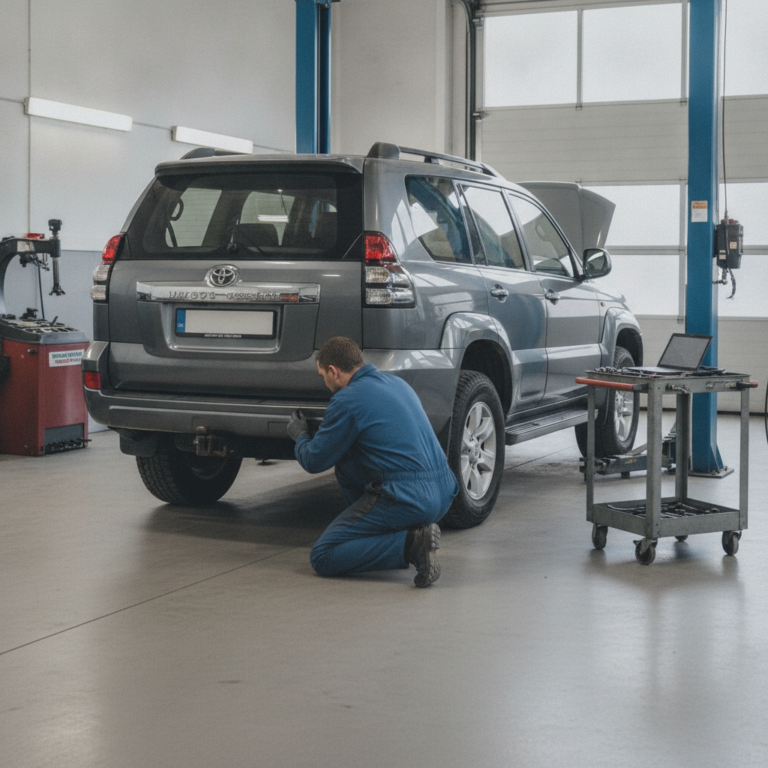
Get your head under the back of the car with a torch. The DPF sits in the exhaust and looks like a fatter canister with sensor pipes running into it. You are looking for bright, fresh-looking weld beads around the casing, mismatched clamps, or a canister that looks newer than everything around it. Those are the marks left when a filter is cut open and the internals removed.
A healthy DPF-equipped diesel leaves the tailpipe close to clean. Heavy dry soot that blackens your finger, or visible smoke under load on the drive, suggests either a car burning more than it should or a filter that is no longer catching anything.
Twenty minutes with some sustained speed. You are watching for a warning light appearing as it warms up, a loss of power, or the car dropping into limp mode. Also watch the fuel gauge before you set off: many systems will refuse to start a regeneration below roughly a quarter of a tank, so a car sold on fumes has quite possibly not regenerated in a while.
Ask two questions while you are there, and listen to the answers rather than the words. What was the car used for? And what oil goes in it at service time? Using the wrong specification oil quietly accelerates blockage, which is why the wrong engine oil causes premature DPF blocking more often than most owners realise.
Signs the filter has been removed or gutted
This is the one that turns a bargain into a liability. A gutted filter is not a modification you inherit quietly — it is a defect that sits with the car and, from the moment you buy it, with you.
The DVSA is blunt about the consequences: drivers face fines of up to £1,000 for a car or £2,500 for a light goods vehicle for driving with the filter removed, and undeclared illegal modifications of that kind can also invalidate the vehicle’s insurance. The MOT is a separate problem again.
Walk away from: a seller who volunteers that the car has been “remapped and decatted”, any mention of an MOT-friendly delete, a suspiciously quiet dashboard on a high-mileage town diesel, or fresh welds on an otherwise crusty exhaust.
If you want the full picture on what a delete actually exposes an owner to, we have written it up separately in DPF removal: legal risks, MOT failure and the real cost of deleting it.
The DPF looks tired but the car is right
A soot-loaded filter is not automatically a reason to walk. It is a reason to know what you are looking at and price it in. Filters are cleanable far more often than they are replaceable, and a car with an otherwise clean bill of health and a blocked DPF can be a genuinely good buy at the right number.
The sensible order is: get a diagnostic reading before you commit if you can, agree the price with the work in mind, then have the filter dealt with properly rather than driving it and hoping. A proper DPF diagnostic check reads soot and ash loading and differential pressure, so you are negotiating from data rather than a hunch.
What that costs depends on the vehicle and on whether the filter comes off the car, and we keep the current figures in our UK DPF cleaning cost guide rather than quoting a number here that dates.
Bought It? Get the Filter Sorted Properly
We clean diesel particulate filters at our Stoke-on-Trent workshop, and by post for customers anywhere in the UK. Flow-tested before and after, so you know what you have.
Related Reading
What Happens During a DPF Diagnostic Check?
The readings that tell you the real condition of a filter.
DPF Warning Light: What Each Stage Means
How urgent each stage of the warning actually is.
Frequently Asked Questions
How can I tell if a used car has a DPF fitted?
Check the emissions standard on the V5C or the sticker in the driver’s door aperture. Diesels built to Euro 5 or Euro 6 have a particulate filter as standard, and the DVSA confirms all diesel vehicles have had one since 2013. Then look under the car: the filter is a wide canister in the exhaust with small sensor pipes running to it.
Will a missing DPF fail the MOT?
Yes. Since February 2014 MOT testers have had to check for a particulate filter when inspecting a diesel exhaust, and a vehicle that was built with one but no longer has it should fail. Evidence of tampering is also treated as a major defect, so a gutted filter that is still physically in place is not a way around it.
Is it safe to buy a used diesel with the DPF light on?
It can be, provided you price it accordingly and get it looked at rather than driving on it. A warning light means the filter needs attention, not that the car is scrap. What you should not do is take the seller’s word that “it goes off on a run” and leave it three months, because a partially blocked filter puts extra load on the turbo and injectors.
Does a low-mileage diesel have a healthier DPF?
Usually the opposite. Low annual mileage generally means short, cold journeys where the exhaust never gets hot enough to burn off soot, so the filter loads up faster than it does on a high-mileage motorway car. Mileage on its own tells you very little; how those miles were driven tells you almost everything.