

Vehicle-Specific DPF Guide
BMW, Mercedes and Volkswagen Diesel DPF Problems: What You Need to Know
German diesel engines are respected for performance and engineering, but they are some of the most DPF-prone vehicles on UK roads. Here is why they block — and what to do when it happens.
BMW, Mercedes, and Volkswagen group diesels account for a large share of DPF cleaning work across the UK. Whether it is a BMW 3 Series doing school runs, a Mercedes Sprinter covering urban delivery routes, or a VW Golf TDI used mostly for commuting, the pattern is consistent: German diesel engines produce specific DPF challenges that are worth understanding before booking a clean or replacing an expensive part.
In This Guide
Why German Diesels Are More DPF-Prone
DPF problems can affect any diesel vehicle, but several factors make German-engineered models particularly susceptible. It is not a quality issue — these are well-built cars. The cause is a combination of DPF design, regeneration requirements, and the way most of these vehicles are used in the UK.
Short journeys and urban driving
BMW and Mercedes vehicles often have DPF regeneration cycles that require sustained higher-speed driving to complete — typically 20 to 30 minutes at 60mph or above. When a vehicle is used mostly for short local trips, the engine never reaches or maintains the exhaust temperatures needed. The DPF fills up faster than it clears.
Volkswagen and Audi models face a similar challenge. Many VW TDI engines are calibrated for fuel economy under official test conditions, which can make real-world passive regeneration under urban driving patterns inconsistent and incomplete.
Ash accumulation over time
Every diesel DPF collects two things: soot (which burns off during regeneration) and ash (which does not). Over time, ash builds up regardless of how many successful regeneration cycles the vehicle completes. When ash loading becomes significant, cleaning is the only solution — and German vehicles with high annual mileage or older engines often accumulate ash faster than average.
Common DPF Fault Codes in German Vehicles
If you have used an OBD reader and seen a DPF-related fault code, here are the most common ones found in BMW, Mercedes, and VW group vehicles:
| Fault Code | Description | Common Vehicles |
|---|---|---|
| P2002 | DPF efficiency below threshold | BMW, VW, Audi |
| P2452 | DPF differential pressure sensor — range/performance | BMW, Mercedes, Audi |
| P2453 | DPF differential pressure sensor — signal too low | VW, Skoda, Seat |
| P2463 | DPF — soot accumulation | BMW, Mercedes |
| P244B | DPF — below threshold bank 1 | BMW 3 Series, 5 Series |
| P24A0 | DPF — ash accumulation | Mercedes Sprinter, BMW X5 |
These codes point to a blocked or underperforming filter, a pressure sensor detecting restricted exhaust flow, or DPF efficiency falling below acceptable levels. In most cases, professional cleaning resolves the root cause without replacement.
BMW DPF Problems: What to Watch For
BMW diesel models — particularly the 3 Series, 5 Series, X3, and X5 — are among the most frequently cleaned vehicles at DPF Cleaner. The symptoms usually appear in a recognisable sequence.
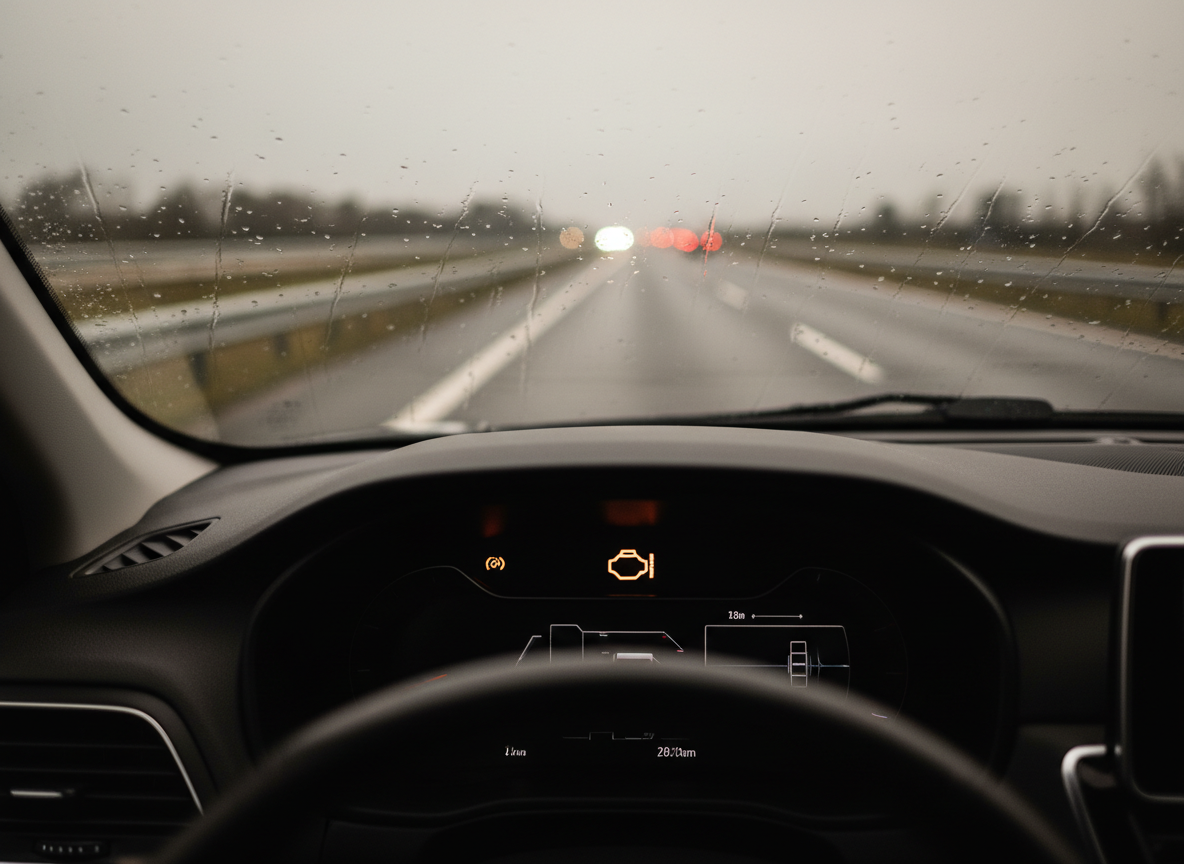
First comes the DPF warning light — an orange symbol that resembles a dotted rectangle with dots above it. This means the filter is approaching capacity and the vehicle is attempting passive or active regeneration. If the light persists after a longer motorway drive, regeneration has not completed.
Performance loss, increased fuel consumption, and eventually limp mode follow. At limp mode stage, the ECU has restricted engine output to protect components and slow further DPF loading. This is not just inconvenient — it is a clear signal that the filter needs professional attention rather than another regeneration attempt.
BMW models are also prone to pressure sensor faults that can generate DPF-related fault codes even when the filter itself is not critically blocked. A diagnostic check before booking a clean is always worthwhile, as it confirms whether the DPF or a related sensor is causing the warning.
Mercedes DPF Problems: The Regeneration Cycle Issue
Mercedes diesel vehicles — the Sprinter, Vito, C-Class, E-Class, and GLC among others — use DPF systems that are often more demanding about regeneration conditions. The Sprinter van is particularly well known for DPF problems because of how it is used: short delivery routes, stop-start urban driving, and low-speed commercial work that gives the exhaust system no opportunity to reach regeneration temperatures.
Mercedes vehicles tend to store multiple failed regeneration attempts before triggering a visible warning. By the time the dashboard light appears, the filter can already be heavily loaded. Acting at the first warning rather than waiting is significantly cheaper — both in cleaning cost and in preventing related damage to the turbocharger and injectors. For a model-by-model BMW DPF cost breakdown, see our BMW DPF cleaning cost guide.
Mercedes Sprinter fleet vehicles
If you operate a Sprinter fleet for deliveries, catering, or trade use, planned DPF cleaning intervals are considerably more cost-effective than emergency bookings after breakdowns. Sprinter DPF issues are predictable: most develop significant blockage between 80,000 and 120,000 miles depending on usage. Building a cleaning schedule around this avoids unnecessary downtime.
Volkswagen, Audi and Skoda DPF Problems
VW, Audi, Seat, and Skoda all share the same VW Group diesel platform. After the 2015 Dieselgate emissions scandal, many VW Group vehicles received software updates that adjusted how DPF regeneration was managed. Some owners experienced more frequent DPF warnings following these updates, as the revised software changed real-world regeneration behaviour under urban driving conditions.
The 2.0 TDI engine — found in the Golf, Passat, Tiguan, Audi A4, A6, and many other models — is one of the most commonly cleaned at DPF specialists nationwide. The 1.6 TDI is similarly prone, particularly in vehicles used predominantly for short-distance urban driving. Both engines respond well to professional cleaning, with post-clean flow rates typically returning to near-original specification.
VW Group vehicles also have a relatively common issue with the DPF differential pressure sensor becoming clogged with soot or developing faults. If your Golf or Audi is generating P2452 or P2453 codes, have the sensor and its pipes inspected alongside the DPF — a blocked sensor can trigger warnings even when the filter itself is not critically restricted.
Cleaning Options for German Diesel DPF Filters
The right cleaning approach depends on how blocked the filter is and what the diagnostic check reveals. Here are the three main options available at DPF Cleaner:
The filter remains in the vehicle. A specialist cleaning solution is introduced directly into the DPF, dissolving soot and loosening deposits. Best suited to filters that are partially blocked and have not reached critical ash loading.
The filter is removed and cleaned using dedicated equipment. This allows a thorough clean of both soot and ash accumulation. Recommended for heavily blocked filters, high-mileage vehicles, or those where on-car cleaning has not resolved the issue previously.
You remove the DPF and send it to us by courier. We clean it, test flow rates before and after, and return it to you. Available UK-wide for owners who cannot reach our Stoke-on-Trent workshop.
We test DPF flow rates before and after every clean — not just on request. This gives you quantified confirmation that the clean has worked, rather than relying on whether the warning light has cleared.
What to Do When the Warning Light Comes On
If the DPF warning light has appeared on your BMW, Mercedes, or VW, here is the most practical order of steps:
- Do not ignore it. The longer the warning remains unaddressed, the more soot and ash accumulates. A cleanable filter today can become an unreclaimable one in a matter of weeks.
- Try a longer drive first — only if the warning has just appeared. A 30-minute motorway or dual-carriageway run at 60–70mph may allow the vehicle to complete a regeneration cycle and clear the light naturally.
- If the light stays on or returns quickly, book a diagnostic check. This identifies whether the DPF itself is the problem or whether a related sensor, injector fault, or EGR issue is contributing.
- Book a professional clean once the DPF is confirmed as the issue. We can usually advise on the phone which approach suits your vehicle and situation best.
If your vehicle is in limp mode or showing multiple warning lights, skip the DIY regeneration attempts and book a diagnostic check directly. Clearing codes without resolving the underlying cause results in the same fault returning within days — and each failed regeneration adds more stress to the filter substrate and surrounding components.
BMW, Mercedes or VW with a DPF Warning?
We clean DPF filters for German diesel vehicles daily at our Stoke-on-Trent workshop. On-car, off-car, and UK-wide postal options available. We test flow rates before and after so you can see exactly what the clean achieved.
Frequently Asked Questions
Why do BMW diesels block DPF filters more than other vehicles?
BMW diesels have regeneration cycles that require sustained high-speed driving to complete. Most UK driving — particularly urban commuting and short errands — does not provide the exhaust temperatures or duration needed. Ash also accumulates over time regardless of regeneration frequency, requiring professional cleaning to remove.
Can I drive my Mercedes with the DPF warning light on?
For short distances, yes — but it is not advisable to leave it. A DPF warning means the filter is approaching capacity. Continuing to drive means more soot accumulation, a greater risk of limp mode, and a more difficult and expensive clean when you do act on it.
Did the Dieselgate software update make VW DPF problems worse?
Some VW Group owners report more frequent DPF warnings after the post-2015 software updates. The updates changed how regeneration is triggered and managed under real-world conditions. Professional DPF cleaning resolves any resulting blockage regardless of which software version the vehicle is running.
Is DPF replacement ever necessary for German diesel vehicles?
In most cases, no. Professional off-car cleaning restores filter flow to near-original levels. Replacement is typically only necessary where the filter substrate is physically cracked or has suffered heat damage. We test flow rates before and after every clean so you can see the result directly.
Do you clean DPF filters for all BMW, Mercedes and VW models?
Yes. We clean DPF filters across the full range of BMW, Mercedes, Volkswagen, Audi, Seat, and Skoda diesel models, including commercial vehicles. If you are unsure whether your vehicle is suitable, call us or use the contact form and we will advise on the best approach.
Audi TDI models have their own specific DPF failure patterns — see our dedicated Audi TDI DPF problems guide for A6, Q5 and Q7 owners.
0 Comments