
Renault Master and Trafic DPF Faults: Warning Lights, Causes and What to Do
The Renault Master and Trafic are two of the UK’s most popular diesel vans — and DPF problems are among the most common reasons they end up off the road.
Renault vans are workhorses. The Master and Trafic cover enormous daily mileages in delivery, trades and haulage — but their DPF systems suffer when those miles are short, stop-start urban journeys rather than sustained runs. Understanding how these vans manage their DPF, and why it goes wrong, is the quickest route to getting back on the road.
Renault Master and Trafic DPF problems are caused by too many short urban journeys preventing filter regeneration. Warning lights, reduced power and limp mode are common symptoms. Professional DPF cleaning — on-car, off-car or postal — clears the blockage without replacing the filter, which on a Master or Trafic can cost over £1,000.
In this guide
Renault Van Engines and DPF Fitment
The Renault Master uses the 2.3 dCi engine family (M9T) in various power outputs — 100bhp, 125bhp, 135bhp, 145bhp and 165bhp — depending on the generation and specification. All UK-spec Master vans from around 2010 onwards are DPF-equipped to meet Euro 5 and Euro 6 emissions standards.
The Renault Trafic uses a smaller 1.6 dCi (R9M) or 2.0 dCi engine depending on generation, with the later 2.0 dCi being the most common on Euro 6 vans from 2019 onwards. Like the Master, all DPF-equipped Trafic models require regular regeneration cycles to keep the filter from blocking.
Both vans share a characteristic: their DPF system relies heavily on exhaust additive fluid (Eolys/FAP additive on some models, or cerium-based fuel additive) to lower the regeneration temperature. Owners unfamiliar with this system sometimes neglect the additive top-up, which accelerates DPF loading.

Warning Signs: What the Dashboard Is Telling You
Renault vans give clear staged warnings as DPF soot load increases. Knowing which stage you’re at determines what action is needed.
Stage 1 — DPF warning light (amber)
The DPF warning symbol appears on the dashboard. The van is still driving normally. This means the filter is approaching a high soot load and passive regeneration has not cleared it. Take the van on a sustained 20–30 minute run at 60–70mph. If the light clears, the regen has completed successfully.
Stage 2 — DPF light plus reduced performance warning
The DPF light remains on and you notice reduced power, particularly when loaded or pulling away from junctions. The engine management system is now attempting a forced regeneration. Keep driving steadily at road-legal speeds where possible — avoid very short trips at this stage.
Stage 3 — DPF light plus engine management light plus limp mode
Both warning lights are on and the van has entered limp mode, typically limiting power to 60–70bhp or restricting revs. At this point the DPF is critically blocked and cannot self-regenerate. You need professional intervention — attempting further regeneration at this soot load can damage the DPF substrate.
Stop-start ignition cycles make it worse: If your Renault van is parked up between short delivery rounds and frequently switched off and on, each cold start dumps additional raw soot into an already-loaded DPF. The filter never gets the sustained heat it needs.
Renault Master DPF Problems
The Master’s 2.3 dCi M9T engine is generally well-regarded for durability, but its DPF system is sensitive to usage pattern. Master vans used on supermarket or parcel delivery routes — with frequent stops and cold engine restarts — often develop DPF issues within 50,000–80,000 miles if regeneration is not managed actively.
A specific issue on the Renault Master is EGR valve contamination. The M9T engine’s EGR system recirculates exhaust gases back through the intake manifold to reduce NOx emissions. Over time, carbon deposits accumulate in the EGR valve and intake manifold, restricting airflow and causing incomplete combustion — which in turn produces more soot and accelerates DPF loading.
If your Master’s DPF keeps blocking after cleaning, an EGR valve inspection is the logical next step. Our EGR valve cleaning service can remove the carbon build-up without replacing the valve.
Master owners with higher payload variants should also note that the additional engine load from carrying heavy loads on short journeys compounds the DPF problem. A fully-laden Master doing short runs produces more soot per kilometre than a lightly loaded one.
Renault Trafic DPF Problems
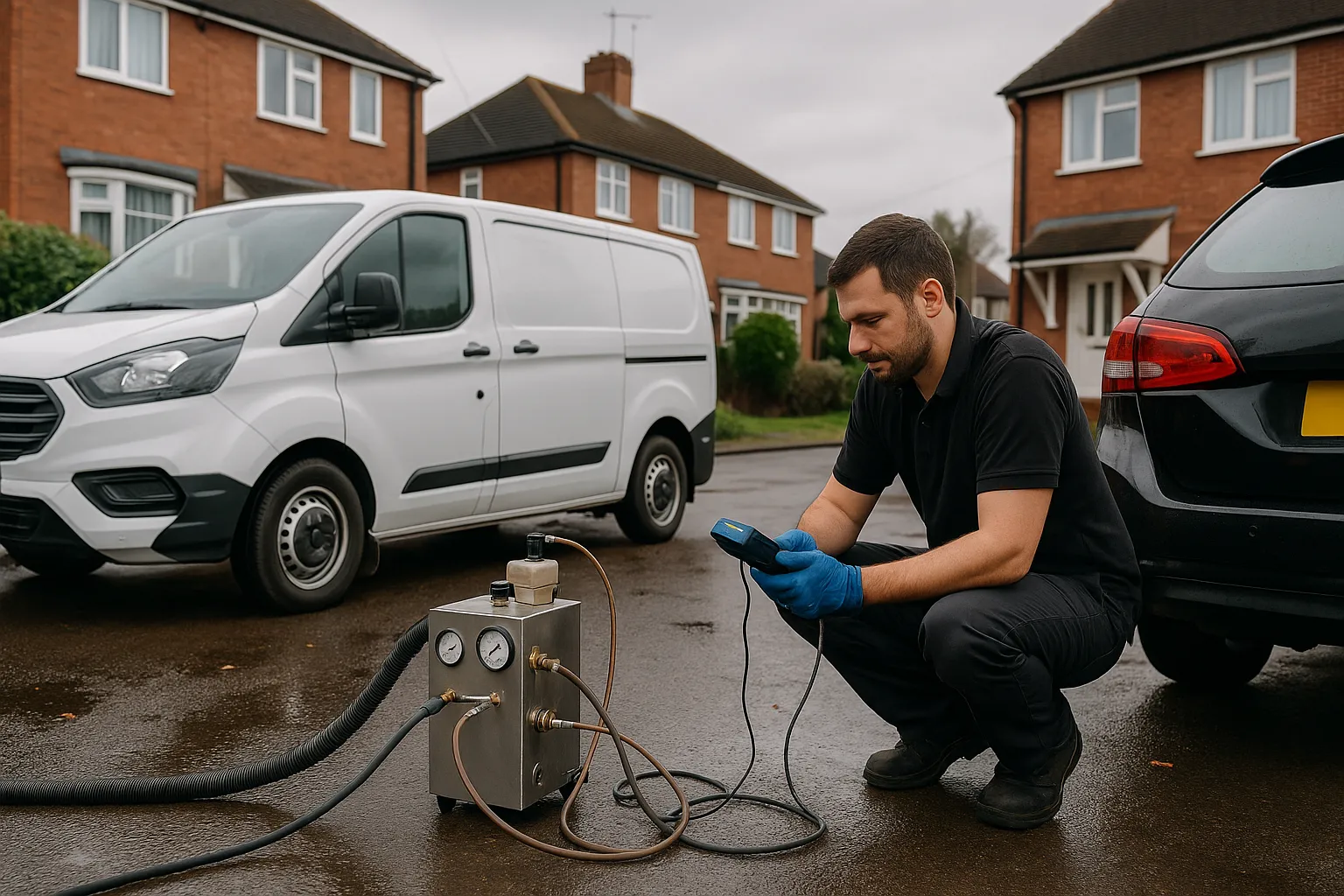
The Renault Trafic — sometimes sold alongside its near-identical sibling the Vauxhall Vivaro — shares the same basic DPF management challenges, but in a smaller van body. Trafic vans are commonly used by electricians, plumbers, and light tradespeople — occupations that typically involve multiple short site visits per day, each lasting less than the time needed for a regen cycle.
The 1.6 dCi engine on earlier Trafic models (2014–2019) is known for DPF problems when used in these short-trip patterns. The 2.0 dCi on the post-2019 Trafic is more tolerant of urban use but still requires periodic longer runs to clear the filter.
A common complaint from Trafic owners is that the DPF warning light keeps returning within a few weeks of each motorway run. This points to either an underlying engine fault producing excess soot, or a DPF that is already beyond passive regeneration and needs professional cleaning or off-car service.
Common Renault DPF Fault Codes
| Code | Description | Action |
|---|---|---|
| P2002 | DPF efficiency below threshold — bank 1 | DPF soot accumulation; forced regen or professional cleaning |
| P244A | DPF differential pressure — below threshold | Advanced blockage; professional cleaning recommended |
| P244B | DPF differential pressure — above threshold | Restriction confirmed; professional cleaning needed |
| P2463 | DPF soot accumulation too high | Critical soot load; do not attempt further self-regen |
| DF155 | Renault-specific: particle filter clogged | Renault-specific code for excessive soot load |
| P0403 | EGR solenoid malfunction | Can trigger excess soot production; inspect EGR valve |
Why Renault Regeneration Keeps Failing
The most common reasons a Renault Master or Trafic cannot complete a successful regeneration cycle:
- Short journeys dominate usage — the exhaust temperature never reaches the 550°C needed for passive regen
- DPF already at critical soot load — the engine’s regen strategy cannot burn off enough soot safely
- EGR valve carbon build-up — restricts airflow, causes rich combustion, accelerates soot production
- Injector wear — worn injectors misfire diesel into the exhaust rather than combusting it cleanly
- Faulty pressure sensor — the ECU may receive incorrect soot load readings, triggering premature or failed regen
- Low Eolys additive level — on additive-equipped Master/Trafic models, depleted additive raises the regeneration temperature threshold
Diagnosis first: At our Hanley workshop, we carry out a full diagnostic check before any DPF cleaning. We read soot load data, check pressure sensor readings, and identify any underlying fault codes — so the cleaning is done on the right basis.
DPF Cleaning for Renault Vans
All three of our DPF cleaning options are suitable for Renault Master and Trafic vans, depending on the severity of the blockage and your situation.
On-car DPF cleaning
On-car cleaning is the quickest option for a moderately blocked DPF. The vehicle comes into our Hanley workshop, we run a diagnostic check, inject specialist cleaning solution through the exhaust, and run an active regeneration cycle to clear the filter. Most vans are ready the same day.
Off-car DPF cleaning
For heavily loaded or long-neglected filters, off-car cleaning produces more thorough results. The DPF is removed from the van, cleaned with high-pressure water and specialist chemical process, and flow-tested before and after.
Postal DPF cleaning
If your Renault van is outside the Stoke-on-Trent area or you have a second vehicle available, our postal DPF cleaning service allows you to remove and send the filter to us. We clean it and return it with flow test data, typically within 2–3 working days.
Renault Master or Trafic DPF Warning Light On?
Get the right fix — not just a warning light reset. Bring your van to our Hanley, Stoke-on-Trent workshop or use our nationwide postal DPF cleaning service.
Helpful Next Reads
Frequently Asked Questions
How much does a Renault Master DPF replacement cost?
DPF replacement on a Renault Master can cost between £800 and £1,500 depending on the van’s age and which DPF variant is fitted. Professional cleaning starts from £150 and restores the existing filter — a significantly cheaper option where the filter is still structurally intact.
Can my Renault Trafic DPF be cleaned without removing it?
Yes — on-car DPF cleaning is possible on most Trafic models using specialist chemical injection and a forced regen cycle in the workshop. Off-car cleaning is more thorough for severely blocked filters, but on-car is effective for moderate blockages.
Why does my Renault Master DPF keep blocking after cleaning?
Repeat DPF blocking usually means an underlying engine fault — most commonly EGR valve carbon build-up, injector wear, or a faulty pressure sensor — is causing excessive soot production. Cleaning the DPF fixes the symptom; the root cause needs diagnosing separately.
What is the Eolys additive and how does it affect my DPF?
Eolys (or cerium-based fuel additive) is used on some Renault Master models to lower the temperature at which the DPF regenerates, making it possible to complete a regen at lower exhaust temperatures. If the additive tank runs dry, regeneration temperature rises and the DPF blocks more readily. Additive top-up is part of scheduled maintenance on equipped models.
Is it worth cleaning a Renault Master DPF at 150,000 miles?
Yes, in most cases. The DPF substrate typically outlasts the van’s engine if maintained correctly. At 150,000 miles, a clean DPF can continue working for another 50,000+ miles. The decision to replace rather than clean is only necessary if the substrate is physically cracked or melted, which we check during the diagnostic before cleaning.
0 Comments