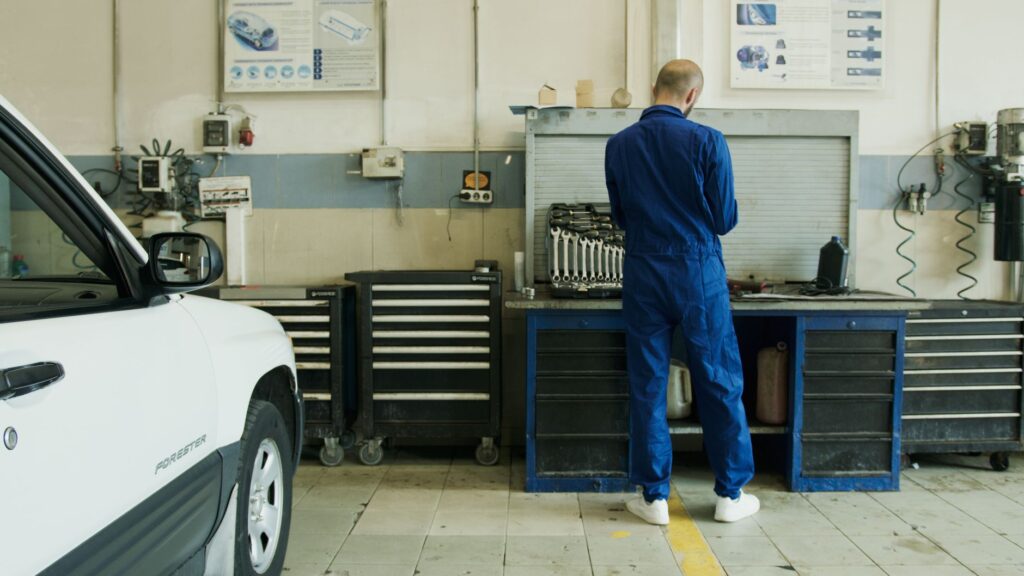
Korean diesel crossovers dominated UK roads through the 2010s, and their 1.7 and 2.0 CRDi engines have a clear DPF fault pattern. Here is what goes wrong, which fault codes to expect, and how to fix it without an expensive replacement.
Hyundai and Kia diesel crossovers are reliable vehicles, but their DPF systems have a specific weakness: the 1.7 CRDi engine shared across the ix35, Tucson, Sportage, and Sorento requires active regeneration conditions that typical UK urban driving rarely delivers. The result is a familiar pattern — DPF warning light, fault code P2002, and a quote for a filter replacement that can run to several thousand pounds.
In most cases, professional cleaning resolves the problem. Here is what you need to know before making any decision.
Hyundai and Kia DPF Fault Codes Explained
Two fault codes appear most frequently on Hyundai and Kia diesel models with DPF problems:
P2002 — DPF Efficiency Below Threshold
This is the primary Hyundai and Kia DPF code. It means the ECU has measured differential pressure across the filter and found that soot loading has exceeded the acceptable range for the operating conditions — in other words, the filter is blocked enough that it is no longer doing its job at the efficiency level the system expects. This does not automatically mean the filter is damaged. In the majority of cases, it means regeneration has failed to complete, soot has built up over several cycles, and the filter now needs professional cleaning to restore it.
P2015 — Intake Manifold Runner Position Sensor
P2015 is frequently misread as a DPF-related fault on 2.0 CRDi engines. It actually relates to the intake manifold actuator — a separate issue that can cause rough running and that is sometimes present alongside genuine DPF codes. If your scan shows both P2002 and P2015, the intake manifold fault should be investigated independently; resolving it will not fix the DPF blockage, and vice versa.
Other Related Codes
P0402 (EGR flow excessive), P0403 (EGR circuit malfunction), and P246C (particulate filter restriction — soot accumulation) are all seen on Korean diesel models with DPF issues. EGR codes alongside a DPF code are significant — the EGR system is a common contributor to accelerated DPF loading on these engines.
Why 1.7 CRDi Engines Struggle to Regenerate
The 1.7 CRDi engine — co-developed by Hyundai-Kia and used across both brands — requires active regeneration every 300–500km under real-world conditions, according to data published across specialist diesel communities. Active regeneration on this engine demands sustained driving at 60+ km/h (roughly 38mph or above) for at least 20 minutes without interruption.
That requirement is difficult to meet in typical UK usage:
- Stop-start urban commuting below 40mph is the most common driving pattern for crossover owners
- School runs, supermarket trips, and short town commutes rarely deliver a continuous 20-minute window at the required speed
- The engine management system may trigger a regeneration attempt but abort it when speed drops — and aborted cycles leave partially combusted soot that bonds harder than fresh soot and is more resistant to the next attempt
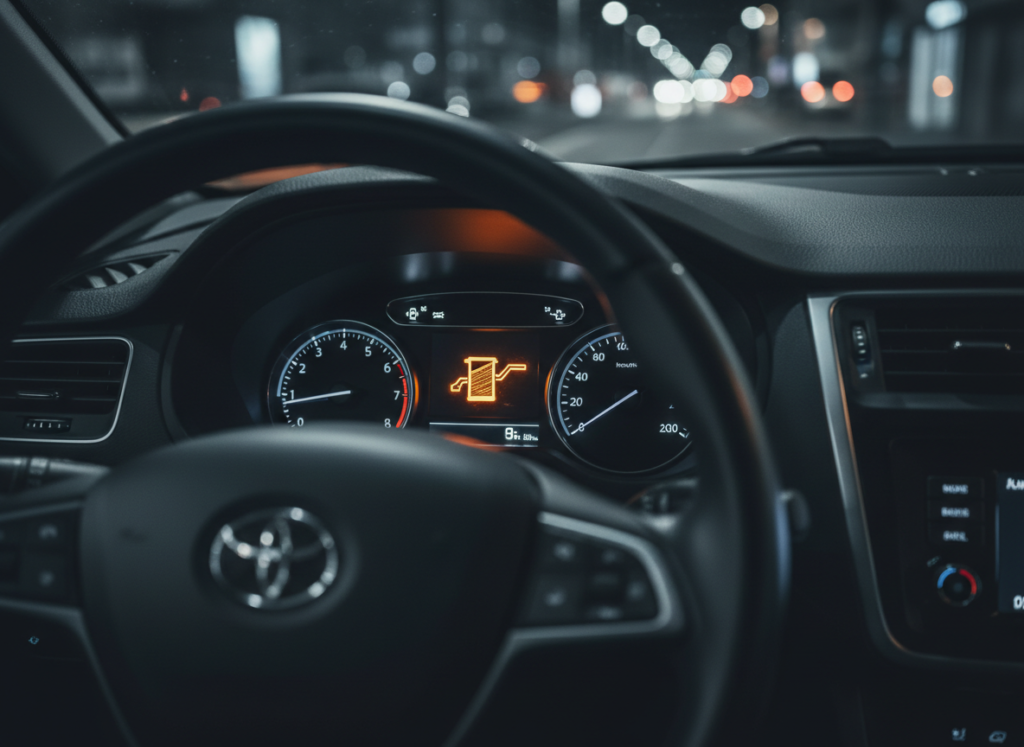
The 2.0 CRDi (used in larger Sorento models and some Tucson variants) has slightly better regeneration characteristics at higher engine loads, but the same urban driving issue applies. Crossovers are marketed as family vehicles for mixed use — school run, weekend getaway — and the weekend motorway run is often not long enough to offset five days of urban commuting.
Understanding how often and under what conditions a DPF needs to regenerate helps explain why these warning lights appear when they do. For a detailed explanation of the relationship between driving patterns and filter health, our guide on how often DPF cleaning is needed covers this directly.
Model-by-Model: ix35, Tucson, Sportage, Sorento
Hyundai ix35 (2009–2015) — 1.7 CRDi
The ix35 was one of the first crossovers to use the 1.7 CRDi unit at scale in the UK, and it is the vehicle where DPF issues are most widely reported. The combination of compact dimensions (attracting urban buyers), the 1.7 engine’s regeneration requirements, and the age of the vehicles now on the road (many approaching 100,000+ miles) makes the ix35 a common DPF cleaning job. Most cases respond well to professional off-car cleaning.
Hyundai Tucson (2015–present) — 1.7 and 2.0 CRDi
The second-generation Tucson carries forward the same engine options with updated DPF management software. The 1.7 variant has the same regeneration requirements as the ix35. Later Tucson models (post-2019) have more aggressive active regeneration triggering, which helps — but does not eliminate — the urban driving problem.
Kia Sportage (2010–present) — 1.7 CRDi
The Sportage shares the 1.7 CRDi platform with the ix35 and has an identical DPF fault pattern. It is also one of the most searched-for Korean diesel DPF issues in the UK. Owners on specialist forums have documented cases where a Sportage was quoted for full DPF replacement, took it to a specialist instead, and had the restricted pipes cleaned rather than replaced — saving a significant sum. Most Sportage DPF problems are cleaning jobs, not replacement jobs.
Kia Sorento (2006–present) — 2.0 and 2.2 CRDi
The Sorento uses larger CRDi units. The 2.2 CRDi is generally better at completing regeneration cycles under real-world conditions, but the 2.0 (2006–2012 era especially) shares the same urban driving vulnerability. Sorento DPF issues are less frequent than Sportage/Tucson but follow the same diagnostic and treatment path.
EGR Valve Faults and Their Link to DPF Problems
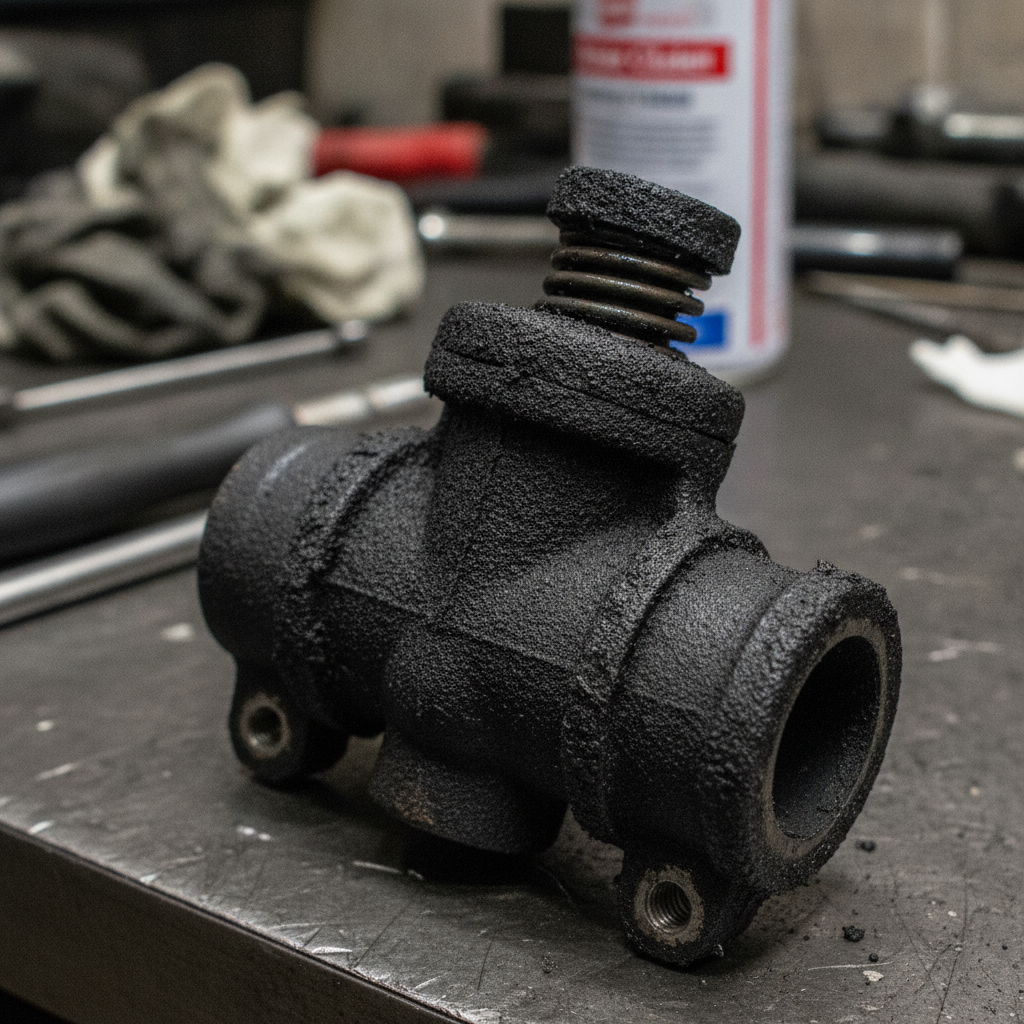
EGR (Exhaust Gas Recirculation) system faults are closely linked to DPF issues on Hyundai and Kia CRDi engines. The EGR valve recirculates a portion of exhaust gases back into the intake to reduce NOx emissions. When it sticks, becomes clogged, or operates incorrectly, several things happen that directly affect the DPF:
- Partially combusted exhaust gases re-enter the intake and pass through the combustion cycle again, producing higher soot output per mile
- An over-opening EGR floods the intake with exhaust, causing incomplete combustion and significantly increased particulate production
- The resulting carbon deposits accumulate faster in the DPF than under normal operating conditions
If your scan shows an EGR fault code alongside P2002, the EGR issue should be addressed as part of or before the DPF clean. Cleaning the DPF with a faulty EGR in place means the filter will re-block faster than normal — potentially within weeks rather than months. For a broader look at how sensor faults interact with DPF blockage diagnosis, that guide covers the distinction between a genuine block and a sensor or EGR-driven false reading.
DPF Cleaning vs Replacement Costs
The cost difference between professional cleaning and replacement is significant:
| Option | Typical Cost | When Appropriate |
|---|---|---|
| Professional DPF cleaning | £250–500 | Most blockage cases — filter substrate intact |
| DPF replacement (OEM) | £2,000–4,000+ | Cracked or heat-damaged substrate only |
| DPF replacement (aftermarket) | £800–1,500 | As above — but quality varies significantly |
The key diagnostic question is whether the filter substrate is physically damaged. A cracked or thermally damaged substrate cannot be cleaned back to function — it needs replacing. But most Hyundai and Kia DPF faults, particularly those showing P2002 without a sustained history of failed forced regenerations, involve an intact substrate that has simply accumulated more soot than passive regeneration can handle. In these cases, professional cleaning is the correct treatment.
The figures above align with industry data from specialist DPF cleaning providers across the UK. Prices vary by vehicle and filter condition, but the principle holds: cleaning is the right first step for the majority of cases.
For comparison with how German diesel DPF costs and decisions compare, our guide on BMW, Mercedes and VW DPF problems covers the same question from a different vehicle perspective.
Diagnosis: What to Check Before Booking Anything
Before booking either a clean or a replacement, two checks are worth doing:
1. Run a Full Diagnostic Scan
A generic OBD reader will show P2002, but a full diagnostic scan (using Hyundai/Kia-specific software or a manufacturer-grade tool) will also show: active regeneration cycle status, DPF differential pressure live data, EGR position and flow data, and any fuel injector fault codes. This distinguishes a straightforward blockage from a multi-fault scenario where the DPF is the symptom rather than the primary problem.
2. Attempt a Motorway Regeneration First
If the warning light has only recently appeared and the vehicle is not in limp mode, a sustained motorway run (30–40 minutes at 60–70mph) can sometimes allow a passive regeneration to complete and clear the light naturally. This is only appropriate if the vehicle is driving normally — not if it is in limp mode, showing multiple fault lights, or showing significantly reduced performance.
DC
DPF Cleaner — Technical Team
Published 20 October 2026 · Unit 2, 2 Cutts Street, Hanley, Stoke-on-Trent ST1 4LX
How to Prevent Recurring Hyundai and Kia DPF Blockage
The root cause for most Hyundai and Kia DPF problems is the mismatch between the 1.7 CRDi’s regeneration requirements and typical UK urban driving. Closing that gap is the most effective long-term prevention strategy:
- Regular motorway or dual carriageway driving. At least one sustained run per week at 60+ mph for 20–30 minutes gives the system the conditions it needs to complete a passive regeneration cycle. This single habit prevents most blockage issues on CRDi engines.
- Address EGR faults promptly. An EGR code should not be left to run. The soot loading it causes accumulates quickly and will shorten the DPF service interval significantly — sometimes by more than half.
- Check injector condition at service intervals. Injectors with minor fuelling issues increase soot production without obvious drivability symptoms. A fuel system check at each service catches problems before they manifest as a DPF warning.
- Use quality diesel. Premium diesel from major fuel brands has better additive packages that support cleaner combustion and healthy DPF function over time.
Hyundai or Kia DPF Warning Light? Book a Clean First.
We clean DPF filters for Hyundai ix35, Tucson and all Kia CRDi models at our Stoke-on-Trent workshop. Professional cleaning at £250–500 resolves most cases — UK-wide postal cleaning available for vehicles that cannot travel to us.
Helpful Next Reads
BMW, Mercedes and VW DPF ProblemsHow German diesel DPF issues compare — and the same cleaning approach that works.
How Often Should a DPF Be Cleaned?The driving patterns that determine your DPF service interval — and when to act.
Frequently Asked Questions
What is fault code P2002 on a Hyundai or Kia?
P2002 means the DPF efficiency is below the threshold the ECU expects for the current operating conditions. It indicates soot accumulation has exceeded the level that passive regeneration can manage. In most cases this is a cleaning issue, not a replacement issue — but a full diagnostic scan is needed to confirm no related faults are present.
Can I drive my Hyundai ix35 or Kia Sportage with the DPF light on?
For short distances, yes — but you should not leave it. A DPF warning means the filter is at or approaching capacity. If the vehicle enters limp mode, shows multiple warning lights, or performance drops noticeably, stop driving and arrange inspection. Continued driving with a severely blocked filter risks damage to surrounding components.
Is DPF replacement necessary for Hyundai and Kia diesels?
In most cases, no. Professional cleaning restores filter flow to near-original levels. Replacement is only necessary where the filter substrate is physically cracked or damaged by heat — typically from repeated failed forced regenerations at very high temperatures. A pre-clean diagnostic identifies which situation applies.
Why does my Kia Sportage DPF keep blocking after cleaning?
Recurring blockage after a clean usually means an unresolved contributing fault — most commonly an EGR issue, injector over-fuelling, or a driving pattern that prevents regeneration from completing. If the DPF warning returns within a few thousand miles of a clean, a full diagnostic scan (not just a code read) is needed to identify the root cause.
Do you clean DPF filters for all Hyundai and Kia diesel models?
Yes. We clean DPF filters for the full Hyundai and Kia CRDi range including ix35, Tucson, i30, i40, Sportage, Sorento, and Ceed. Both workshop (Stoke-on-Trent) and UK-wide postal cleaning are available.