
Ford Transit DPF Problems: Common Faults, Warning Signs & Cleaning Guide
The Ford Transit is the UK’s most popular diesel van — and one of the most common vehicles we see with DPF problems. Here’s what goes wrong, what to look for, and what actually fixes it.
Ford Transit DPF problems are usually caused by short urban journeys that prevent the filter from reaching regeneration temperature. Common symptoms include a DPF warning light, limp mode, black smoke and increased fuel consumption. Professional DPF cleaning — on-car, off-car or postal — is the most reliable fix when forced regeneration has already failed.
Why the Ford Transit Is Prone to DPF Problems
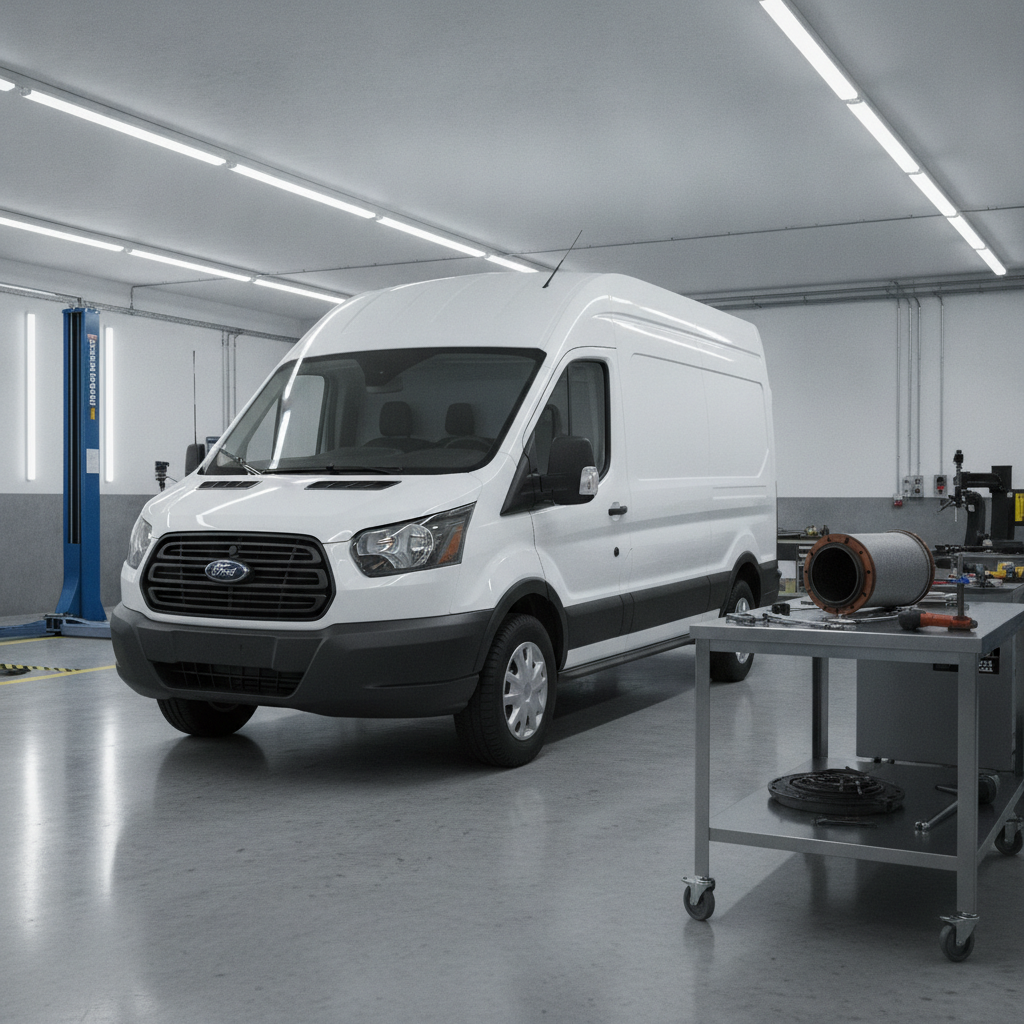
The Ford Transit is a working van. Most are covering short urban delivery routes, site work or town-to-town runs — exactly the conditions that a diesel particulate filter struggles with most. DPF regeneration only works when exhaust temperatures climb high enough to burn off trapped soot, which typically requires sustained motorway driving at higher revs.
Transits running short local routes rarely complete a full passive regeneration. Soot builds up faster than it burns off, and over weeks and months the filter becomes progressively blocked. By the time a warning light appears, the filter is often well above the normal service threshold and a garage forced regeneration may also have failed.
This is the same pattern across all diesel vans, but the Transit’s popularity in commercial and trade fleets means we see more of them. Engine variants also matter: the 2.0-litre EcoBlue and older 2.2 TDCi both use DPFs and both suffer in the same conditions, though the EcoBlue tends to regenerate more aggressively.
Worth knowing: If your Transit has a DPF issue and you also have an EGR valve fault code, the two are often related. A dirty EGR valve can prevent complete combustion and accelerate DPF soot loading. See our EGR valve cleaning service for more.
Ford Transit DPF Warning Signs
Recognising the early signs of a DPF problem can save you from a more expensive repair later. Here’s what to look for and what each symptom means.
DPF Warning Light Stages
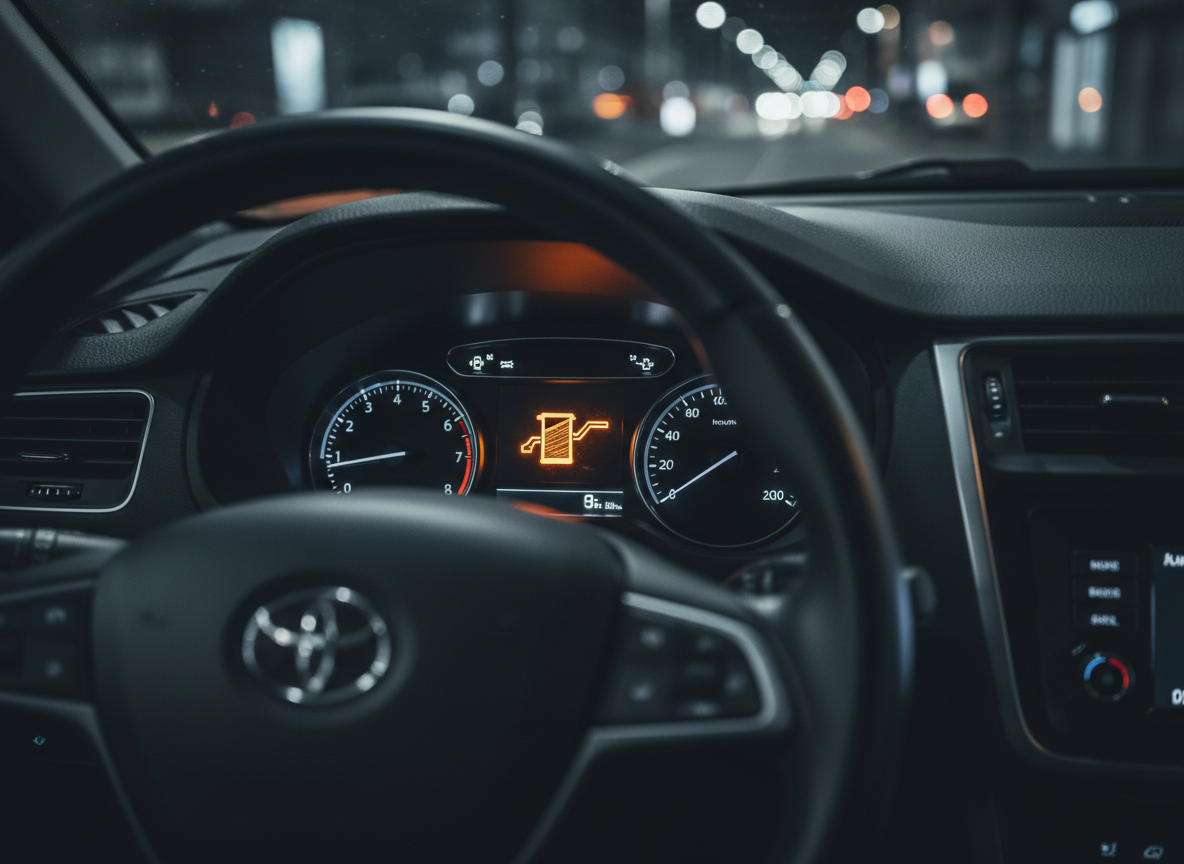
Ford Transits use a tiered dashboard warning system. The first warning — a solid amber DPF light — typically appears when the filter is approaching 80–85% full. At this stage, a long motorway run at speed may still trigger a passive regeneration. The second-stage warning (often a flashing light or text message on the instrument cluster) means the filter is critically full and a garage-initiated active regeneration is required. Ignoring it beyond this point risks engine damage.
Limp Mode and Power Loss
When the engine management system detects a severely blocked DPF, it may restrict engine output to protect the vehicle. You’ll notice the van feeling sluggish, unwilling to accelerate past a certain speed, and potentially refusing to rev out properly. This is limp mode — it’s designed to protect the engine, not to punish you. A professional DPF clean and diagnostic reset is the fix, not a drive to clear it.
Excessive Black Smoke
A Transit producing heavy black smoke from the exhaust — especially on acceleration — often has a backpressure problem caused by a blocked DPF. The exhaust gases have nowhere to go, and unburnt soot is being pushed out instead. This symptom is hard to miss and usually means the filter is close to fully blocked.
High Fuel Consumption
One of the earliest and easiest-to-miss signs is fuel economy getting noticeably worse. When a DPF is partially blocked, the engine has to work harder to push exhaust gases through, which increases fuel consumption. If your Transit’s mpg has dropped without an obvious reason, the DPF is worth checking.
Common Ford Transit DPF Fault Codes
When a Transit’s engine management light comes on alongside a DPF warning, a diagnostic scan will usually reveal one or more of these fault codes.
| Fault Code | Meaning | Likely Cause |
|---|---|---|
| P2002 | DPF efficiency below threshold (bank 1) | Heavy soot loading; failed regeneration |
| P2003 | DPF efficiency below threshold (bank 2) | As above — common on twin-turbo variants |
| P244B | DPF pressure differential too high | Filter blocked; pressure sensor issue |
| P244C | DPF pressure differential too low | Pressure sensor fault; filter damage |
| P2463 | DPF soot accumulation | Short-journey pattern; failed regen |
| P246C | DPF restricted / backpressure | Severely blocked filter |
A code like P2002 doesn’t automatically confirm the DPF needs replacing. In most cases it means the filter needs a professional clean. The pressure sensor should also be checked — a faulty sensor can generate incorrect readings even when the filter itself is in reasonable condition.
Don’t clear the code and drive: Clearing fault codes without addressing the underlying blockage buys you very little time. The light will return quickly, and continued driving with a heavily blocked DPF risks cracking the filter substrate — turning a £250–£350 clean into a £1,000+ replacement.
Can You Drive a Transit DPF Problem Away?
You may have read that a long motorway run clears a DPF. This is true in the very early stages — when the filter is mildly loaded and the first warning light has only just appeared. At this point, 30–40 minutes of motorway driving at 60–70 mph can raise exhaust temperatures high enough for a passive regeneration to complete.
But if your Transit’s DPF light has been on for more than a day or two, or if you’re seeing limp mode, that window has almost certainly closed. Forced active regeneration requires specialist equipment to raise the exhaust temperature artificially while the vehicle is stationary — most vans need this by the time a driver notices a problem.
If forced regeneration also fails — which it often does when the filter is too blocked to allow enough airflow — physical cleaning is the only option that reliably restores function without replacing the filter.
Ford Transit DPF Cleaning Options
There are three main cleaning methods, each suited to different levels of blockage and different customer situations.
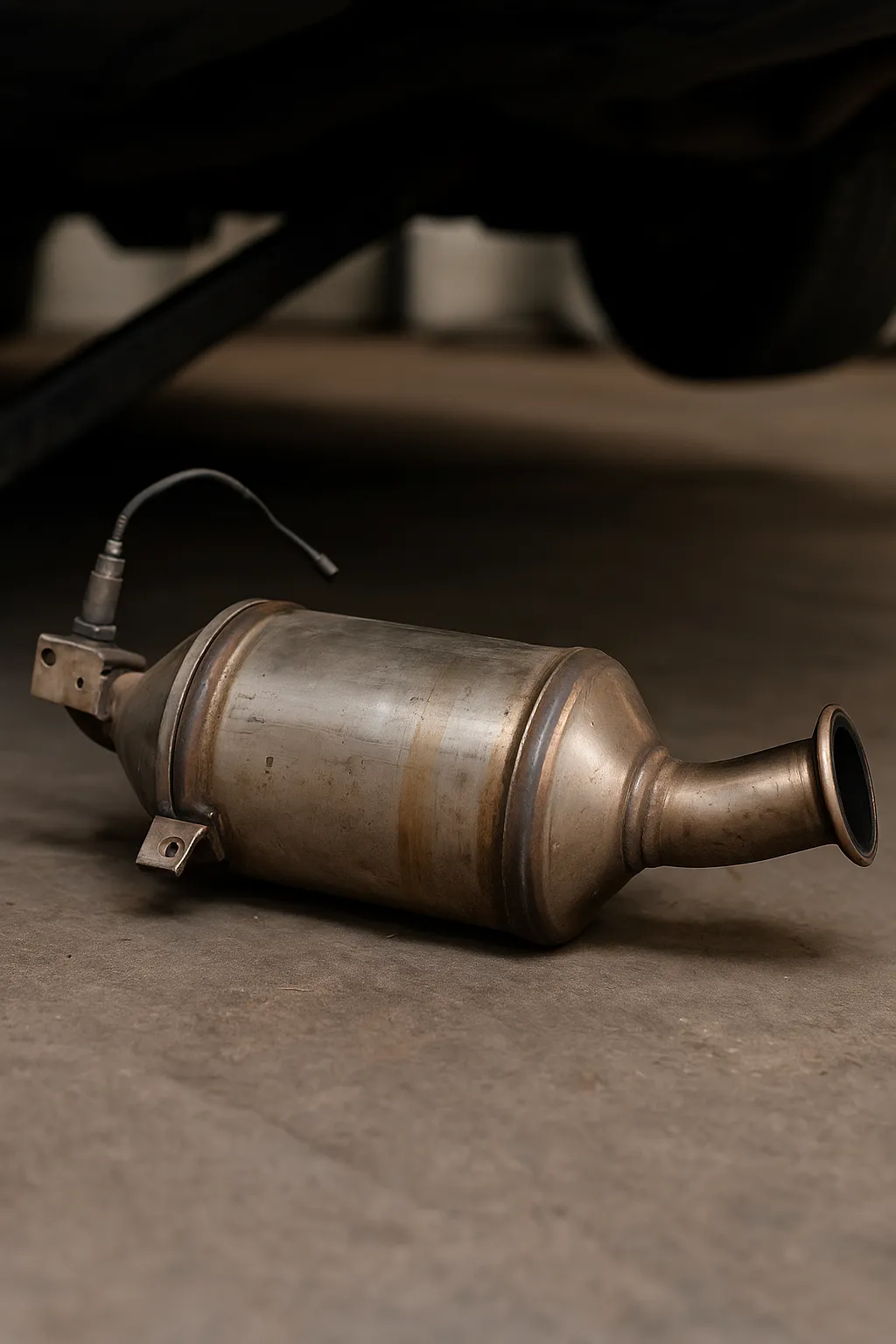
The DPF stays in the vehicle while a specialist cleaning fluid is injected into the filter at controlled pressure. This dissolves and loosens soot and ash deposits, which are then flushed out. Best suited for moderate blockages where the filter can still pass some exhaust flow. Carried out at our Hanley workshop.
The DPF is removed from the vehicle and cleaned using a dedicated pneumatic flushing process that works from both ends of the filter. This gives a more thorough result and allows a visual and flow inspection before refitting. Recommended for Transit filters with heavy ash loading or where on-car cleaning hasn’t fully resolved the issue.
If you’re outside the Stoke-on-Trent area, you can remove your Transit’s DPF and send it to us for cleaning. We clean it, test it, and return it ready to refit. A popular option for fleet operators and independent mechanics across the UK. Full details at our postal DPF cleaning page.
Which method is right for your Transit? If you’re unsure which cleaning option applies to your van’s situation, get in touch. We’ll ask a few questions about symptoms and history and point you toward the right service.
How Long Does DPF Cleaning Take?
On-car DPF cleaning on a Transit typically takes 2–3 hours at the workshop. Off-car cleaning, which involves removing and refitting the filter, usually takes a full day. Postal cleaning turnaround is normally 2–3 working days from receipt.
After cleaning, we flow-test the filter to confirm it’s performing within spec before signing it off. You’ll get a clear result — not just an assurance that it’s been cleaned.
For vans in active use, minimal downtime matters. If your Transit needs to be back on the road quickly, mention this when you contact us and we’ll work around it where possible.
Your Ford Transit DPF Sorted
We work on Transits regularly and understand how important a quick turnaround is for commercial vehicles. Book your DPF clean at our Hanley workshop, or send us the filter for postal cleaning from anywhere in the UK.
Frequently Asked Questions
How much does Ford Transit DPF cleaning cost?
Cost depends on whether on-car or off-car cleaning is needed and how blocked the filter is. On-car cleaning is typically lower cost; off-car cleaning includes removal, cleaning, flow test and refit. Contact us for a quote based on your specific situation — we aim to give you a clear price before you commit.
Can a Ford Transit DPF be cleaned more than once?
Yes, most DPF filters can be cleaned multiple times if the substrate is undamaged. A filter with a cracked or melted substrate cannot be effectively cleaned and will need replacement. We check filter condition as part of the cleaning process and will tell you honestly if the filter is beyond cleaning.
How do I stop my Ford Transit DPF from blocking again?
The most effective long-term prevention is changing the van’s use pattern where possible — including at least one longer run per week to allow passive regeneration. Using the correct engine oil (low-SAPI specification) and keeping the EGR valve clean also significantly reduces the rate of soot accumulation. See our EGR valve cleaning page for more.
My Transit is in limp mode — is DPF cleaning still possible?
Usually yes. We see many vans in limp mode and can carry out cleaning to restore normal operation in most cases. The diagnostic scan will confirm whether any additional faults need addressing alongside the DPF clean.
Does DPF Cleaner work on all Ford Transit variants?
We work on all diesel Transit variants including the 2.0 EcoBlue, 2.2 TDCi, and 2.4 TDCi. If you have a specific engine variant or model year query, get in touch and we’ll confirm before you travel or post.
0 Comments