
DPF Cleaner — UK-Wide Postal Service
Postal DPF Cleaning: How to Send Your Filter and What Happens Next
You do not need to be in Stoke-on-Trent to use our DPF cleaning service. Our postal DPF cleaning option lets customers from anywhere in the UK send their filter directly to our Fenton workshop — and get it back professionally cleaned.
Not every diesel driver lives within reach of a specialist DPF workshop. If the nearest DPF cleaning service is two hours away — or you cannot leave the vehicle off the road for a full day — the logistics of getting a blocked filter cleaned become a real barrier. Postal DPF cleaning solves that problem directly.
The concept is straightforward: you remove the DPF from your vehicle, package it securely, and send it to our workshop in Stoke-on-Trent. We clean it, test it, and send it back. You refit it and drive. But there is a bit more to it than that — and understanding the full process helps you prepare properly and know what to expect at each stage.
What’s on this page
Who Postal DPF Cleaning Is Designed For
Postal DPF cleaning is particularly useful for drivers and businesses in specific situations. It is not always the most convenient route for everyone, but for certain customers it is the most practical option by a considerable margin.
It works well for drivers who are geographically too far from a specialist DPF workshop to make the journey viable. It is also a practical choice for commercial vehicle operators who cannot take a van or truck off the road for a full day to travel to and from a workshop. If your vehicle is off the road already — not driveable due to severe DPF blockage or a limp-mode restriction — postal cleaning avoids the need for recovery transport to a workshop.
Postal cleaning is also the preferred route for vehicles where an on-car clean is not suitable due to the filter’s location, design, or the severity of the blockage.
The Postal DPF Cleaning Process, Step by Step
Before removing anything, get in touch. We will confirm that postal cleaning is the right option for your vehicle and filter type, and provide you with the return address and any specific packaging guidance for your DPF.
The filter will need to be removed either by yourself if you are mechanically confident, or by a local garage or mechanic. We will advise on what to look out for during removal to avoid damage to the filter body or surrounding components.
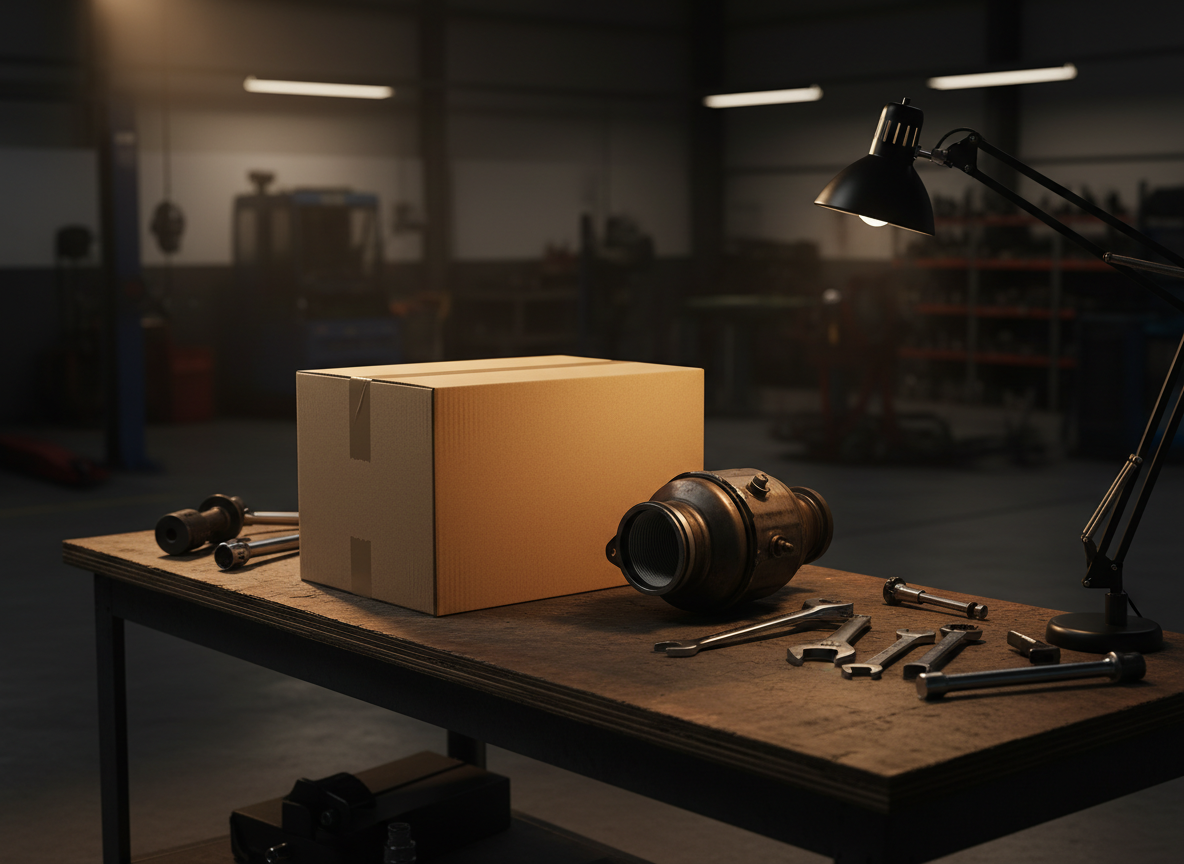
DPFs have a fragile ceramic substrate inside the metal casing. Improper packaging is one of the most common causes of damage during transit. We will advise on the right approach — which typically involves wrapping the filter to prevent movement and using a suitably sized, sturdy box.
Post or courier the packaged filter to us at 201 King Street, Fenton, Stoke-on-Trent, ST4 3ER. We recommend a tracked service so you have visibility of when the filter has been received.
Once we receive your filter, we inspect it, assess its condition, and carry out the appropriate cleaning process. After cleaning, we test the filter to verify that flow has been restored and soot load is within normal limits before returning it.
The cleaned and tested filter is packaged and sent back to your address. We will notify you when it has been dispatched so you can arrange for refitting.
Refit the DPF — either yourself or through a local garage. Once refitted, any stored DPF-related fault codes will need to be cleared using diagnostic equipment. We can advise on what codes to expect after refitting.
Removing and Packaging the Filter Correctly
Correct removal and packaging are the two areas where most postal DPF cleaning problems originate. A DPF that arrives at the workshop damaged by improper removal or inadequate packaging cannot always be cleaned — and in some cases cannot be used at all.
Removing the filter
DPF removal difficulty varies significantly by vehicle. On some cars and vans, the filter is straightforward to access and remove with basic tools. On others — particularly where the DPF is close-coupled to the turbo or located under a heat shield in a confined space — removal is a more involved job that is best done by a mechanic.
Key things to be careful of during removal:
- Avoid hammering or forcing the filter if it is seized onto its mountings — this can crack the ceramic substrate inside
- Take care with the pressure sensor pipes and temperature sensor connections — these are fragile and expensive to replace if damaged
- If the filter has a centre section with separate inlet and outlet flanges, note how it is assembled before removal
- Do not drop the filter — even a single drop onto a hard surface can crack the internal substrate
Packaging the filter for transit
The packaging needs to prevent the filter from moving inside the box and protect it from any external impact. Bubble wrap alone is generally insufficient. Our standard packaging guidance is:
- Wrap the filter in bubble wrap — at least two layers
- Place it in a box that is not much larger than the filter itself, to limit movement
- Fill any remaining space with packing peanuts, crumpled newspaper, or foam
- Seal the box well with strong packing tape
- Mark the outside of the box as “Fragile — ceramic filter” so couriers handle it with care
Contact us before sending and we will confirm the specific packaging approach for your filter type. Some DPFs have unusual shapes or dimensions that benefit from slightly different packing arrangements.
What Happens When Your Filter Arrives at Our Workshop
When your DPF arrives, the first step is an assessment — not an immediate clean. We inspect the filter’s physical condition, note any external damage from transit or removal, and assess the internal condition based on appearance and weight.
Pre-clean testing
Before cleaning, we carry out a flow test to establish the baseline restriction level of the filter. This tells us how blocked it is and — critically — how much of that blockage is soot (which can be cleaned) versus ash (which accumulates over the filter’s lifetime and cannot be fully removed). We will contact you if the pre-clean assessment reveals anything that changes the likely outcome.
The cleaning process
The cleaning method depends on the filter’s condition and the type of contamination. The most common approach for postal DPFs is a thermal and pressure cleaning process that removes soot and ash from the filter channels without damaging the substrate. For filters with heavy ash loading or chemical contamination, a deeper off-car cleaning process may be required.
Post-clean testing
After cleaning, we carry out a second flow test to confirm the result. We are looking for a meaningful improvement in flow restriction compared to the pre-clean reading — the specific target varies by filter type. Only when we are satisfied with the result do we package the filter and return it.
Refitting the Filter After Cleaning
Refitting is essentially the reverse of removal. A few things to be aware of:
- Use new gaskets at the filter connections if the old ones were damaged or heavily compressed during removal
- Reconnect the pressure sensor pipes and temperature sensor connections carefully — check for any cracks or damage before reconnecting
- Ensure all clamps and fixings are tightened to the correct torque specification for your vehicle
- Once refitted, stored fault codes related to the DPF will need to be cleared using diagnostic equipment — a local garage, fast-fit centre, or a handheld OBD reader can do this
After clearing codes, the vehicle’s engine management system will recalibrate its soot load estimate. In most cases, the DPF warning light will not reappear if the filter is clean and there is no underlying engine fault driving the blockage.
When Postal Cleaning Is the Right Option — and When It Is Not
Postal DPF cleaning is a practical and cost-effective solution for many situations, but it is not the right route for every case.
Postal cleaning works well when:
- You are too far from Stoke-on-Trent to visit the workshop
- The vehicle is off the road and cannot be driven
- You want to avoid the time and cost of taking the vehicle to a workshop for the day
- You have a contact who can remove and refit the filter locally at a lower cost than a full workshop visit
- The filter is heavily blocked and an off-car clean is appropriate based on its condition
When to consider our workshop service instead:
- Your vehicle is local to Hanley or Stoke-on-Trent — an on-car clean at the workshop avoids removal entirely
- You are unsure whether the problem is the DPF itself or an underlying engine fault — a diagnostic at the workshop will identify both
- The filter removal is complex for your vehicle and carrying out the work locally is difficult or expensive
If you are not sure which route is more appropriate for your situation, contact us and we will help you work through it. Sometimes a short conversation saves a lot of time and cost in both directions.
Ready to Send Your DPF for Cleaning?
Get in touch before you remove anything. We will confirm the right approach for your filter type, give you our packaging guidance, and walk you through the process — so your filter arrives safely and comes back clean.
Frequently Asked Questions
How long does postal DPF cleaning take?
Transit time varies depending on your location and the courier or postal service used. Once we receive your filter, cleaning and testing is typically completed within one to two working days. We will let you know when it has been dispatched back to you.
Do I need to remove the DPF myself, or can a garage do it?
Either option works. Many customers have a local garage or mechanic remove and refit the filter — this is often the most practical arrangement, particularly on vehicles where the filter is difficult to access. We can advise on what to ask for if you are booking this through a local garage.
How do I know the filter has been successfully cleaned?
We carry out a flow test before and after cleaning to confirm the result. If the post-clean reading does not show a meaningful improvement, we will contact you rather than returning a filter that has not responded to cleaning.
Will postal DPF cleaning fix an underlying engine fault?
No. If your DPF is blocking due to an underlying engine issue — a faulty EGR valve, a failing injector, a turbo oil leak, or similar — cleaning the filter will not resolve the root cause. The filter will block again. If you have reason to suspect an underlying fault, a full workshop diagnostic is the better starting point.
Can you clean all types of DPF by post?
We can handle the vast majority of DPF types from diesel passenger cars, vans, and light commercial vehicles. Contact us with your vehicle make, model, and year before sending and we will confirm whether postal cleaning is suitable for your specific filter.
0 Comments