
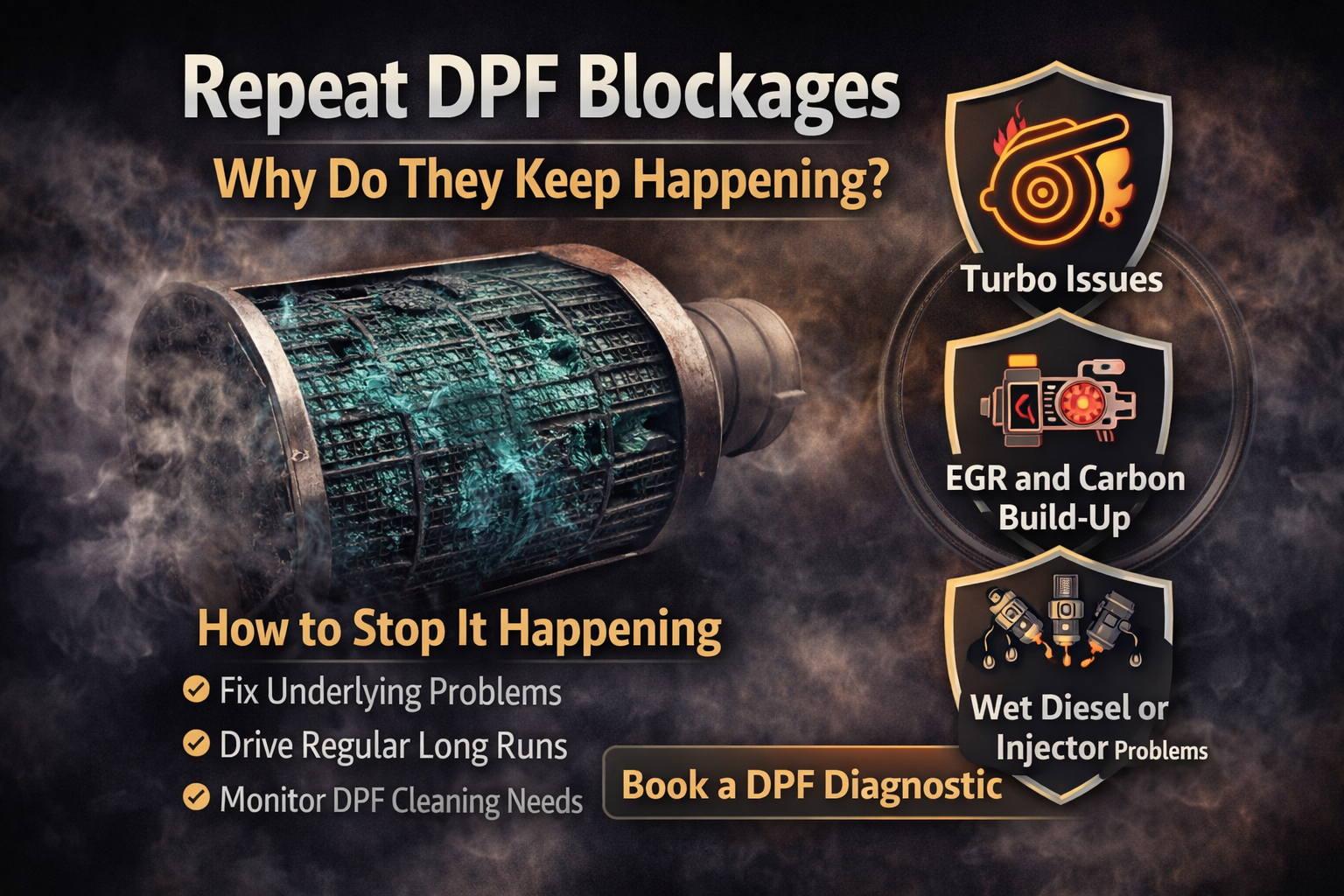

High DPF Back Pressure: What It Means and How to Fix It
High DPF back pressure is one of the clearest signs your diesel particulate filter is blocked.
You might not see it directly, but it shows up through warning lights, poor performance, or repeated regeneration failure.
The key question is not just what it means — but what stage your DPF is at and what needs to happen next.
Quick answer:
- High back pressure means exhaust flow is restricted
- This is usually caused by a blocked DPF
- Early stages may allow regeneration
- Advanced blockage requires proper cleaning
Contents
- What DPF back pressure actually is
- What high back pressure means for your engine
- Common causes of high DPF pressure
- Symptoms you will notice
- When regeneration works vs when it won’t
- How the problem is properly fixed
- What to do next in Stoke-on-Trent
What DPF back pressure actually is
Back pressure is the resistance to exhaust flow caused by restriction in the system.
In a healthy DPF, gases pass through with minimal resistance. When the filter becomes blocked, that resistance increases.
The engine control unit measures this using pressure sensors before and after the DPF.
When the readings are too high, the system recognises a problem.
If you’re unsure what warning stage you’re at, start here:
DPF warning lights explained
DPF warning lights explained
What high back pressure means for your engine
High back pressure affects how your engine runs.
Exhaust gases cannot flow properly, which leads to:
- Reduced engine efficiency
- Loss of power
- Poor fuel economy
Over time, this can impact:
- Turbo performance
- Injector operation
- Overall engine health
Related issue:
How a blocked DPF affects turbo and injectors
How a blocked DPF affects turbo and injectors
Common causes of high DPF pressure
High back pressure always has a cause.
Typical causes include:
- Soot build-up from incomplete regeneration
- Ash accumulation over time
- Frequent short journeys
- Engine faults increasing soot production
Engine faults are a major factor:
How engine faults cause DPF blocking
How engine faults cause DPF blocking
Without fixing the cause, the problem will return even after cleaning.
Symptoms you will notice
High back pressure doesn’t always show directly. It appears through symptoms.
- DPF warning light
- Limp mode activation
- Loss of power
- Repeated regeneration attempts
If you’re seeing these signs, this guide helps:
Signs your DPF needs cleaning
Signs your DPF needs cleaning
When regeneration works vs when it won’t
Regeneration can reduce back pressure in early stages.
It works when:
- The blockage is light
- The engine is functioning correctly
It fails when:
- The DPF is heavily blocked
- Ash has built up
- Faults prevent proper regeneration
If regeneration keeps failing, read this next:
Failed regeneration guide
Failed regeneration guide
How the problem is properly fixed
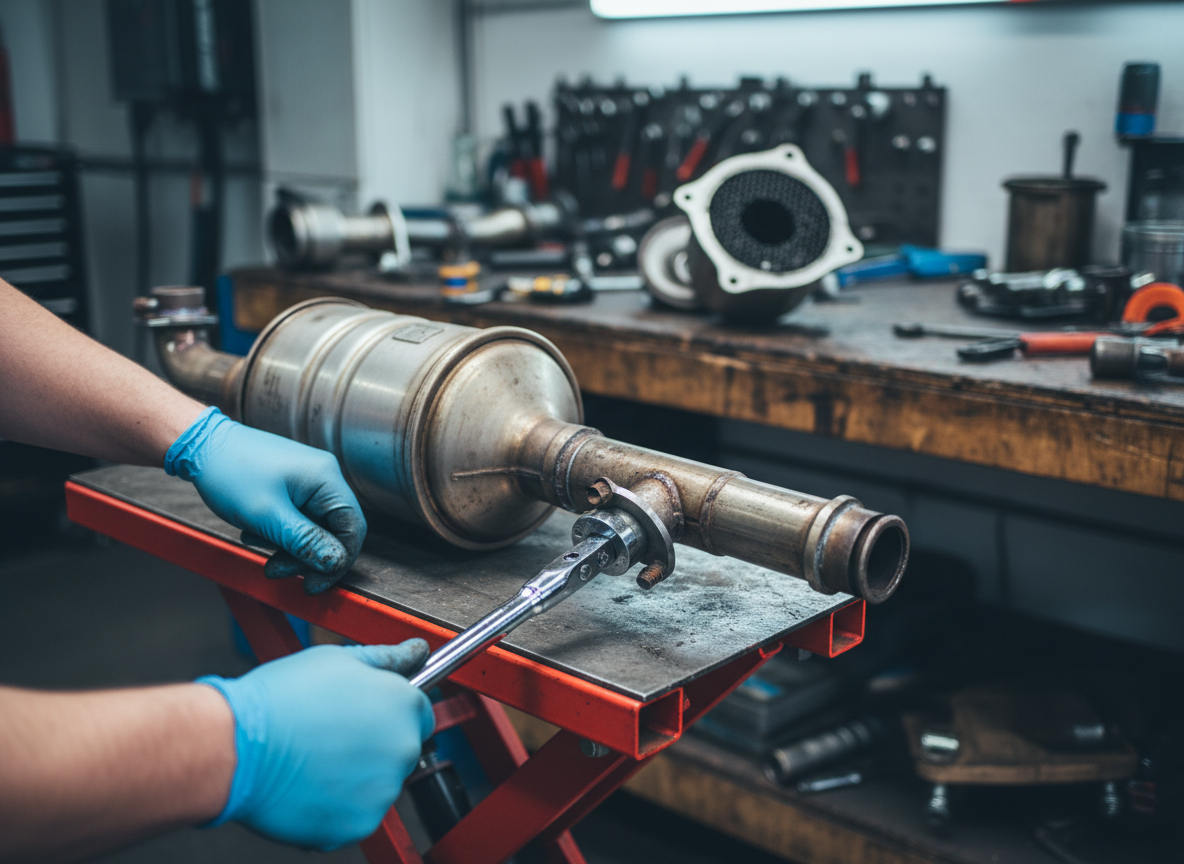
Fixing high back pressure starts with diagnosis.
The process includes:
- Reading pressure sensor data
- Checking soot and ash levels
- Identifying underlying faults
Then the correct cleaning method is chosen.
View options:
DPF cleaning services
DPF cleaning services
This may involve:
Proper cleaning restores airflow and reduces pressure to normal levels.
What to do next in Stoke-on-Trent
If you are in Hanley, Stoke-on-Trent or nearby areas, high DPF back pressure should be checked as soon as possible.
Workshop-based testing allows accurate readings and proper diagnosis, which avoids guesswork and repeat problems. :contentReference[oaicite:1]{index=1}
Postal cleaning is also available for customers outside the local area.
High DPF Back Pressure?
If your DPF is showing signs of restriction, the next step is proper diagnosis and cleaning.
Speak to the team or book in:
Contact DPF Cleaner
Contact DPF Cleaner
FAQs
What causes high DPF back pressure?
Usually soot and ash build-up restricting airflow.
Can driving fix high back pressure?
Only in early stages. Heavy blockage needs cleaning.
Is high back pressure dangerous?
Yes. It can affect engine and turbo performance.
How is it fixed?
Through proper diagnosis and the correct cleaning method.
0 Comments