Motorhomes and campervans are among the most DPF-prone vehicles on UK roads — not because of poor design, but because of how they are used. Storage periods, short trips, and low-speed touring are the perfect recipe for a blocked filter.
Most leisure vehicles spend the majority of the year unused. Then they come out for a weekend drive at 50mph down country lanes — exactly the conditions that prevent a diesel particulate filter from completing a regeneration cycle. If your motorhome DPF warning light appeared during or after a trip, this guide explains why it happens and what to do about it.
Why Motorhome DPFs Block Faster Than Car Filters
The issue is not engineering — it is usage pattern. A diesel particulate filter needs sustained heat to burn off accumulated soot, and that heat comes from extended high-load driving. A motorhome that sits for three months between trips, then does 200 miles of A-road touring at moderate speed, will struggle to maintain the conditions needed for successful regeneration.
Several factors compound this for leisure vehicles specifically:
- Larger engines in van conversions produce more soot per mile during cold starts and low-load driving
- Heavy vehicles require more throttle at low speeds, which increases soot output without raising exhaust temperatures enough for regen
- Campsite arrivals and departures involve slow manoeuvring — exactly the pattern that floods the filter with unburned particles
- Cold engines at the start of a trip produce significantly more particulate matter than a warm, stabilised engine at motorway speed
A standard passenger car on a mixed commute has more opportunities for successful regeneration than a motorhome doing 80% of its driving below 50mph on rural routes. This does not mean leisure vehicles are poorly designed — it means they require more attention to DPF health than a daily-driven diesel.
What Happens to a Diesel DPF During Storage
Leaving a diesel engine unused for weeks or months has a direct effect on the DPF — and it is not simply a matter of soot sitting unchanged in the filter. Several degradation processes occur:
Moisture Ingress
Diesel engines produce water vapour as a combustion by-product. During normal operation this burns off through the exhaust. During long storage, moisture can condense inside the filter and exhaust system. When the vehicle is restarted, this moisture mixes with residual soot and partially-converted ash to form a compacted layer that is harder to remove through normal regeneration than dry soot alone.
Fuel System Degradation
Diesel that has been sitting in injectors for extended periods can degrade slightly, leading to incomplete combustion and higher soot production on startup. Injectors with minor wear or back-leak will over-fuel, accelerating blockage on the first few trips out of storage. This is one of the most common reasons a motorhome DPF warning appears within 50 miles of coming out of winter lay-up.
EGR-Driven Contamination
EGR faults cause oily, sooty residue to build up in turbo pipes and the intake. This residue coats filter cells in a different way to dry soot particulate — it reduces airflow even at regeneration temperatures and is difficult to remove through forced regen cycles. If your motorhome has an EGR code alongside a DPF code, the EGR issue should be investigated first. Cleaning the DPF without addressing the EGR means the filter will re-block quickly.
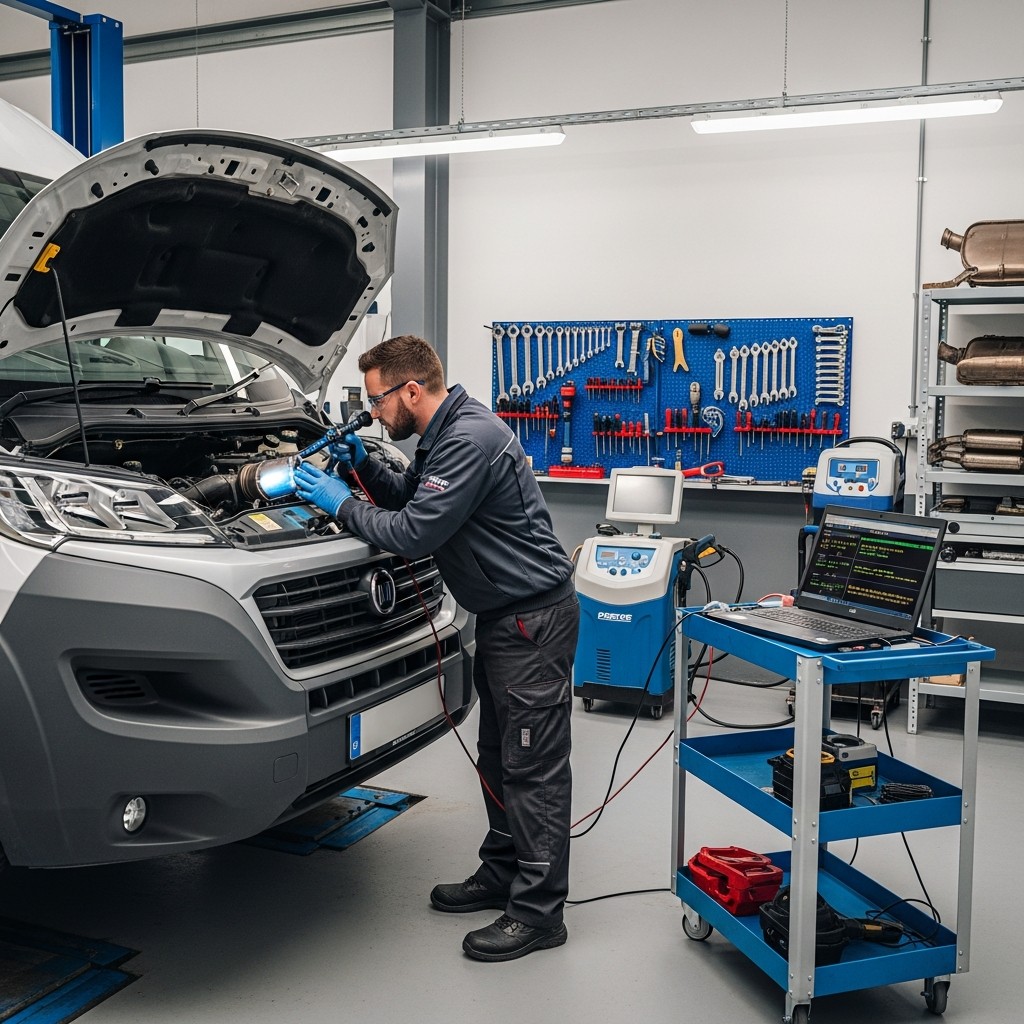
How Regeneration Works — and Why Leisure Driving Breaks It
DPF regeneration is the process by which the engine management system burns accumulated soot at high temperature, converting it to a much smaller volume of ash residue. This happens automatically when conditions allow.
Regeneration requires the exhaust to reach sustained temperatures of 500–650°C, held long enough to fully combust the soot layer. To reach those temperatures, the engine needs to be under load at a speed that generates sufficient exhaust flow — typically motorway or dual carriageway driving at 60–70mph for at least 20–30 minutes. According to motorhome specialists, a regeneration cycle triggers roughly every 300–400 miles of mixed driving under normal conditions.
Typical motorhome driving breaks this pattern:
- Short hops of 20–40 miles may not trigger a regeneration cycle at all
- If a cycle starts but the vehicle drops to low speed before completion, the cycle aborts — and the partially combusted soot can bond into a harder deposit that resists the next attempt
- Repeated failed regenerations increase backpressure through the filter, which the ECU reads as progressive blockage
- Eventually the system stops attempting passive regen and the DPF warning light appears
Fiat Ducato DPF: Pressure Readings and Common Faults
The Fiat Ducato — and its Citroën Relay and Peugeot Boxer siblings — is the base vehicle for a large proportion of UK motorhome and panel van conversions. Its 2.3 MultiJet engine is generally reliable but has well-documented DPF sensitivities related to the usage patterns described above.
DPF pressure readings give a useful diagnostic baseline for Ducato owners:
| Idle Pressure Reading | Status | Recommended Action |
|---|---|---|
| 8–15 mbar | Normal | No action required |
| 20–40 mbar | Elevated — fault developing | Plan a clean; monitor closely |
| 40+ mbar | Significant blockage | Book specialist inspection before any forced regen |
These figures apply to a well-serviced 2.3L Ducato at warm idle. EGR and injector issues frequently accompany DPF problems on these engines. An injector with excessive back-leak may not cause obvious drivability symptoms but will significantly shorten the DPF service interval — and a blocked EGR continuously feeds dirty exhaust back into the intake, adding to the filter load on every journey.
What DPF Blockage Percentages Actually Mean
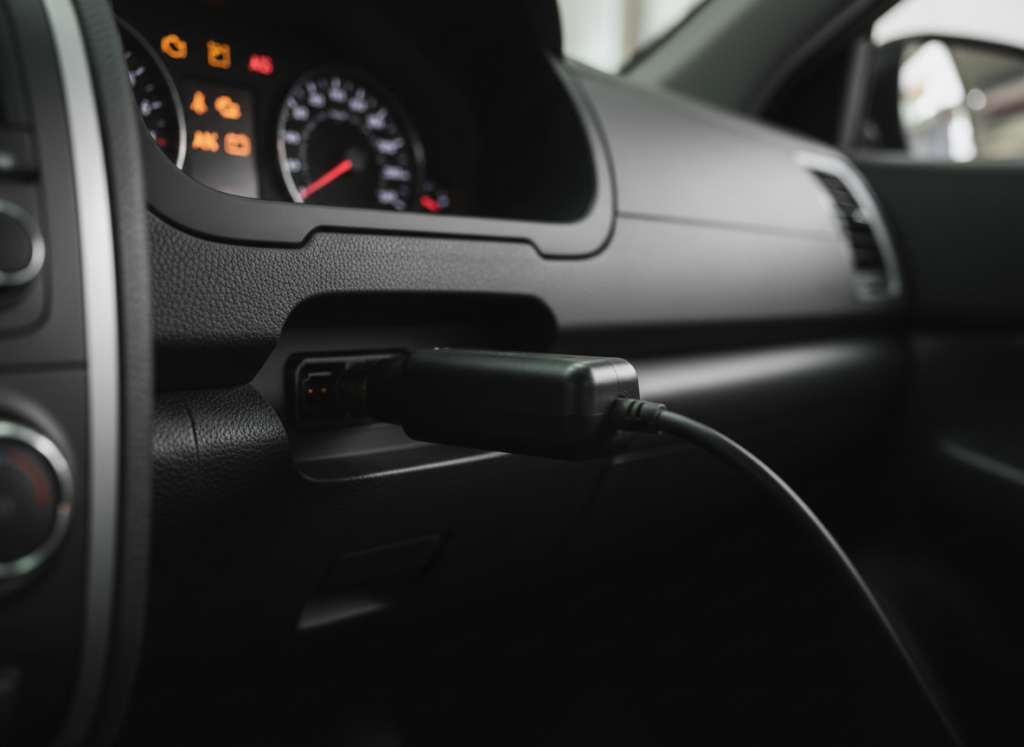
Diagnostic tools often express DPF loading as a percentage, and the numbers can look alarming before you understand the scale. A loading of 60–90% is considered normal variation across a service interval. Only above 130% does a filter move into genuinely problematic territory. Even a reading of 200% does not mean the filter is destroyed — it means it requires professional cleaning to restore flow.
A blocked filter that has not been subjected to repeated failed forced regenerations at excessive temperatures is almost always recoverable. What shortens a DPF’s life is not blockage itself but the response to it: repeatedly attempting forced regen on a severely blocked filter, or driving aggressively to “burn off” the soot through sheer engine load, can damage the ceramic substrate. A filter that might have been cleanable at £200–350 becomes a replacement job at £1,500–3,000+.
The better approach — particularly for motorhome owners who may not have easy access to a specialist — is to arrange professional DPF cleaning at the first sign of a persistent warning light. For a broader look at how diesel van and panel vehicle DPF problems develop, our guide on diesel van DPF problems covers the same root causes in a commercial driving context.
Cleaning Options for Motorhome Owners
Location is often a practical barrier. Many leisure vehicles are stored away from urban centres, and driving one with a warning light across the country is not always practical — especially if the vehicle is already showing reduced performance.
Workshop Clean — Stoke-on-Trent
Where the motorhome can be driven to our workshop at Unit 2, 2 Cutts Street, Hanley, we carry out on-car or off-car DPF cleaning. Flow rates are tested before and after the clean so you can see exactly what was achieved. Most cleans are completed within a few hours.
UK-Wide Postal DPF Cleaning
For owners who cannot bring the vehicle to us, our postal DPF cleaning service allows you to remove the filter, send it via courier, and have it cleaned and returned — typically within 2–3 working days. This suits owners who can remove the filter themselves or who have a local mechanic to help. For a full explanation of the process, our postal cleaning guide covers every step.
How to Extend DPF Life Between Cleans
Ash accumulation — the residue of completed regenerations — cannot be prevented and cannot be burned away; it requires physical cleaning over time. But soot blockage caused by failed regeneration is largely preventable:
- Take a sustained motorway run before and after storage. A 30-minute run at 60–70mph gives the engine management system the conditions it needs to complete a regeneration cycle. Do this before winter lay-up and again on the first outing of the season.
- Let the engine reach full operating temperature before low-speed driving. Cold-start driving is the highest soot-production phase of any journey. A few minutes of gentle driving before arriving at a campsite makes a measurable difference across a season.
- Address EGR and injector faults promptly. These are the two most common causes of accelerated loading on motorhome base engines. An injector with minor back-leak may not cause noticeable drivability problems but will cut the DPF service interval in half.
- Use good quality diesel. On longer trips where regeneration matters, name-brand fuel from a major supplier is worth choosing over supermarket diesel.
DC
DPF Cleaner — Technical Team
Published 15 October 2026 · Unit 2, 2 Cutts Street, Hanley, Stoke-on-Trent ST1 4LX
Motorhome DPF Warning Light? We Can Help.
We clean DPF filters for Fiat Ducato, Citroën Relay, Peugeot Boxer and all major van conversion base vehicles from our Stoke-on-Trent workshop. UK-wide postal cleaning is also available — send your filter and we return it cleaned within 2–3 working days.
Helpful Next Reads
Frequently Asked Questions
Why does my motorhome DPF keep blocking even after a clean?
Recurring blockage after a clean usually means an underlying fault — most commonly injector back-leak or over-fuelling, EGR problems, or driving conditions that prevent regeneration from completing. A diagnostic scan identifies related faults that should be addressed at the same time as the clean.
Can a DPF additive clean my motorhome filter?
Fuel additives marketed as DPF cleaners lower the ignition temperature of soot slightly and may help at early-stage blockage. They cannot remove ash and will not resolve a significantly blocked filter. If the DPF warning light is on, an additive alone is unlikely to clear it.
How long does a Fiat Ducato DPF last before needing a clean?
Under typical motorhome usage — short trips, storage periods, and low-speed touring — a Ducato DPF may require cleaning every 50,000–80,000 miles. With regular motorway use, some filters go 120,000+ miles. Usage pattern is the dominant factor, not just mileage.
Is it safe to drive with the motorhome DPF light on?
A single DPF warning light without limp mode means the filter is approaching capacity — you can continue driving but should not ignore it. If the vehicle enters limp mode or shows multiple warning lights, stop and arrange recovery rather than driving further.
Do you clean DPF filters from all motorhome base vehicles?
Yes. We work on Fiat Ducato, Citroën Relay, Peugeot Boxer, Ford Transit, Mercedes Sprinter, Volkswagen Crafter, and other commercial van bases used in motorhome and campervan conversions. Postal cleaning is available UK-wide.