
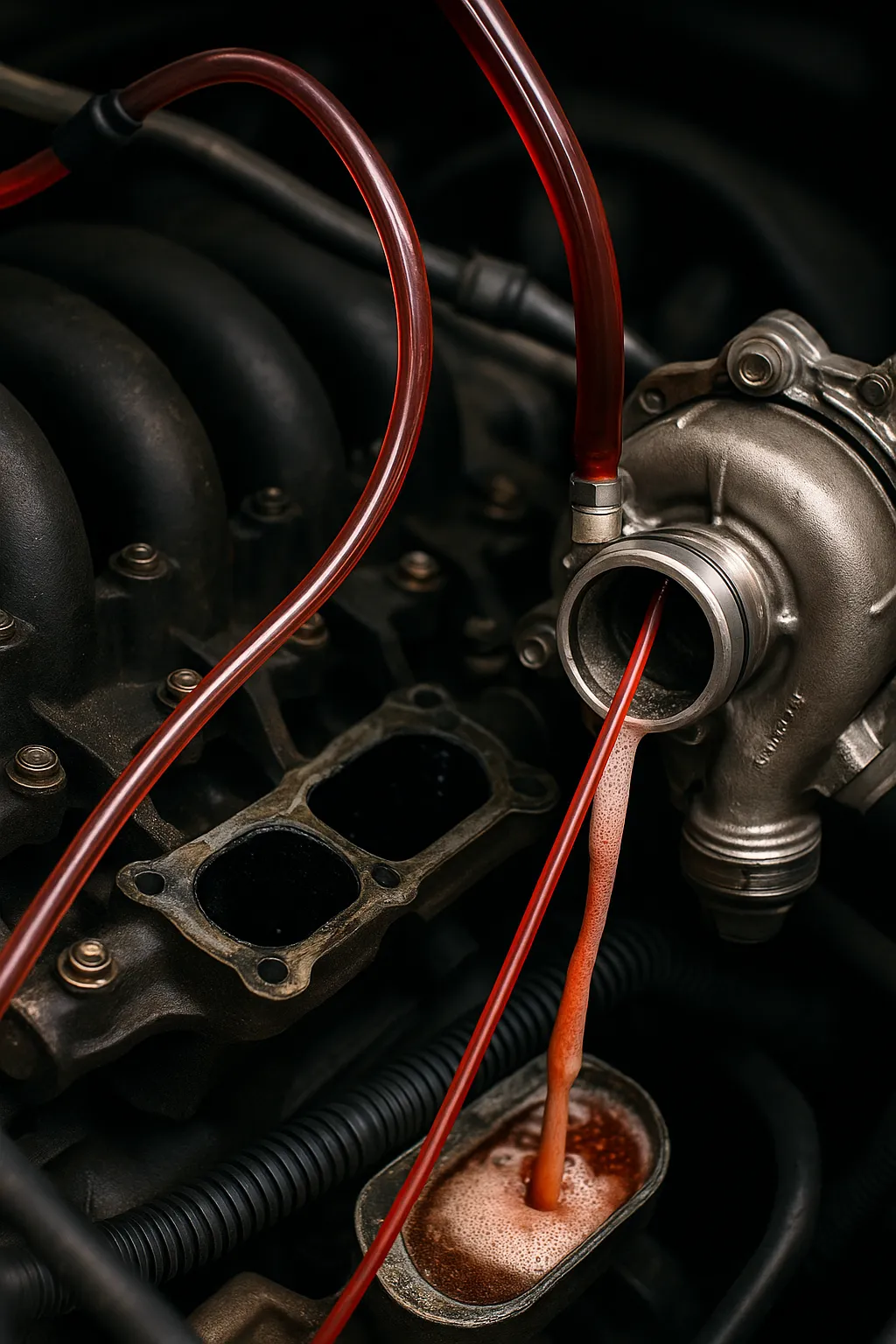

Why Forced Regeneration Often Fails on Modern Diesels
A forced regeneration sounds like a quick fix.
Plug in a diagnostic tool, start a regen, clear the light, job done.
Real life is not that clean.
Modern ECUs cancel regens for safety, emissions logic, and engine protection.
This guide explains the common reasons a forced regen fails, what it means for your DPF, and when cleaning is the safer next step.
Garage-based service only.
Unit 2, 2 Cutts Street, Wood Terrace, Hanley, ST1 4LX.
Postal DPF cleaning available UK-wide.
If your garage told you “the forced regen failed”, you are not alone.
We see it all the time.
The car wants to protect itself.
The diagnostic tool wants to run a process.
The ECU has the final say.
A forced regen can still work on some vehicles in the right conditions.
It fails when the DPF is too far gone, the engine conditions are wrong, or the ECU sees risks it will not accept.
The key is knowing what failed and why, before you pay for repeat attempts.
Quick answer
- Modern ECUs cancel regens when conditions are not safe or not stable.
- High soot load, high differential pressure, or high exhaust temperatures can stop the process.
- Engine faults (EGR, boost, injectors, sensors) often block regens even when the DPF is the part showing the warning.
- A forced regen does not remove ash, so it cannot solve high-ash DPFs.
- If a forced regen fails once, cleaning is often the safer route than repeat attempts.
If you want the step-by-step “what to do next” path, start here:
DPF regeneration failed: what to do next.
What a forced regeneration actually does
A normal regen happens when the car decides conditions are right.
A forced regen uses a diagnostic tool to request the process.
The ECU still checks safety limits before it agrees.
During regen, the car raises exhaust temperature to burn soot inside the DPF.
It does not “wash” the filter.
It does not remove ash.
If the DPF is packed with ash or contaminated with oil, a regen can run and still leave the DPF restricted.
Good for
Moderate soot loading when the engine is healthy and conditions are stable.
Think “early warning light” rather than limp mode.
Not good for
Very high soot load, repeated failed regens, heavy ash load, oil contamination, or a damaged DPF core.
A common mistake
Treating a forced regen as the main fix.
It can be a step.
It is not a cure when the root cause remains.
Want the plain language view of what regen is and why it stops?
Read:
DPF warning lights explained.
The real reasons forced regens fail on modern diesels
A forced regen usually fails for one of these reasons.
Sometimes it is one issue.
Often it is a stack of issues.
That is why the second attempt fails too.
1) The soot load is too high
Once the DPF reaches a certain soot level, the ECU stops playing games.
The risk of excessive heat rises.
The car can refuse the regen or stop it early.
2) Differential pressure is too high
The ECU watches pressure across the DPF.
If it is too restricted, the regen can become unsafe.
The ECU cancels to protect the turbo and exhaust.
3) Engine faults block regeneration
The car needs stable air, fuel, boost, and temperatures to regen.
EGR issues, boost leaks, injector problems, glow plug faults, or sensor faults can stop the process.
Fixing the DPF without fixing the engine fault often leads to repeat blocking.
4) Temperatures go out of range
Regeneration needs high exhaust temperature, but within safe limits.
If temperatures rise too fast or sit too high, the ECU stops the regen.
It would rather cancel than damage the DPF core.
5) Driving pattern keeps interrupting it
Many blockages start with short trips and town driving.
If the car never gets the right run time and temperature, regens keep failing.
A forced regen in the workshop can still fail if the underlying pattern stays the same.
6) Ash load is the real limit
Ash does not burn off.
A forced regen can burn soot and still leave the DPF restricted because ash has reduced the filter’s capacity.
Off-car cleaning is often the better route in ash-heavy cases.
This guide covers the engine-side causes that keep coming back:
how engine faults can cause DPF re-blocking.
Common myths that lead to repeat failed regens
“A motorway run will always fix it”
It can help early on.
If the car already cancelled regens, you often need cleaning and fault checks, not a longer drive.
“A forced regen cleans the DPF”
It burns soot.
It does not remove ash.
It does not fix oil contamination.
It does not solve the fault that made the DPF block.
“Additives are the same as cleaning”
Additives can support a mild case.
They do not restore a heavily restricted filter.
They do not remove ash.
For a straight myth-busting read, use:
DPF regeneration myths and truths.
What to do after a forced regen fails
If the regen failed, do not keep paying for the same attempt.
You need a better next step based on what the car is showing.
Use this as a simple guide.
| What you are seeing | What it usually means | Best next step |
|---|---|---|
| DPF light on, drives normally | Early restriction, regen conditions not met | Check driving pattern, act early, avoid limp mode |
| Forced regen fails with fault codes present | ECU refuses due to engine-side faults or unsafe values | Fix faults first, then clean the DPF if needed |
| Limp mode keeps returning | High restriction, high pressure, high soot load | Book a proper clean before further strain builds |
| DPF blocks again soon after a regen | Underlying cause still present or ash load is high | Find the cause, not just the symptom |
If you are in a repeat cycle, start here:
why a DPF keeps blocking after a clean.
When cleaning is the safer fix than trying another regen
You do not want to keep forcing heat through a restricted DPF.
You want to restore flow.
Cleaning does that without relying on the ECU accepting another regen attempt.
Cleaning becomes the better option when
- The car has already cancelled multiple regen attempts.
- You are seeing limp mode or serious power loss.
- Differential pressure readings stay high.
- You suspect high ash load (older or high mileage vehicles).
- You want a proof-led outcome with flow checks.
Want to see how we prove improvement?
Read:
how we test DPF flow before and after cleaning.
Cleaning options we offer (garage only, plus postal)
We carry out all work in our garage.
We do not offer mobile visits.
If you are not local, you can use postal cleaning once the DPF is removed.
On-car DPF clean (garage)
A good fit for soot blockage when the DPF is still healthy.
Ideal when you want a clean, quick route back to normal driving.
On-car DPF cleaning is £200.
Prices can vary depending on the vehicle and condition.
Call for a proper quote.
Off-car DPF cleaning
Best when restriction is severe or ash load is high.
The DPF comes off the vehicle for a deeper refurbishment clean.
Postal DPF cleaning (UK-wide)
Your garage removes the DPF and posts it to us.
We clean it, test flow, and return it ready to refit.
Want a quick comparison of methods?
Read:
on-car vs off-car DPF cleaning.
If the forced regen failed, stop chasing the same reset
Tell us what warnings you have, what the garage tried, and how you use the car day to day.
We will help you choose the right next step and book you in at our Hanley garage.
If you are further away, use postal cleaning once the DPF is removed.
All services are carried out in our garage.
No mobile visits.
Postal option available.
Helpful next reads
Step-by-step: how we clean your DPF
What the process looks like in the real world and what you get back.
Why you should not ignore the DPF warning light
What tends to happen next and why costs climb.
DPF cleaning and regeneration
The main service page with booking options.
0 Comments