
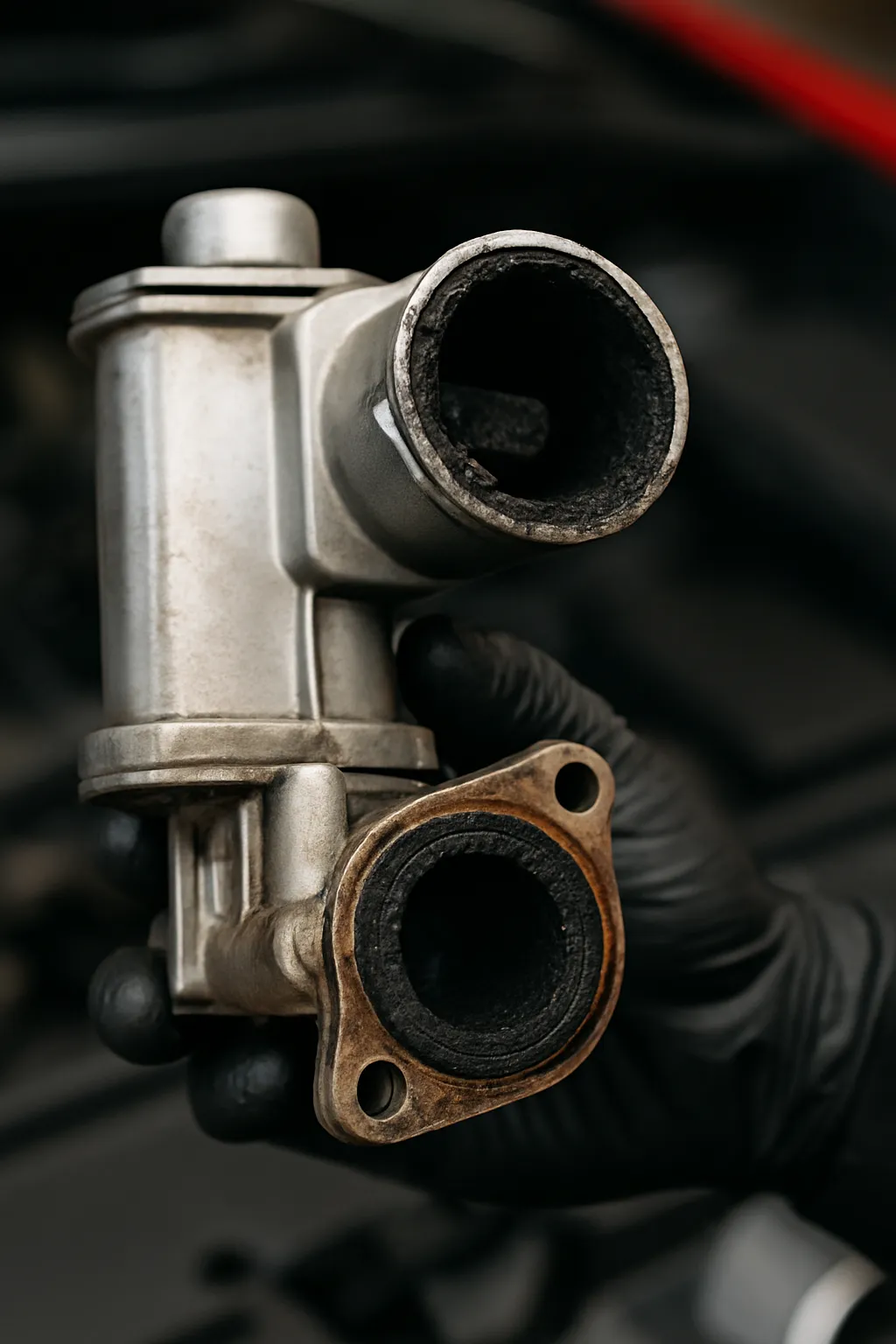

DPF Cleaning for Short Journey Drivers: Why Town Use Blocks Filters Faster
If your diesel mostly does short trips and town driving, your DPF faces the hardest life.
The car rarely reaches the heat it needs to clean itself.
Soot builds in small layers until the warning light becomes your new normal.
This guide explains what is happening, what you can do right now, and when cleaning makes more sense than chasing regens.
Garage-based service only.
Unit 2, 2 Cutts Street, Wood Terrace, Hanley, ST1 4LX.
Postal DPF cleaning available UK-wide.
Short journeys feel harmless.
You start the car, nip to the shops, then switch off.
The problem is what the engine and exhaust did not get time to do.
Your DPF needs sustained heat to burn soot.
Town use rarely gives it that heat for long enough.
That is why short journey drivers often see repeat DPF warnings, failed regenerations, and rising fuel use.
Quick answer
- Short trips stop your DPF completing regeneration.
- Stop start driving keeps exhaust temperatures too low for long periods.
- Repeated failed regens build soot fast and raise back pressure.
- Motorway runs sometimes help, but they stop working once soot load is high.
- Cleaning works best when you act early, before limp mode becomes frequent.
If your DPF warning light is already on, start here:
how to respond to a DPF warning light.
Why short journeys block DPFs faster
A DPF traps soot.
The car then burns that soot during regeneration.
For regeneration to complete, the exhaust needs to stay hot while you keep driving.
With short trips, you usually switch off during the warm-up phase.
The exhaust never stays hot for long.
The regen either never starts, or it starts and stops.
Each stop leaves more soot behind.
Cold starts create more soot
A cold engine does not burn fuel as cleanly.
More soot goes into the exhaust.
That soot heads straight for the DPF.
Town speeds keep temps low
Low revs and gentle throttle keep exhaust temperature down.
Idling makes it worse.
The car cannot maintain the heat regen needs.
Regens get interrupted
Even when the ECU requests a regen, you might arrive and switch off.
That stops the burn.
The next trip starts from a worse point.
Back pressure climbs
More soot means less flow.
Less flow means higher pressure across the DPF.
The car reacts by limiting power or logging faults.
If you want the next step after repeated failed regens, read:
DPF regeneration failed: what to do next.
What regeneration needs, and why town driving rarely gives it
Regeneration is not magic.
It is a controlled burn.
The car needs stable conditions to run it through.
In plain terms, the car wants:
steady speed, steady load, and enough time.
Town driving gives you: traffic lights, roundabouts, queues, and short shut-downs.
That is why the same car can behave fine on motorway commutes and struggle on school runs.
A simple example
You drive 2 miles to work, then 2 miles home.
The car never gets a proper hot run.
The DPF loads a bit more each day.
After a few weeks, the car attempts more frequent regens.
You still switch off.
The DPF light appears.
Then it comes back again, sooner each time.
You can also read our breakdown of warning lights here:
DPF warning lights explained.
Early signs short journey drivers often miss
Most drivers wait for a dashboard warning.
By that point, the DPF has already loaded up.
These are the quieter signs you can spot earlier.
Cooling fan runs after you switch off
The car may have been trying to manage heat from a regen attempt.
If it happens often after short trips, pay attention.
Fuel economy drops
Failed regen behaviour can increase fuel use.
Short journeys already reduce MPG, so the extra drop can be easy to miss.
Slightly higher idle
Some cars raise idle during regen attempts.
If you notice it at random, it may not be random.
The car feels flat
Rising back pressure can reduce pull and response.
You may not get limp mode yet, but you will feel the change.
For a wider checklist, use:
signs your DPF needs cleaning.
Why quick fixes often disappoint short journey drivers
If your DPF keeps loading because your driving pattern keeps interrupting regens, a bottle in the tank will not change the pattern.
At best, it buys time.
At worst, it delays the moment you deal with the real cause.
Additives do not remove ash.
They do not fix faulty sensors.
They do not fix poor combustion from an engine issue.
If you are weighing it up, read:
do DPF cleaning additives work?
Ask yourself this
If you cannot change your driving routine, what will keep the DPF healthy over the next 6 months.
More attempted regens, or a clean that restores flow and lets the system work again.
When DPF cleaning makes sense for short trip driving
Cleaning is not a last resort.
For town-driven vehicles, it is often the sensible maintenance move.
The earlier you act, the more straightforward it tends to be.
On-car DPF clean at our garage
A strong fit when the filter is loaded with soot and the unit is still in good condition.
We carry out the work at our Hanley garage.
On-car DPF cleaning is £200.
Prices can vary if your vehicle needs a different approach.
Call or message for a proper quote based on your vehicle and symptoms.
Off-car DPF cleaning
If soot load is high, ash load is heavy, or the filter needs a deeper refurbishment, off-car cleaning can be the better choice.
Your DPF is removed and cleaned properly.
Postal DPF cleaning UK-wide
If you are not local, your garage can remove the DPF and post it to us.
We clean it, check flow, then send it back ready to refit.
Want a straight comparison of methods.
Read:
on-car vs off-car DPF cleaning.
What you can do if you cannot avoid short journeys
Many people cannot change their routine.
If your car must do short trips, you can still reduce how fast the DPF loads.
Think in weeks, not in one single drive.
- Once a week, give the car a steady 20 to 30 minute run if you can.
- Do not switch off if you notice higher idle or fans running at the end of a drive.
- Keep servicing up to date, poor maintenance increases soot output.
- Act early when the warning light appears, do not wait for limp mode.
- If the car keeps failing regens, book cleaning rather than repeating the same cycle.
If you are caught in repeat problems after repairs, read:
DPF keeps blocking after repairs.
Short journey DPF FAQs
How short is a “short journey” for a DPF?
If you often drive under 10 to 15 minutes from cold, you are in short journey territory.
The engine and exhaust usually do not reach stable operating temperature for long enough.
Will a motorway run fix it?
Sometimes, if the soot level is still low and the car can complete a regen.
If your regens keep failing or the light returns quickly, cleaning usually makes more sense than repeating motorway runs.
Why does the DPF light keep coming back?
Most often, the driving pattern keeps interrupting regens.
It can also be linked to an underlying engine fault that increases soot output.
This guide helps:
how engine faults can cause DPF re-blocking.
How long does DPF cleaning take?
It depends on the vehicle and the condition of the filter.
This page explains what affects time:
how long does DPF cleaning take.
More answers are here:
DPF Cleaner FAQs.
If town driving is your normal, plan for cleaning before it becomes a breakdown
Book in at our Hanley garage, or use our postal service if you are further away.
Tell us your vehicle, your mileage, and what lights you are seeing.
We will point you to the right option.
All services are carried out in our garage.
No mobile visits.
Postal option available.
Helpful next reads
DPF cleaning and regeneration
The main service page.
Learn what we do and how to book in.
DPF cleaning cost guide
A clear guide to typical UK pricing and what changes the cost.
How we test DPF flow
See how we check flow before and after cleaning so you get proof of improvement.
0 Comments