
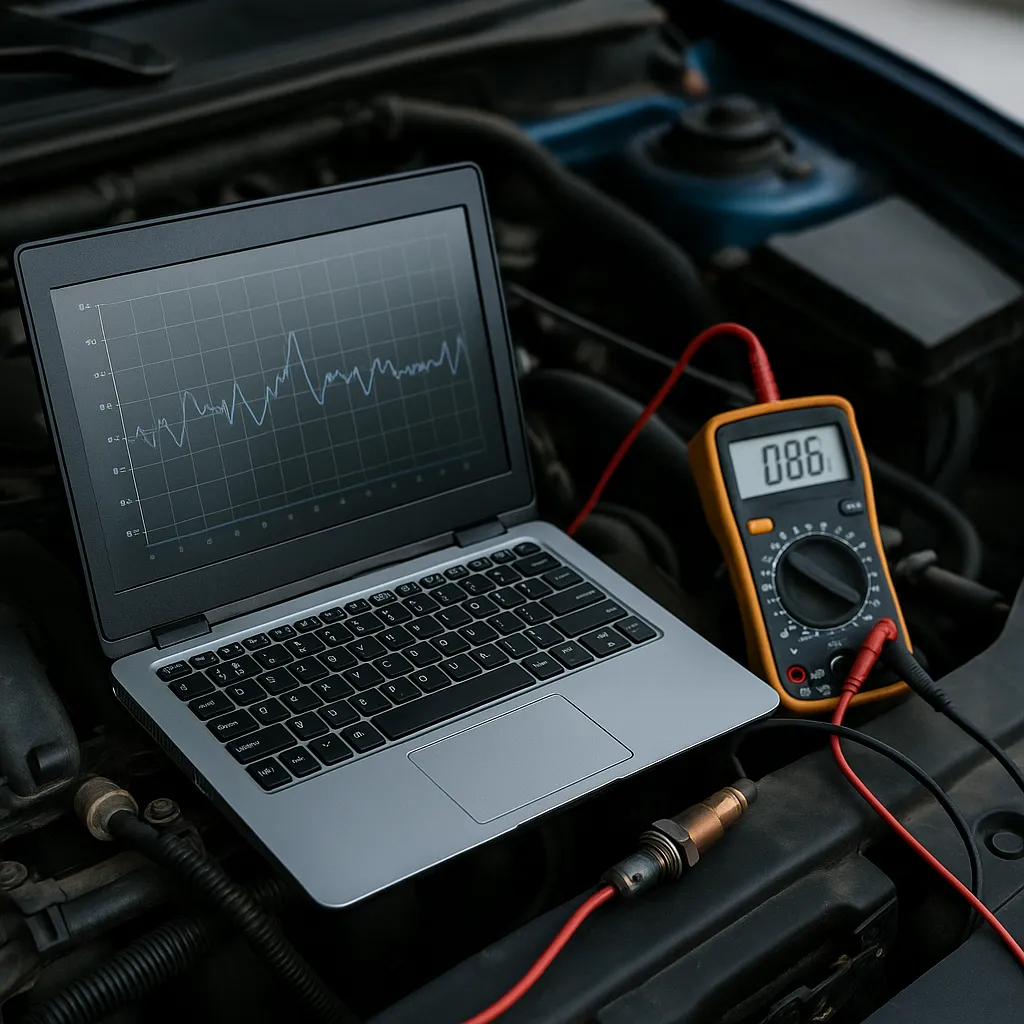

DPF Pressure Sensor Fault: Symptoms, Causes & Fix Guide
A DPF pressure sensor fault can look like a blocked DPF, even when the filter is not the main issue.
You may see repeat warnings, failed regenerations, limp mode, or power loss.
This guide explains what the sensor does, the signs it is lying to the ECU, and what to check next.
Garage-based service only.
Unit 2, 2 Cutts Street, Wood Terrace, Hanley, ST1 4LX.
Postal DPF cleaning available UK-wide.
If your car says the DPF is full, you want a clear answer fast.
A pressure sensor fault can trigger the same messages as a genuine restriction.
The difference matters because the wrong fix wastes money and the warning returns.
The sensor measures exhaust back pressure across the DPF.
The ECU uses that data to decide when to regenerate, how hard to work the turbo, and when to protect the engine.
If the reading is wrong, everything downstream can go wrong too.
Quick answer
- A DPF pressure sensor fault can cause false “DPF full” warnings, failed regen messages, and limp mode.
- Common causes include split pressure hoses, blocked sensor ports, wiring issues, and contaminated sensor internals.
- Do not keep forcing regens if pressure readings look unrealistic. Find the cause first.
- If the DPF is genuinely restricted, cleaning restores flow. If the sensor is wrong, cleaning alone may not stop the warning returning.
On this page
If you need the wider context around warnings, start here:
DPF warning lights explained
What the DPF pressure sensor does
Most cars use a differential pressure sensor connected to the exhaust by two small hoses.
One hose reads pressure before the DPF. The other reads pressure after it.
The sensor reports the difference, which is a proxy for restriction.
Low pressure difference
Exhaust flows freely.
The DPF may still hold soot, but it is not restricting much.
The ECU usually allows normal driving and schedules regen based on conditions.
Rising pressure difference
Restriction increases as soot builds.
The ECU may trigger active regeneration more often.
You may notice fan running, higher idle, or fuel use changes during regen.
High or erratic readings
This can be real restriction, or a sensor system fault.
Split hoses and blocked ports often cause spikes or implausible values.
The ECU may cancel regen, log fault codes, and reduce power.
Why pressure data matters so much
- The ECU uses pressure to decide if it is safe to regenerate.
- Bad readings can stop regeneration from completing.
- Bad readings can also mask engine faults that create excess soot.
If you keep getting regen issues, read this next:
DPF regeneration failed: what to do next
Symptoms of a DPF pressure sensor fault
A sensor fault does not always feel like a blocked exhaust.
Sometimes the car drives “almost normal” but the warnings keep returning.
Look for patterns like these.
DPF light keeps returning after a motorway run
If a proper drive should allow regeneration but the light returns quickly, pressure readings may be wrong.
The ECU may think the DPF is still restricted, even if soot is lower.
Failed regeneration messages
The ECU cancels regen if it sees implausible pressure changes.
That can happen with split hoses, blocked sensor ports, or a tired sensor.
Limp mode with no obvious smoke
A genuine restriction often brings smoke, heat, or clear power loss under load.
A sensor fault can trigger limp mode without those obvious signs.
Intermittent fault codes
Wiring issues and moisture in connectors can cause faults that come and go.
The car may behave differently in wet weather or after washing.
If you are seeing repeat blocking themes, this guide helps connect the dots:
how engine faults can cause DPF re-blocking
Common causes (and what they look like)
Pressure sensor faults usually sit in one of these buckets.
Some are cheap fixes. Others need proper diagnosis so you do not keep chasing the warning.
| Cause | What you might notice | Typical next step |
|---|---|---|
| Split or perished pressure hoses | Intermittent warnings, odd readings, sometimes worse under load | Inspect hoses for splits, poor fitment, heat damage |
| Blocked sensor ports or hoses | Readings stuck high or slow to change, regen cancels | Remove and check hoses and ports for soot build-up |
| Sensor drifting or failing internally | Values look “possible” but do not match how the car drives | Live data checks and plausibility testing |
| Wiring or connector issues | Fault appears after rain, after heat soak, or randomly | Check plug, pins, corrosion, loom rub points |
| Genuine DPF restriction | Consistent power loss, regen frequency increases, back pressure stays high | Flow testing and cleaning based on condition |
If you want to understand how we confirm restriction, read:
how we test DPF flow before and after cleaning
Checks you can do before you book in
You do not need to guess.
A few basic checks can tell you if this looks like a sensor system issue or genuine restriction.
Do these safely and avoid burning yourself on the exhaust.
1) Visual check of pressure hoses
Find the two small hoses running to the pressure sensor.
Look for splits, loose ends, melted sections, or oil contamination.
A tiny split can create false readings.
2) Check for obvious exhaust leaks
Leaks before the DPF can change pressure behaviour and confuse readings.
Soot marks around joints can be a clue.
If the exhaust blows, sort that first.
3) Read fault codes and freeze-frame data
If you have a scan tool, note the code and the conditions it logged.
Was it at idle, cruising, or under load?
Patterns matter more than one code screenshot.
4) Watch live data for plausibility
Even cheap tools can show basic pressure values on some cars.
At idle, pressure should not look like full throttle load.
During a light rev, the value should change smoothly, not jump.
A simple question you can ask yourself
- Does the car feel restricted all the time, or does the warning feel random?
- Does the problem change with weather, bumps, or heat soak?
- Did the issue start after any exhaust work or sensor replacement?
If you are not sure, the safest route is to stop forcing regens and get it checked.
Fix options and when cleaning still matters
The “right” fix depends on whether the DPF is genuinely restricted or the readings are wrong.
In a lot of real cases, you can have both issues at the same time.
Fix the sensor system
Replace split hoses, clean ports, and repair wiring faults.
This restores correct readings and lets the ECU manage regeneration properly.
It can also stop unnecessary limp mode triggers.
Clean the DPF if restriction is real
If back pressure stays high and flow is poor, cleaning restores breathing room.
The aim is to reduce restriction and get the car back into a normal regen cycle.
Fix what is creating excess soot
A tired EGR system, boost leaks, injector issues, or sensor faults can keep soot high.
If you do not fix the cause, the DPF will block again.
Service options you can book:
On-car DPF clean (garage)
Off-car DPF cleaning
Postal DPF cleaning (UK-wide)
If you are weighing service types, read:
on-car vs off-car DPF cleaning
When you should stop driving
A pressure sensor fault can cause false alarms.
But if the DPF is truly restricted, driving on can push temperatures up and stress the turbo.
Use these practical triggers.
Stop and get help if you have limp mode
Limp mode usually means the ECU is protecting the engine or emissions system.
Continuing can create extra faults and higher repair bills.
Stop if the car will not complete regeneration
Repeated failed regen attempts add heat and fuel use without solving the restriction.
Get the cause checked rather than repeating drives.
Stop if you get strong burning smells or extreme fan running
Those can happen during regeneration, but if it feels abnormal or constant, do not ignore it.
A proper check beats guessing.
If you have already seen “regen failed”, this is your next read:
DPF regeneration failed: what to do next
Get a clear answer, not another warning light
Tell us what you are seeing and what the car is doing on the road.
We can help you work out if it looks like a sensor fault, a genuine restriction, or both.
Book in at our Hanley garage, or use our postal option if your DPF is removed off-site.
All services are carried out in our garage.
No mobile visits.
Postal option available.
Helpful next reads
DPF warning lights explained
Learn what each warning usually means and what to do first.
How we test DPF flow
How we check flow before and after cleaning so you can see the result.
Regen failed: what to do next
Practical steps when regeneration fails and warnings keep returning.
On-car DPF clean service
Our garage-based on-car clean option for soot restriction cases.
FAQs
Can a pressure sensor fault cause a DPF warning light?
Yes. If the sensor reports high back pressure, the ECU can flag a DPF warning even if the filter is not the main issue.
Split hoses and blocked ports cause this a lot.
Will a motorway run fix a pressure sensor fault?
No. A motorway run may help soot burn off if the car can regenerate, but it will not fix a split hose, wiring issue, or a failing sensor.
You often end up with the same warning again.
Does cleaning the DPF fix a pressure sensor fault?
Cleaning helps if the DPF is genuinely restricted.
If the sensor system is faulty, cleaning alone may not stop the warning returning because the ECU still sees the wrong pressure.
What causes the pressure sensor hoses to split?
Heat, age, poor routing, and vibration.
Oil contamination can weaken rubber too.
Even a small split can make readings unreliable.
Should I keep driving if the car goes into limp mode?
If limp mode starts, you should stop pushing it.
Limp mode usually means the ECU is protecting the engine.
Get the cause checked so you do not add turbo or exhaust stress.
More answers here:
DPF Cleaner FAQs
0 Comments