
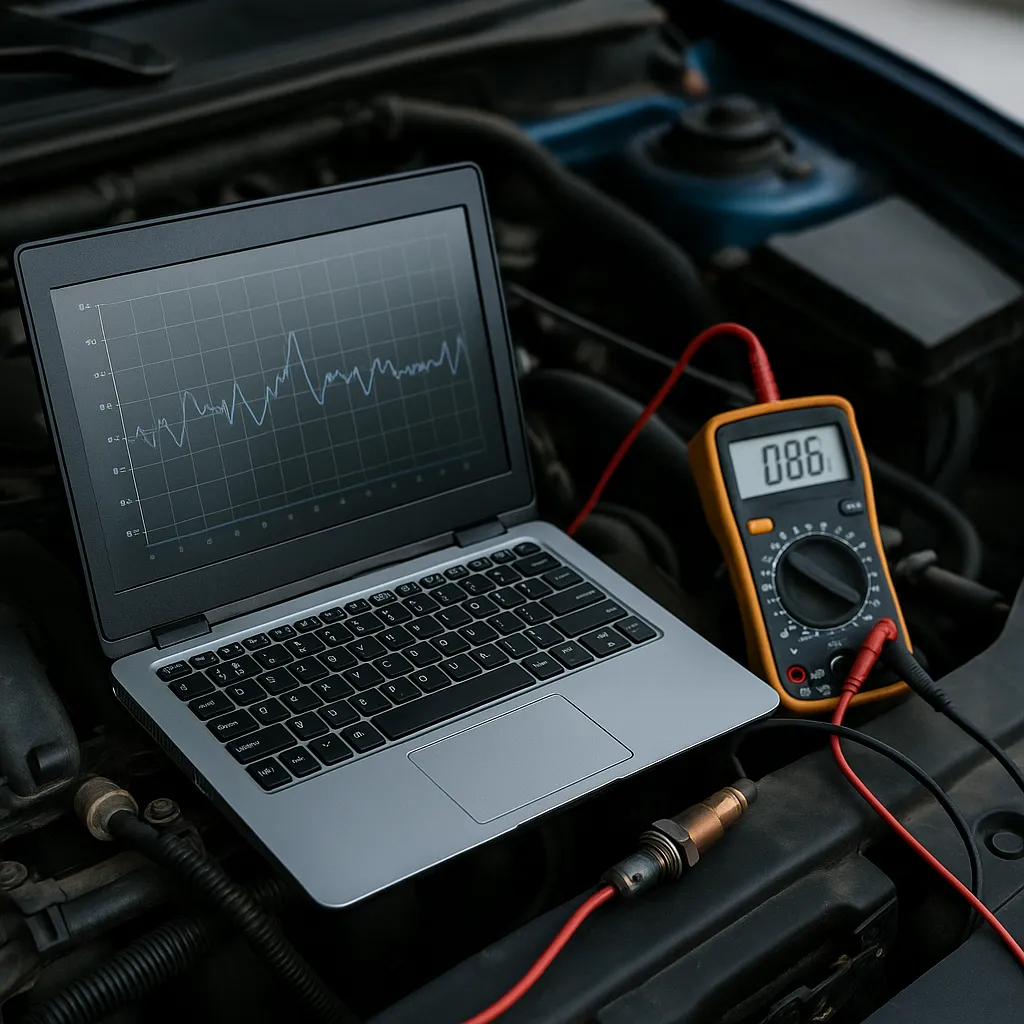

DPF warning light on, failed regeneration message, or limp mode that keeps coming back?
The filter may not be the real problem.
This guide explains the most common DPF pressure sensor symptoms, what the sensor actually does, and why cleaning sometimes will not solve the fault.
DPF Cleaner
Unit 2, 2 Cutts Street, Wood Terrace, Hanley, ST1 4LX
Garage-based service only. Postal DPF cleaning available UK-wide.
Why a DPF pressure sensor fault gets misread so often
When a diesel starts showing DPF trouble, most drivers think of one thing first.
The filter must be blocked.
Sometimes that is true.
Sometimes it is not.
A faulty DPF pressure sensor, a split hose, or a blocked sensor pipe can make the ECU think the filter is heavily restricted even when the filter itself is not the main issue.
That matters because the fix changes completely.
If the reading is wrong, forcing a regeneration, adding a bottle to the tank, or cleaning the DPF without checking the sensor system can waste money and leave the warning light coming straight back.
Quick answer
- Common DPF pressure sensor symptoms include a DPF warning light, repeated regeneration failure, limp mode, poor performance, and fault codes linked to differential pressure readings.
- A faulty DPF pressure sensor can make the ECU think the filter is blocked when the reading is false.
- Blocked sensor pipes and damaged pressure hoses can cause the same kind of fault as a failed sensor.
- If the sensor system is the issue, cleaning the DPF alone may not solve the problem.
On this page
- What the DPF pressure sensor actually does
- Common DPF pressure sensor symptoms
- Why these faults happen
- How bad readings affect regeneration
- When cleaning will not fix the problem
- How DPF pressure sensor faults are diagnosed
- When the DPF itself really does need cleaning
- What to do next if the warning keeps coming back
For the broader warning light picture, read:
DPF warning lights explained
What the DPF pressure sensor actually does
The DPF differential pressure sensor measures the pressure difference across the diesel particulate filter. In simple terms, it helps the ECU judge how hard the exhaust gases are having to push through the filter.
The system usually works through two pressure feeds. One side reads pressure before the DPF. The other reads pressure after the DPF. The ECU compares those values and uses them with other data, such as exhaust temperature and driving conditions, to estimate soot loading.
If the pressure difference rises, the ECU assumes the filter is becoming more restricted. That can trigger a regeneration request. If the reading becomes extreme, the car may put on a warning light, restrict power, or log a fault code.
Healthy system
The sensor reports believable pressure values, the ECU tracks soot load properly, and regeneration is triggered when needed rather than too early or too late.
Faulty sensor system
Wrong readings make the ECU think the DPF is fuller than it really is, or sometimes far emptier than it should be. Either way, the regeneration strategy becomes unreliable.
Why this matters
A false reading can send you down the wrong repair path. You may focus on cleaning the filter when the real problem is the sensor, the hose, or the pressure pipe.
This is why a pressure sensor issue can look almost identical to a blocked DPF at first. The dash warning does not always tell you whether the filter is truly loaded with soot or whether the pressure signal is wrong. That is where proper diagnosis matters.
Common DPF pressure sensor symptoms
A faulty DPF pressure sensor rarely introduces itself neatly. It usually appears as a familiar DPF complaint. The trick is recognising the pattern.
DPF warning light on the dashboard
This is the symptom most drivers notice first. The light may come on after repeated short journeys, after a failed regeneration attempt, or seemingly out of nowhere. That does not automatically prove the DPF is blocked. It only tells you the ECU has seen data that suggests a DPF issue.
Repeated regeneration failures
If the car keeps trying to regenerate and then aborts, a bad sensor reading may be part of the reason. The ECU needs believable pressure data to manage regeneration safely. If the values do not make sense, it may cancel the process. That leaves the driver chasing the same warning again and again.
Limp mode or reduced power
Many owners arrive after the car has dropped into reduced-power mode. They assume the filter must be packed solid. Sometimes it is. Sometimes the pressure signal is reporting such a high restriction that the ECU protects the engine and turbo even though the reading is false.
Poor throttle response and flat performance
Some cars do not go straight into full limp mode. Instead, they feel flat, sluggish, or hesitant. They pull badly under load and do not feel right at motorway speed. This can happen when regeneration is being cancelled repeatedly and the management system is working around a fault.
Fault codes linked to differential pressure
On a scan tool, you may see codes pointing to the DPF differential pressure sensor, implausible readings, or pressure values out of range. The exact code varies by make and model. What matters is the pattern. If the code keeps returning after clearing, there is usually a reason.
The DPF keeps blocking after cleaning
This is one of the most frustrating ones. A car may have had a clean or a forced regeneration, only for the warning to return quickly. If the DPF is genuinely clean and flow has improved but the sensor system still reports a restriction problem, the fault may never appear properly solved from the ECU’s point of view.
If the warning itself is your starting point, see:
clear DPF warning light
Why DPF pressure sensor faults happen
The sensor itself is only one part of the system. In real workshop cases, the problem may be the sensor, the pipes feeding it, the hoses connected to it, or the conditions that have allowed soot and moisture to build up in the first place.
Sensor failure
The sensor can fail electrically or start sending implausible values. Heat, age, vibration, and contamination all take their toll over time.
Blocked pressure pipes
Soot and condensation can build up in the narrow pipes that carry pressure to the sensor. If one pipe is restricted, the reading stops reflecting what is happening in the DPF.
Damaged hoses or poor connections
Split hoses, loose fittings, or damaged connectors can distort the signal. A tiny leak can be enough to create a misleading pressure difference.
Long-term short journey use
Vehicles that spend most of their time on short trips often struggle to complete regeneration. That keeps soot levels up and increases the chance of contamination in the sensor system too.
A common mistake is to treat the sensor and the DPF as separate worlds. They are not. A genuinely blocked DPF can stress the sensor system. A faulty sensor can misreport the condition of the DPF. Sometimes both problems are present together. That is why a simple code clear rarely gets to the bottom of it.
This is also why two cars with the same warning light can need completely different repair paths. One may need cleaning because soot loading is high but the sensor system is healthy. Another may need pressure pipe work or sensor replacement because the filter is not the main cause of the reading.
How bad pressure readings affect regeneration
Regeneration depends on the car having believable information. If the ECU cannot trust the data, the strategy falls apart.
| Sensor behaviour | What the ECU may think | Likely result |
|---|---|---|
| Reading far too high | The DPF is heavily blocked | Warning light, limp mode, regeneration may be cancelled |
| Reading inconsistent | Pressure data is implausible | Fault codes, repeated failed regen attempts |
| Reading too low | The DPF is clearer than it really is | Regeneration timing can be wrong and soot load may rise unnoticed |
| Pressure pipe blocked | False differential pressure signal | Driver sees DPF symptoms without a clear answer from the dash |
When the readings are wrong, motorway runs stop being a reliable answer. A driver may do exactly what people online suggest, get the engine hot, keep the revs up, and still end up with no lasting change because the management system is not operating from a trustworthy signal.
This also explains why some cars show a “regeneration failed” message that seems disconnected from how they actually drive. The ECU is making decisions from bad information. That is not something a bottle in the tank can correct.
If your car has already logged this stage, read:
DPF regeneration failed: what to do next
When cleaning will not fix the problem
DPF cleaning is valuable when the filter is genuinely restricted by soot or ash within a recoverable range. It is not a magic answer to every DPF-related warning.
If the pressure sensor is sending false readings
You can clean the DPF properly and still be left with the same warning behaviour if the sensor keeps reporting the wrong pressure difference. From the ECU’s point of view, the problem remains.
If a pressure pipe is blocked
A blocked pipe can act like a false narrator. It tells the sensor something that is no longer true. Unless that blockage is found and sorted, the data the ECU sees may still be wrong after cleaning.
If the fault is electrical rather than mechanical
Wiring faults, connector issues, or an internally failed sensor will not be fixed by cleaning the filter. In those cases, cleaning alone becomes an expensive detour.
If the root cause has been misread
Many diesel faults overlap. EGR issues, turbo problems, injector imbalance, and sensor faults can all feed into DPF complaints. The right route is to confirm whether the filter itself is the central issue or whether it is just the part shouting the loudest.
This does not mean cleaning is pointless. It means cleaning has to match the real condition of the system. When diagnosis and service choice line up, results are far better. When they do not, drivers often describe the job as “done but not fixed”.
How DPF pressure sensor faults are diagnosed properly
Good diagnosis is about joining up the evidence rather than guessing from one light on the dash.
Read the fault codes
The first step is seeing what the car is actually reporting. Codes pointing to differential pressure, implausible signal, or sensor range issues give the diagnosis direction.
Check live data
A live reading tells you more than a stored code on its own. The key question is whether the pressure values make sense at idle and under load.
Inspect the pipes and hoses
This is where plenty of faults are found. A blocked pressure pipe or split hose can mimic a bad sensor and cause recurring trouble.
A sensible diagnostic process asks several questions at once. Is the DPF actually restricted? Do the differential pressure readings fit what the car is doing? Has regeneration been occurring or failing repeatedly? Are there other engine faults that could be causing higher soot loading?
That is why workshop diagnosis beats random replacement. Swapping a sensor because a forum suggested it may work, but it may also leave the real problem untouched. The same goes for rushing straight into replacement of the DPF itself. If the sensor system has been lying, replacing the filter can be the most expensive wrong turn available.
If your car does need a cleaning service once the diagnosis is clear, these are the main service routes: on-car DPF cleaning and off-car DPF cleaning. If you are not local and your garage can remove the DPF, there is also postal DPF cleaning.
When the DPF itself really does need cleaning
It is still common for the DPF to be the main problem. The goal is not to dismiss cleaning. The goal is to know when it fits.
If soot loading is genuinely high because regeneration has been interrupted by short journeys, town driving, or stop-start work, cleaning can be the right next step. The same applies when the filter is contaminated but still structurally sound and worth restoring rather than replacing.
The challenge is that a blocked DPF and a faulty DPF pressure sensor can produce similar complaints from the driver’s point of view. Both can lead to warning lights. Both can lead to reduced performance. Both can cause repeated failed regens. That is why the decision has to rest on diagnosis, not assumption.
| Situation | Likely best route | Why |
|---|---|---|
| High soot load, sensor data believable | Cleaning may be the right answer | The filter is the main restriction and service can restore flow |
| Fault code for pressure signal, values implausible | Check sensor system first | Cleaning alone may leave the false reading untouched |
| Repeat trouble soon after a previous clean | Reassess the full system | A sensor, hose, or underlying engine fault may still be present |
| Vehicle not local and DPF removed | Postal cleaning can work well | The DPF can be cleaned and returned ready to refit |
Useful comparison here:
on-car vs off-car DPF cleaning
What to do next if the warning keeps coming back
If the light clears and then returns, or if regeneration keeps failing, stop treating it as a one-off. Repetition is a clue.
Do not rely on repeated motorway runs
They can help only if the car is able to regenerate correctly and the sensor data is believable. If the readings are false, you just waste time.
Do not assume the DPF needs replacing
Replacement is sometimes necessary, but it should not be the first leap. A sensor fault or blocked pressure pipe can make a recoverable system look terminal.
Get the fault pattern checked properly
Look at codes, live data, regeneration history, and pipe condition together. That is what separates a real fix from a temporary reset.
Choose the service route that matches the diagnosis
If the filter needs cleaning, pick the right method. If the sensor system is wrong, fix that first or alongside the cleaning work.
Drivers often search in a rush because the car feels unreliable and they want the shortest route back to normal. That is understandable. The problem is that DPF systems punish guesswork. A quick answer that is wrong usually becomes a slower and more expensive answer later.
If you want help working out whether the filter is genuinely blocked or whether the pressure sensor system is misleading the ECU, getting the car checked before choosing the next step is the sensible move. That is particularly true when the warning keeps returning after previous work.
Need a proper answer, not another guess?
If your DPF warning keeps returning, the filter may not be the only issue.
Speak to DPF Cleaner in Hanley for a practical next step based on the symptoms, previous repairs, and the right cleaning route if the DPF itself needs attention.
All services are carried out in our garage.
No mobile visits.
Postal option available if your garage removes the DPF.
Helpful next reads
DPF warning lights explained
Understand what different warning stages usually mean before the car drops into a more serious fault state.
DPF regeneration failed
See what usually causes repeated failed regeneration and what the next sensible step looks like.
On-car DPF cleaning
Find out when on-car cleaning is the right fit and when a more involved off-car service may be better.
Off-car DPF cleaning
Learn about the deeper cleaning route for filters that need removal, refurbishment, and proper restoration.
FAQs
Can a faulty DPF pressure sensor cause a DPF warning light?
Yes. If the sensor or its pressure pipes send a false reading, the ECU can think the DPF is more restricted than it really is. That can bring on the warning light even when the filter is not the only problem.
What are the most common faulty DPF pressure sensor symptoms?
The usual signs are a DPF warning light, repeated regeneration failure, limp mode, poor performance, recurring fault codes, and trouble returning soon after previous DPF work.
Can a blocked DPF pressure sensor pipe cause the same symptoms as a bad sensor?
Yes. A blocked pressure pipe can distort the signal to the sensor and create misleading differential pressure readings. That can produce similar symptoms to an actual sensor failure.
Will DPF cleaning fix a pressure sensor fault?
Not on its own. Cleaning can help if the filter is genuinely restricted, but it will not repair a failed sensor, damaged hose, blocked pressure pipe, or electrical issue in the sensor circuit.
Should I replace the DPF if the pressure sensor fault keeps coming back?
Not without proper diagnosis. Replacing the DPF before confirming the sensor system, fault codes, and live readings can lead to a very expensive wrong decision.
More general answers here:
DPF Cleaner FAQs
0 Comments