
Why DIY DPF Cleaning Methods Usually Make Things Worse
DIY DPF sprays and home fixes feel like a cheap win.
They often turn a soot problem into a repair problem.
This guide shows why quick-fix products rarely solve the real cause, what damage we see after DIY attempts, and what to do instead if your DPF is blocking.
Garage-based service only.
Unit 2, 2 Cutts Street, Wood Terrace, Hanley, ST1 4LX.
Postal DPF cleaning available UK-wide.
If you have a DPF warning light, you want it gone.
A DIY spray says it will clear the soot and save you money.
You spray it in, take it for a drive, and hope for the best.
The issue is simple.
Most DPF problems are not “just soot”.
They are a mix of soot load, ash load, regen failure, and engine faults that keep producing soot.
A quick chemical doesn’t fix the underlying reason your DPF is blocking.
Quick answer
- DIY sprays can shift soot, but they rarely solve restriction properly.
- They do not remove ash and they do not repair faults that cause high soot output.
- DIY methods can add risk: wet sensors, damaged DPF cores, and forced regens at the wrong time.
- If your regen is already failing, professional cleaning and proper checks usually save more money than repeating DIY attempts.
If you are deciding between “try a product” and “book a clean”, start here:
do DPF cleaning additives work?
What people mean by “DIY DPF cleaning”
DIY DPF cleaning usually falls into one of these buckets.
Each one has limits.
Each one can backfire if your DPF is already too restricted.
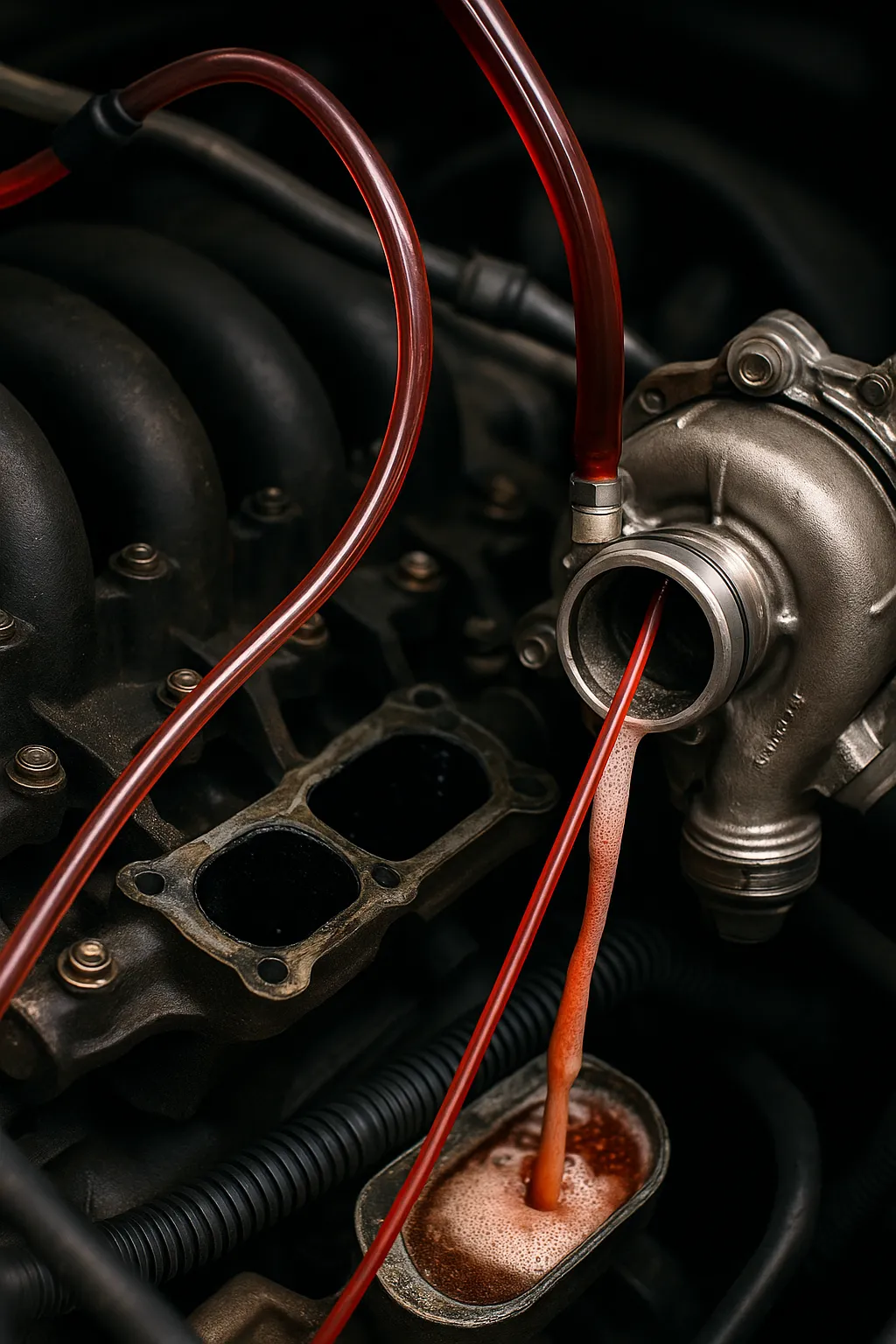
Tank additives
You pour it in the fuel tank and hope it helps burn soot.
It does not remove ash.
It does not fix failed regen conditions.
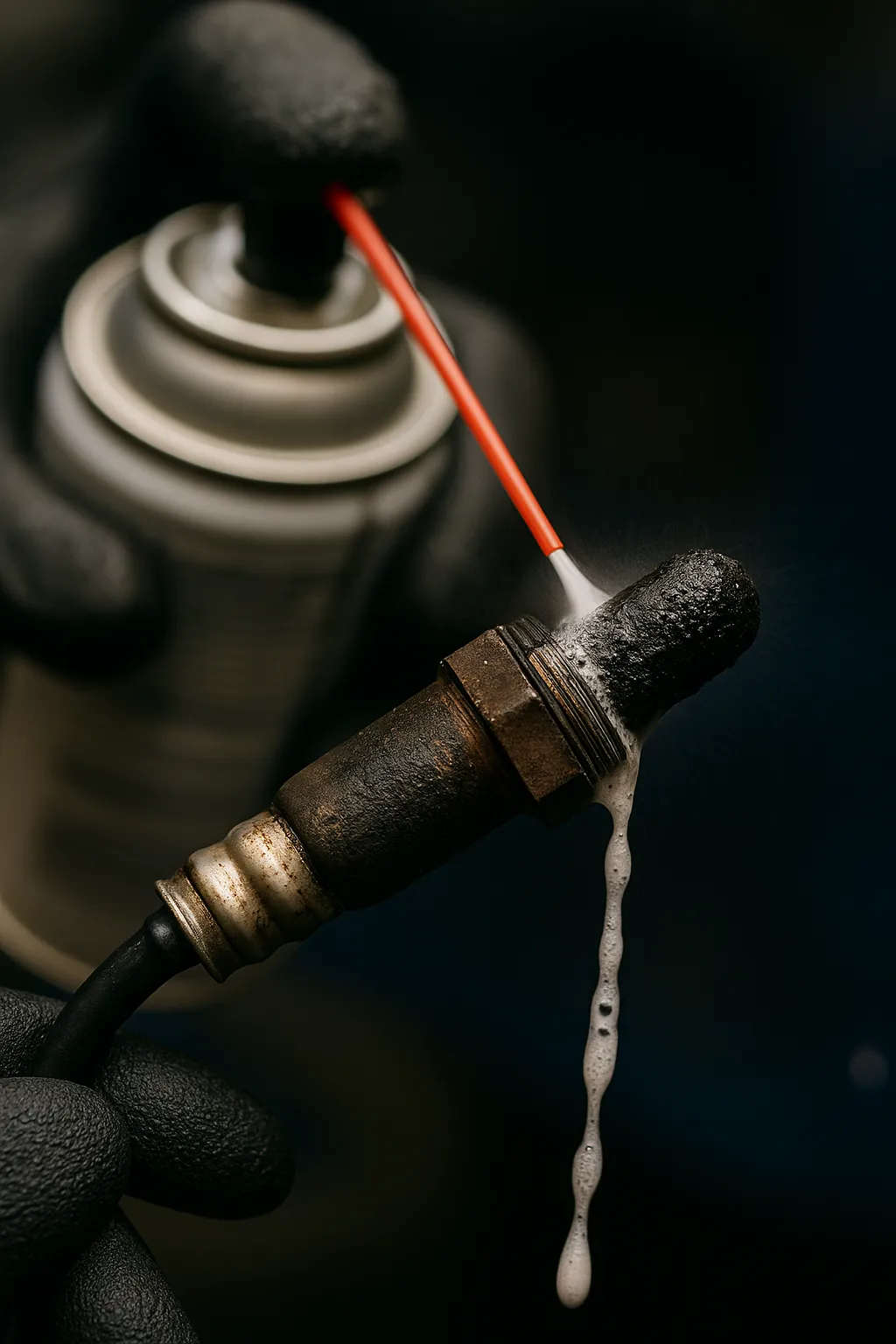
Aerosol sprays
Sprayed into the DPF via a sensor hole.
It can wet sensors.
It can leave residue.
It can push loose soot deeper into the core.
“Italian tune up” drives
A motorway run can help if soot load is still in range and the car can regen.
If the regen has already failed, it often does nothing.
DIY forced regen attempts
Some people try a cheap tool and trigger regen without checking the cause.
If the car cancels regens, you can chase your tail.
If you are already seeing a regen fail message, read:
DPF regeneration failed: what to do next
Why DIY methods often fail
A DPF blocks for three main reasons.
DIY methods usually address only one part of the picture.
That is why the warning comes back.
| Real cause | What DIY usually does | What happens next |
|---|---|---|
| Soot load high from short trips | Attempts to help burn soot off | Works only if regen conditions are met |
| Ash load high (capacity reduced) | Does nothing meaningful | Car keeps trying to regen more often |
| Engine or sensor fault causing extra soot | Treats the symptom, not the cause | DPF blocks again soon after |
If you want a clear explanation of repeat blocking, read:
why a DPF keeps blocking after a clean
How DIY methods can make the situation worse
The biggest cost is not the spray.
It is what you risk if you delay proper cleaning and checks.
Here are the most common problems we see after DIY attempts.
Sensors get contaminated
Sprays go in through sensor ports.
That can wet temperature and pressure sensors.
The car then reads bad values and cancels regeneration.
You end up chasing extra faults.
Loose soot shifts and clumps
Chemicals can break up soot.
That sounds good.
But if the DPF is already tight, loosened soot can move and block flow in a different way.
Then the regen fails again.
You keep driving while it worsens
DIY fixes often buy you a few days of “seems better”.
Meanwhile back pressure stays high.
That can increase stress on the turbo and the rest of the exhaust system.
You miss the real cause
If an injector, EGR issue, boost leak, or sensor fault drives soot up, the DPF is only the messenger.
A DIY attempt masks the message.
The root problem keeps working.
The turbo and injector link shows up a lot in real jobs:
blocked DPF turbo and injector problems
A better way to decide what to do
Ask yourself a simple question.
Are you early in the problem, or already in the danger zone?
Use this quick path.
| What you are seeing | What it usually means | Best next step |
|---|---|---|
| DPF light comes on now and then | Soot load rising, regen conditions poor | Act early and book a clean before limp mode |
| Regen fails or car feels flat | Restriction higher, back pressure rising | Stop guessing and get it cleaned properly |
| Limp mode, repeat warnings | High soot load, ECU protecting the car | Do not keep driving. Get proper help |
| DPF blocks again soon after a “fix” | Underlying fault or ash load | Find the cause, not just the symptom |
Need a clear list of symptoms first?
Read:
DPF warning lights explained
What professional cleaning does differently
DIY methods aim to “help regen”.
Professional cleaning aims to restore flow and get you out of the danger zone.
It also gives you a better chance of spotting why it blocked in the first place.
On-car DPF clean (garage)
A strong fit for soot restriction when the DPF core is still healthy.
On-car DPF cleaning is £200.
Prices can vary depending on the vehicle and condition.
Call for a proper quote.
Off-car DPF cleaning
Better for higher ash load and deeper restriction.
The DPF comes off the vehicle for a refurbishment clean.
Postal DPF cleaning (UK-wide)
Not local to Hanley?
If your garage can remove the DPF, you can post it to us.
We clean it, test flow, and return it ready to refit.
Want the straight comparison?
Read:
on-car vs off-car DPF cleaning
FAQs about DIY DPF cleaning
Do DIY DPF sprays work at all?
They can help in limited cases when soot load is still low and the car can complete regeneration afterwards.
They do not remove ash.
They do not fix why soot is high.
If your car already cancels regens, the benefit is usually short-lived.
Can DIY products damage sensors?
Yes.
Sprays go in via sensor ports on many cars.
If a sensor gets wet or contaminated, the ECU can read wrong values.
That can trigger new faults and stop regeneration from completing.
Why does the DPF block again after a DIY “fix”?
Because the real cause stays in place.
Short trips keep interrupting regeneration.
Or a fault keeps producing soot.
Or ash load has reduced capacity.
This page breaks down repeat causes:
how engine faults cause DPF re-blocking
If my DPF light is on, should I try a DIY spray first?
If you want the lowest risk path, do not keep experimenting.
A warning light means the car is already tracking a problem.
Get it cleaned properly and deal with the cause, so you do not pay twice.
More answers are on our main FAQ page:
DPF Cleaner FAQs
Stop guessing with sprays
If your DPF is blocking, the cheapest fix is often early proper cleaning.
Book in at our Hanley garage, or use our postal option if you are further away.
Tell us your mileage and your usual journeys, and we will point you at the right service.
All services are carried out in our garage.
No mobile visits.
Postal option available.
Helpful next reads
DPF cleaning and regeneration
The main service page.
What we do and how to book.
DPF flow testing
How we check flow before and after cleaning so you can see the result.
How long does DPF cleaning take?
What to expect on the day and why timing can vary.
0 Comments