
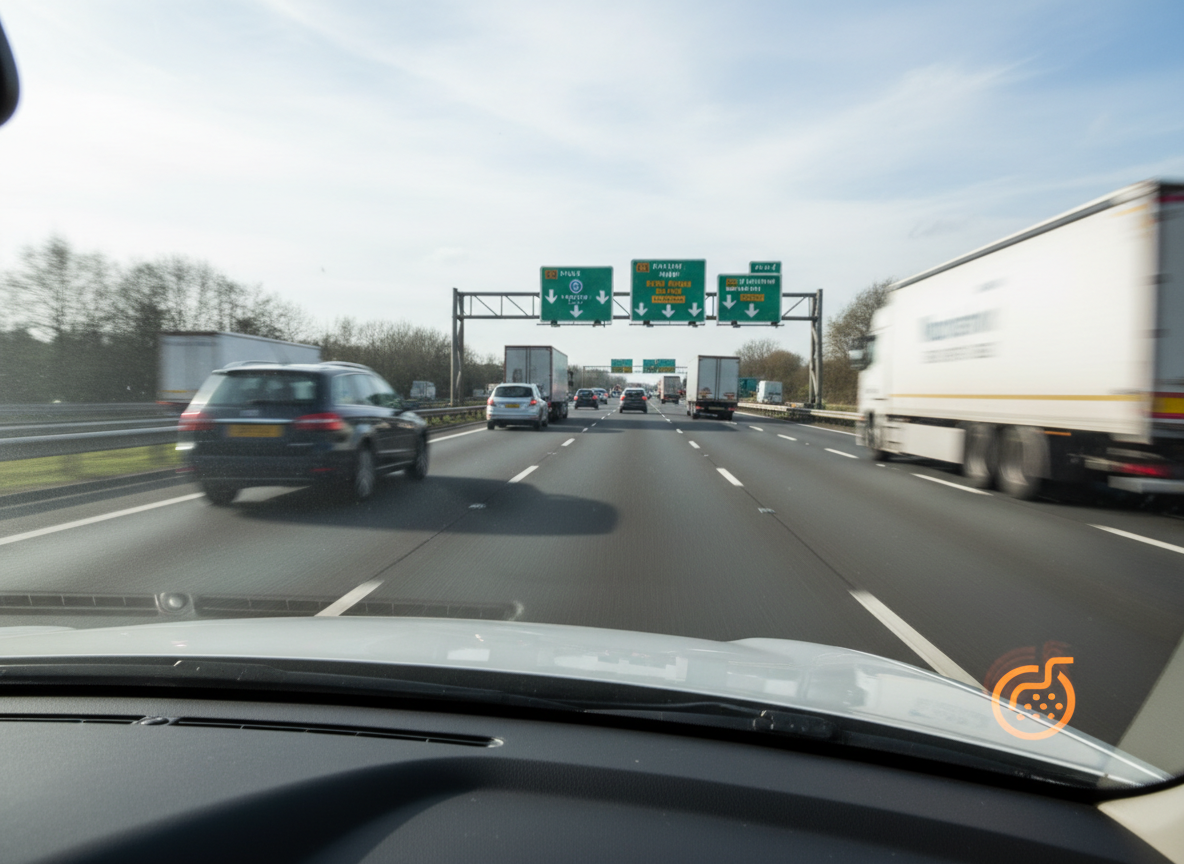

Why Short Journeys Are One of the Biggest Causes of DPF Blockages
If your diesel does mostly short trips, your DPF has a harder life.
Exhaust temperatures stay low.
Regens get interrupted.
Soot builds faster than the car can burn it off.
This guide explains why it happens and what you can do to stop the repeat cycle.
Garage-based service only in Fenton, ST4 3ER.
Postal DPF cleaning available UK-wide.
Short journeys do not “cause” a DPF to fail.
They cause the conditions that make the DPF block.
That is the key difference.
When you do a lot of 5–10 minute trips, the engine rarely reaches stable running temperature.
Exhaust temperature stays low.
The car either never starts regeneration, or it starts it and you switch off before it finishes.
Soot load climbs until you get a warning.
If this sounds like your driving
- School runs, short commutes, local errands.
- Stop-start traffic with low average speed.
- Car sits idling while you wait.
- DPF warning light returns every few weeks.
If you already have a warning light, start here:
clear a DPF warning light.
Why short journeys block a DPF faster than you expect
A DPF needs two things to stay healthy.
Good combustion.
And enough heat, for long enough, to regenerate.
Short trips usually give you neither.
Low exhaust temperature
The DPF needs heat to burn soot.
In city driving, exhaust temps stay low.
The car struggles to start passive regen.
Interrupted active regeneration
The ECU triggers active regen as soot load rises.
If you switch off mid-cycle, the soot stays.
The car tries again later.
That repeats until it fails.
More soot per mile
Cold starts and short runs create more soot than steady cruising.
The engine spends more time warming up, where combustion is not at its cleanest.
Other systems get involved
EGR and intake carbon build-up tends to be worse with short trips.
That can raise soot output, which loads the DPF even faster.
If you want the full breakdown of what interrupts regen and what to do next, read:
DPF regeneration failed.
The short-journey DPF cycle (what it looks like in real life)
Most people describe it like this.
“It was fine, then the light came on again.”
The truth is it was building for weeks.
- Lots of short trips and cold starts.
- Soot load rises quietly.
- Car attempts active regen at a bad time (school run, town traffic).
- You switch off mid-way because you are parked at the destination.
- Car tries again later, often more than once.
- DPF warning light comes on, then limp mode arrives if ignored.
If you are wondering whether you are already at the “needs cleaning” stage, use:
early warning signs your DPF needs cleaning.
What you can do if you mainly drive short journeys
You do not need to change your life to look after a DPF.
You just need to give it the right conditions often enough.
Small changes make a big difference.
Add one longer drive each week
A steady run on an A-road or motorway helps the car reach stable temperature.
You are supporting natural regen conditions.
Avoid switching off mid-regen
If you notice signs of regen, try to keep driving a bit longer if it is safe.
Interrupting it repeatedly is one of the fastest ways to build soot load.
Keep up with servicing
A tired air filter, poor oil condition, or weak glow plugs can affect combustion.
That can raise soot output, which loads the DPF faster.
Do not chase quick fixes
Additives and “reset” advice often delay the real fix.
They do not remove ash.
They do not repair faults.
If you are weighing up additives, this page keeps it straight:
do DPF cleaning additives work?
When short journeys have already pushed it too far
Some cars respond well when you change the routine early.
Others are already past the point where driving will clear it.
These are the signs you should stop guessing.
Book a clean if you notice any of these
- DPF light keeps returning after you try a longer drive.
- Car drops into limp mode or feels down on power.
- Regen attempts feel more frequent than before.
- Fuel economy has dropped for weeks, not days.
- You have other faults that can increase soot output.
If the DPF keeps blocking after a clean, this is the page that usually explains why:
why your DPF keeps blocking after a clean.
Your options if the DPF is already blocked
We do all work in our garage.
No mobile visits.
If you are not local, you can post the DPF to us for cleaning.
On-car DPF clean (garage)
Best for soot blockage when the unit is still healthy.
DPF cleaning starts from £150. Prices can vary depending on the vehicle and condition, so this is a guide and not a quote.
Off-car DPF cleaning
Full refurbishment clean when ash load is high or blockage is severe.
Postal DPF cleaning (UK-wide)
If the DPF is removed, you can post it to us.
We clean it and return it by tracked courier.
If you want a simple overview of the DPF service route, start here:
DPF cleaning and regeneration.
Short journeys and DPFs: FAQs
How many short trips does it take to block a DPF?
There is no fixed number.
It depends on vehicle, engine condition, and how often regeneration completes.
If your car never gets a steady 20–40 minute run, the risk rises fast.
Can I prevent it without changing cars?
Yes.
One longer steady drive a week helps.
Avoid switching off mid-regen when you can.
Keep on top of servicing so soot output stays low.
Why does the warning light keep coming back?
It usually means the soot load is rising faster than the car can clear it.
Short journeys cause that.
Underlying faults can make it worse.
More answers are on:
DPF Cleaner FAQs.
Doing short trips and the DPF light keeps returning?
You can break the cycle.
Book a clean at our Hanley garage, or use the postal option if you are not local.
Early action saves money.
Garage-based service only.
No mobile visits.
Postal option available.


0 Comments