
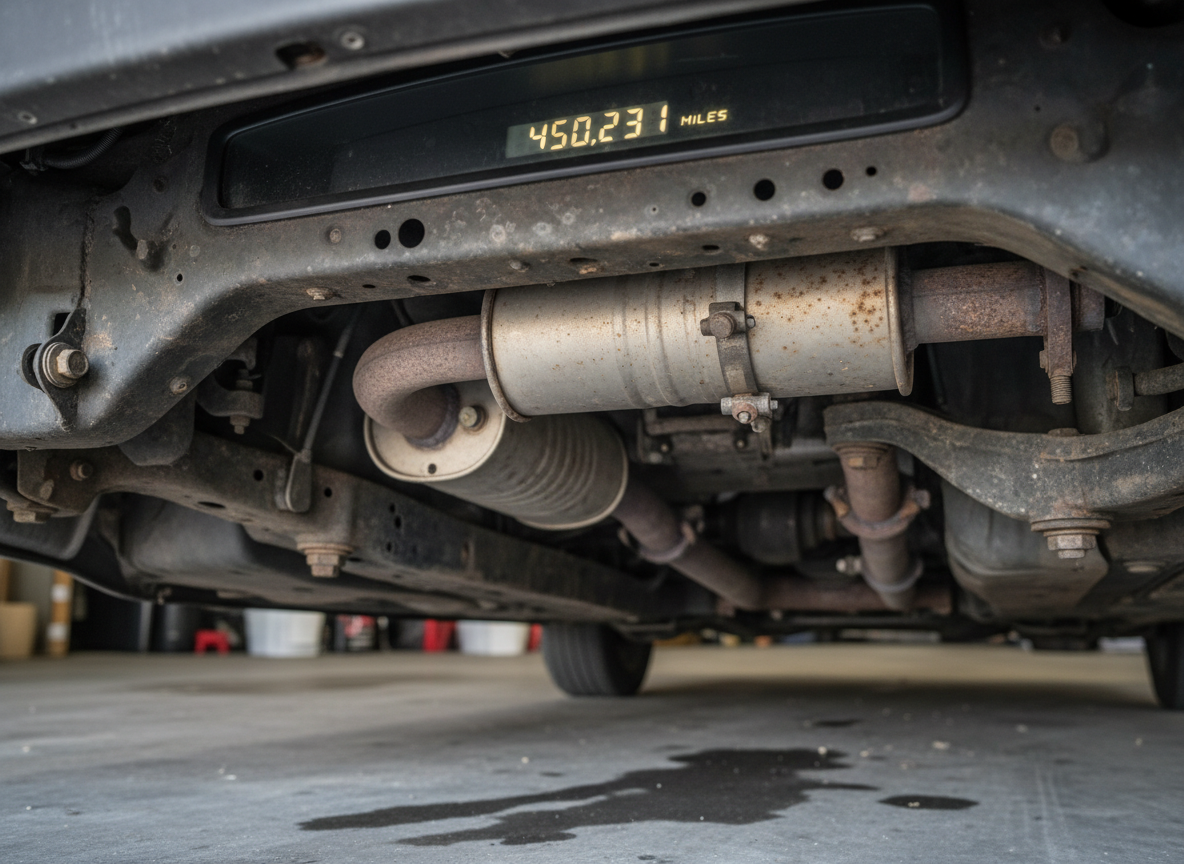

DPF Regeneration While Driving: What Works and What Doesn’t
You have probably heard, “Just take it for a motorway run.”
Sometimes that works.
Sometimes it does nothing.
This guide explains passive and active regeneration in plain English, what you can do on the road, and when cleaning is the smarter move.
Garage-based service only in Fenton, ST4 3ER.
Postal DPF cleaning available UK-wide.
Regeneration is the car’s way of clearing soot from the DPF.
It is not a magic reset.
It only works when the car can reach the right conditions.
When drivers search for “DPF regeneration while driving”, they usually want one thing.
A simple driving pattern that clears the warning light.
The honest answer is this.
It depends on how blocked the filter is, and why it blocked in the first place.
What you will get from this guide
- What passive and active regen mean, without jargon.
- What driving conditions usually help.
- How to spot when a regen is happening.
- What stops regen from completing.
- When driving will not fix it, and cleaning is the right step.
If your regen has already failed, start here first:
DPF regeneration failed: what to do next.
Passive vs active regeneration (plain English)
Most diesel cars regenerate in two ways.
One happens naturally.
The other is triggered by the ECU when soot load rises.
Passive regeneration
This happens when the exhaust is already hot enough to burn soot slowly in the background.
It is most likely on longer steady drives.
It is less likely on short trips and stop-start traffic.
Active regeneration
This is a planned clean cycle.
The ECU raises exhaust temperature to burn soot off faster.
If you interrupt it too often, soot keeps building and the warnings return.
Key point
Driving can only help if the car can reach and hold regen conditions.
If soot load is too high, or an engine fault cancels regens, the motorway run will not fix it.
What driving conditions usually help regeneration
There is no single speed that fixes a blocked DPF.
The goal is steady load and steady temperature.
You are helping the car reach the conditions it already wants.
A practical “good conditions” checklist
- Drive on an A-road or motorway with steady speed for 20–40 minutes.
- Avoid constant braking, stop-start, and short hills where speed keeps changing.
- Keep revs sensible and avoid labouring the engine in a high gear.
- Do not start the drive when fuel is very low, some cars refuse regen.
- Do not keep switching off mid-way if you suspect it is regenerating.
If you are doing lots of short journeys, that alone can be the cause.
You can read more about that cycle here:
what causes a DPF to block more than once.
How to tell if the car is regenerating while you drive
Many cars do not show a clear “regen in progress” message.
You have to notice behaviour changes.
These signs are common across lots of diesel vehicles.
Idle changes
Idle may rise slightly.
The engine can feel a touch different at low speed.
Fans running
Cooling fans may run more often, even when the weather is mild.
Some cars keep them on after you park.
Fuel use changes
Instant MPG can drop.
The car is working harder to raise exhaust temperature.
A hot smell
You might notice a warm, hot-metal smell after driving.
That is not always a problem, but it is a common regen sign.
What to do if you think it is regenerating
- If it is safe, keep driving for another 10–15 minutes.
- Avoid stopping and switching off mid-cycle.
- Do not try to force it with aggressive driving.
Why regeneration fails even when you drive “properly”
This is the part most drivers do not get told.
The car can cancel regeneration for reasons that have nothing to do with your speed.
That is why the same motorway run works for one vehicle and fails for another.
Soot load too high
At a certain point, the ECU stops trying to regen normally.
It protects the system.
You get warnings, limp mode, or “regen failed” messages.
Underlying engine faults
EGR issues, boost leaks, sensor faults, injector problems, and poor combustion increase soot.
Some faults cancel regens completely.
Ash load
Ash does not burn off like soot.
It builds over time.
A motorway run cannot remove it.
That is when off-car cleaning makes more sense.
If you keep getting repeat blockages, this breakdown helps:
how engine faults can cause DPF re-blocking.
“Motorway run” myths that waste your time
People mean well when they give DPF advice.
The problem is the advice is often missing one key detail.
How blocked is the DPF, and what cancelled regen in the first place?
- Myth: “Any motorway run clears it.”
Truth: It only helps if the car can complete a regen cycle. - Myth: “Just drive faster.”
Truth: Speed is not the goal. Steady load and temperature are. - Myth: “Add an additive and it will burn off.”
Truth: Additives do not remove ash and they do not fix faults.
If you are considering additives, read this before you spend money:
do DPF cleaning additives work?
When driving won’t fix it and cleaning is the right move
If you have tried a steady drive and the warning returns quickly, you are usually past “easy regen” territory.
At that point, the clean saves time and helps protect the turbo and engine.
On-car DPF clean (garage)
Best when soot blockage is the main problem and the DPF unit is still healthy.
We clean it in our Hanley garage.
DPF cleaning starts from £150. Prices can vary depending on the vehicle and condition, so this is a guide and not a quote.
If your vehicle needs a different route, we tell you before work starts.
Off-car DPF cleaning
Best when ash load is high or the blockage is severe.
Full refurbishment clean with flow testing.
Postal DPF cleaning (UK-wide)
If the DPF is removed, you can post it to us for cleaning and return shipping.
Ideal if you are not local to Hanley.
Want a straight comparison of methods before you decide?
Use:
on-car vs off-car DPF cleaning.
Regeneration while driving: FAQs
How long does a DPF regen take while driving?
Many regens take around 10–30 minutes once conditions are right.
If you keep interrupting it, it can drag on and repeat more often.
If you want a practical time-based guide, read:
how long DPF cleaning takes.
Should I drive at a certain speed to force regeneration?
Focus on steady driving, not a magic speed.
Constant speeding up and slowing down usually hurts more than it helps.
A steady run that keeps exhaust temperature stable is the goal.
Why does my DPF light come back after a motorway run?
Either the regen did not complete, soot load is already too high, or an underlying fault is pushing soot into the filter faster than normal.
This is the common “it helped for a day then returned” pattern.
Can regeneration clear ash build-up?
No.
Regeneration burns soot.
Ash builds over time and needs a proper cleaning process to remove it.
More answers are on:
DPF Cleaner FAQs.
Tried driving it out and the warning keeps coming back?
That usually means regeneration is no longer enough.
Book a DPF clean at our Hanley garage, or use the postal option if you are further away.
Garage-based service only.
No mobile visits.
Postal option available.
Helpful next reads
DPF cleaning and regeneration
The main service page and booking routes.
On-car DPF clean
Garage clean for soot blockage.
Clear process and cost.
Postal DPF cleaning
UK-wide option if your DPF is removed.
Clean and return.


0 Comments