

Last updated: May 2026
Book a DPF health check or clean
Every DPF has a working lifespan.
The question is how much of it remains.
Some filters respond well to cleaning and continue working for years. Others are already loaded with ash that cleaning cannot remove fully.
This guide explains DPF lifespan in real terms and helps you decide whether cleaning or replacement is the smarter option for your vehicle in 2026.
1. What Is the Average DPF Lifespan?
Most diesel particulate filters last between 100,000–150,000 miles, depending on driving style, service history, and fuel quality. Motorway-driven vehicles often exceed this, while city cars doing short journeys may struggle to reach 70,000 miles.
Over time, DPFs collect both soot (burnable) and ash (from engine oil additives, which cannot be burned off by regeneration). Once ash fills about 80% of the filter’s capacity, cleaning becomes less effective and replacement is usually the only remaining option.
2. Signs Your DPF Is Nearing the End of Its Life
- Regeneration attempts happening every 100–150 miles
- High back-pressure readings even after professional cleaning
- Persistent limp-mode or reduced-power warnings
- Abnormal DPF temperature sensor readings
Before assuming the filter is finished, have a professional on-car clean and flow test done. These confirm whether the filter can still be recovered — and save you from an unnecessary replacement bill.
Typical DPF Lifespan by Driving Pattern
Most diesel particulate filters last between 100,000 and 150,000 miles. That upper range drops significantly for vehicles used mainly for short journeys, repeated stop-start driving, or that regularly miss regeneration cycles.
A DPF does not usually fail overnight. Warning lights, failed regeneration messages, poor performance, or rising back pressure are the early signs — and catching them early is what keeps cleaning affordable.
- Short journeys (under 10 miles) keep exhaust temperatures too low for passive regeneration
- Repeated failed regenerations allow soot loading to build faster than normal
- Professional cleaning at the right time can restore flow and significantly extend filter life
- Most DPFs can be cleaned 2–3 times during their lifespan before ash load makes it uneconomical
Should You Clean or Replace a DPF?
If your DPF is blocked, the right answer depends on what is inside the filter and whether the core is still structurally sound. Many drivers replace when a proper clean would have solved the problem for a fraction of the cost.
Mileage Guide: What to Do at Each Stage
| Vehicle Mileage | Recommended Action | Typical Cost (guide only) |
|---|---|---|
| Under 60,000 miles | On-car clean if warning light shows. DPF should be in good condition. | £150–£350 |
| 60,000–100,000 miles | Professional clean recommended — ideal before significant ash build-up accumulates. | £150–£400 |
| 100,000–150,000 miles | Flow test first. Off-car clean or refurbishment likely needed. Assess ash load before committing. | £180–£400 |
| 150,000+ miles | If repeated blockages or flow test shows <70% efficiency after cleaning, replacement is likely the better investment. | £800–£1,500+ |
Cleaning is usually the better option when:
- The filter is blocked mainly with soot
- Regeneration has failed and back pressure is rising
- DPF differential pressure sensor readings suggest restricted flow
- The DPF core is still structurally sound
Replacement may be needed when:
- Ash loading is too high for cleaning to be worthwhile
- The internal ceramic core is cracked, melted, or damaged
- The filter has already had repeated failed cleaning attempts
- Flow test shows under 70% efficiency after professional cleaning
3. When Cleaning Is Still Worth It
If the filter’s substrate is intact and ash load is under 80%, cleaning almost always works. We see strong results from both on-car and off-car methods:
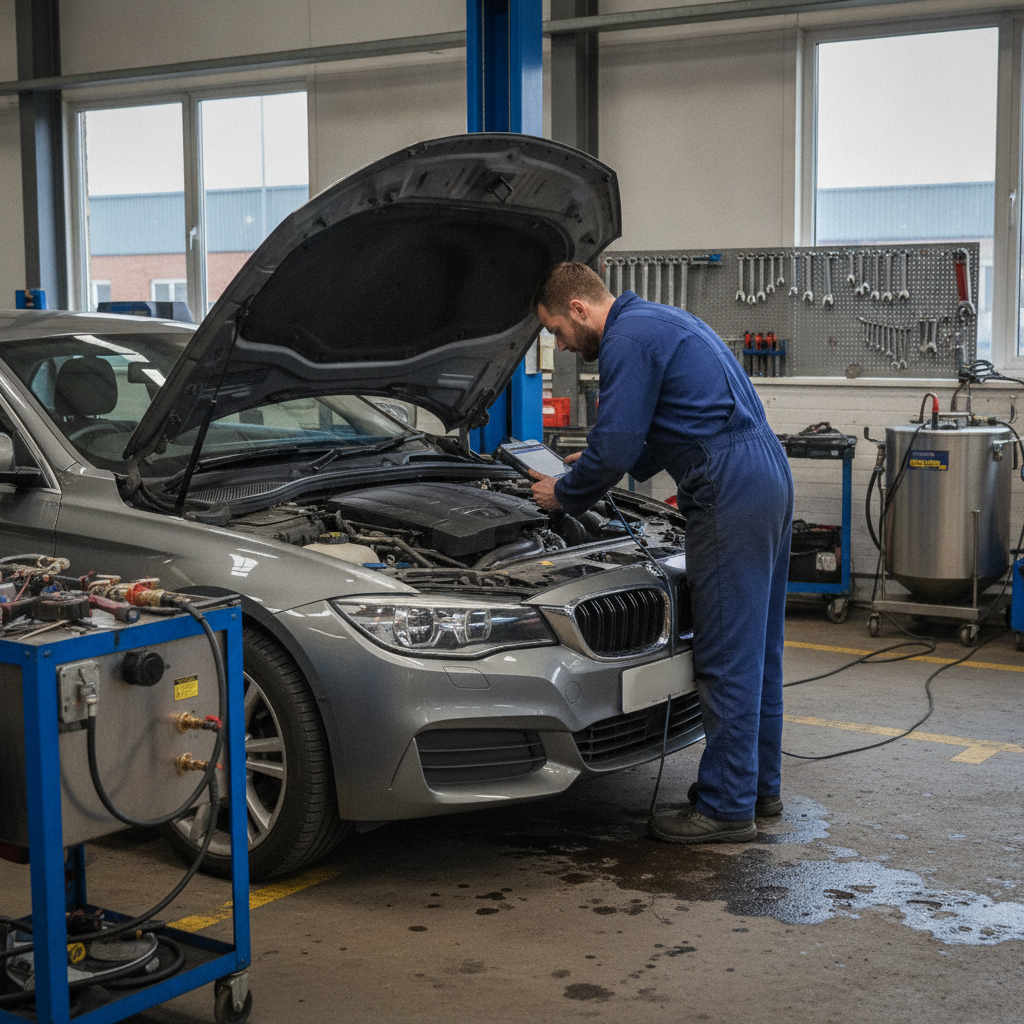
- On-car DPF Cleaning – £150–£350 (not an actual quote but a guide): Ideal for moderate blockages and vehicles still running.
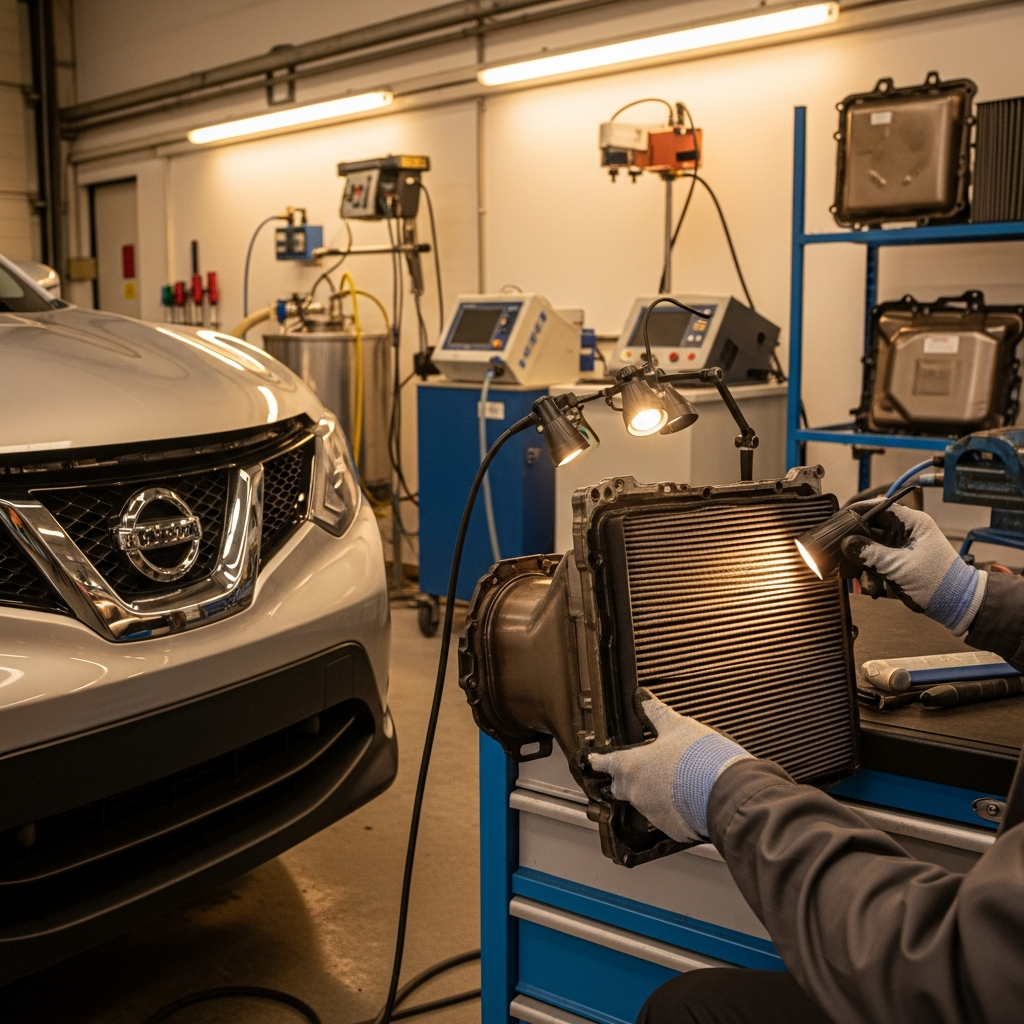
- Off-car DPF Refurbishment – £180–£400 (not an actual quote but a guide): Best for severe soot loads or after engine repairs.
Both methods restore flow and include before/after print-outs so you can see the result. Cleaning is always cheaper than replacing — especially for larger filters that cost £800–£1,500+ (not an actual quote but a guide) to buy new.
4. When Replacement Makes More Sense
If the substrate is cracked, melted, or oil-contaminated, it is beyond repair. Consider replacement if:
- Flow test shows under 70% efficiency after professional cleaning
- Back pressure stays high even with new sensors fitted
- The vehicle has exceeded 150,000 miles with multiple previous cleans
At that point, a new OEM or quality aftermarket DPF is the only safe fix. Make sure any replacement is fitted after engine-fault checks to prevent immediate re-blocking.
5. Cleaning vs Replacement Cost Comparison (2026)
| Service | Average Cost (not an actual quote but a guide) | Turnaround |
|---|---|---|
| On-Car DPF Clean | £150–£350 | Same Day |
| Off-Car DPF Refurb Clean | £180–£400 | 24–48 Hours |
| Postal DPF Cleaning (UK-Wide) | £130–£280 | 2–3 Days |
| New OEM DPF Replacement | £800–£1,500+ | Depends on model |
Compare all options at our 2026 DPF cleaning cost guide or visit our Stoke-on-Trent garage for in-house assessment.
6. How to Extend DPF Life Between Cleans
- Use correct-spec engine oil — low SAPS (low ash) formulas only
- Carry out 20-minute A-road or motorway runs weekly to allow passive regeneration
- Fix EGR and sensor faults as soon as they appear
- Keep fuel quality high and avoid cheap or unproven additives
Read our guide on DPF warning lights to spot early signs before they become expensive repairs.
Frequently Asked Questions
How do I know if my DPF needs cleaning or replacing?
The only reliable way is a professional flow test. High back pressure after a cleaning attempt, a cracked or melted substrate, or ash loading above 80% of capacity all indicate replacement is needed. If the core is structurally intact, cleaning is almost always the better first step.
How many times can a DPF be cleaned?
Usually 2–3 times during its lifespan, depending on driving style, mileage, and filter quality. After each clean the ash load is slightly higher than before, so there is a natural point — typically around 150,000 miles — where replacement becomes more cost-effective than further cleaning.
What happens if you don’t replace a DPF when it’s needed?
A severely blocked or damaged DPF will keep the vehicle in limp mode, cause ongoing engine stress, increase fuel consumption, and can eventually damage the turbo or cause engine overheating. Continuing to drive with a failed DPF is also illegal in the UK if the filter is required for your vehicle’s emissions certification.
Does DPF cleaning damage the filter?
No. Professional cleaning using proper equipment is safe and fully restores flow without damaging the substrate. Avoid DIY chemical soaks, which can crack the ceramic core and turn a cleaning job into a replacement.
Is replacing a DPF worth the cost?
Yes — when replacement is genuinely needed. If the core is damaged or ash load is too high to clean effectively, a replacement DPF is the only way to restore full engine performance. The key is confirming this with a flow test first, so you’re not replacing a filter that could have been cleaned for £150–£400.
Book a DPF Health Check Today
If you’re unsure whether your DPF needs a clean or replacement, book a flow test at our Stoke-on-Trent garage. We’ll measure back pressure, advise the correct option, and get you back on the road. UK-wide postal DPF cleaning also available.
0 Comments