

Your DPF warning light is on, and you’ve seen the ads: “DPF cleaning additives – restore your filter in minutes!” But do they actually work? Or are you just wasting money on a quick fix that won’t solve the problem?
In this comprehensive guide, we’ll compare DPF cleaning additives with professional cleaning services, break down the science behind each method, and help you understand which solution is right for your blocked filter.
Quick Answer: DPF Additives vs Professional Cleaning
| Factor | DPF Additives | Professional Cleaning |
|---|---|---|
| Cost | £15-£50 | £150-£400 |
| Time to Work | 50-500 miles | 1-2 hours (on-car) or 2-5 days (postal) |
| Success Rate | 5-15% for severe blockage | 85-95% |
| Best For | Mild blockage (20-40%) | Moderate to severe (40%+) |
| Equipment Needed | None (add to fuel) | Professional diagnostic & cleaning equipment |
| Guarantee | None | 30-90 day guarantee (Terms & Conditions Apply) (typically) |
| Long-term Results | Temporary relief | Permanent solution |
| Warranty Impact | None | None |
Bottom line: DPF additives are cheap but rarely work for significantly blocked filters. Professional cleaning costs more upfront but delivers 85-95% success with a guarantee (Terms & Conditions Apply). For most blocked DPFs, professional cleaning is the only reliable solution.
What Are DPF Cleaning Additives?
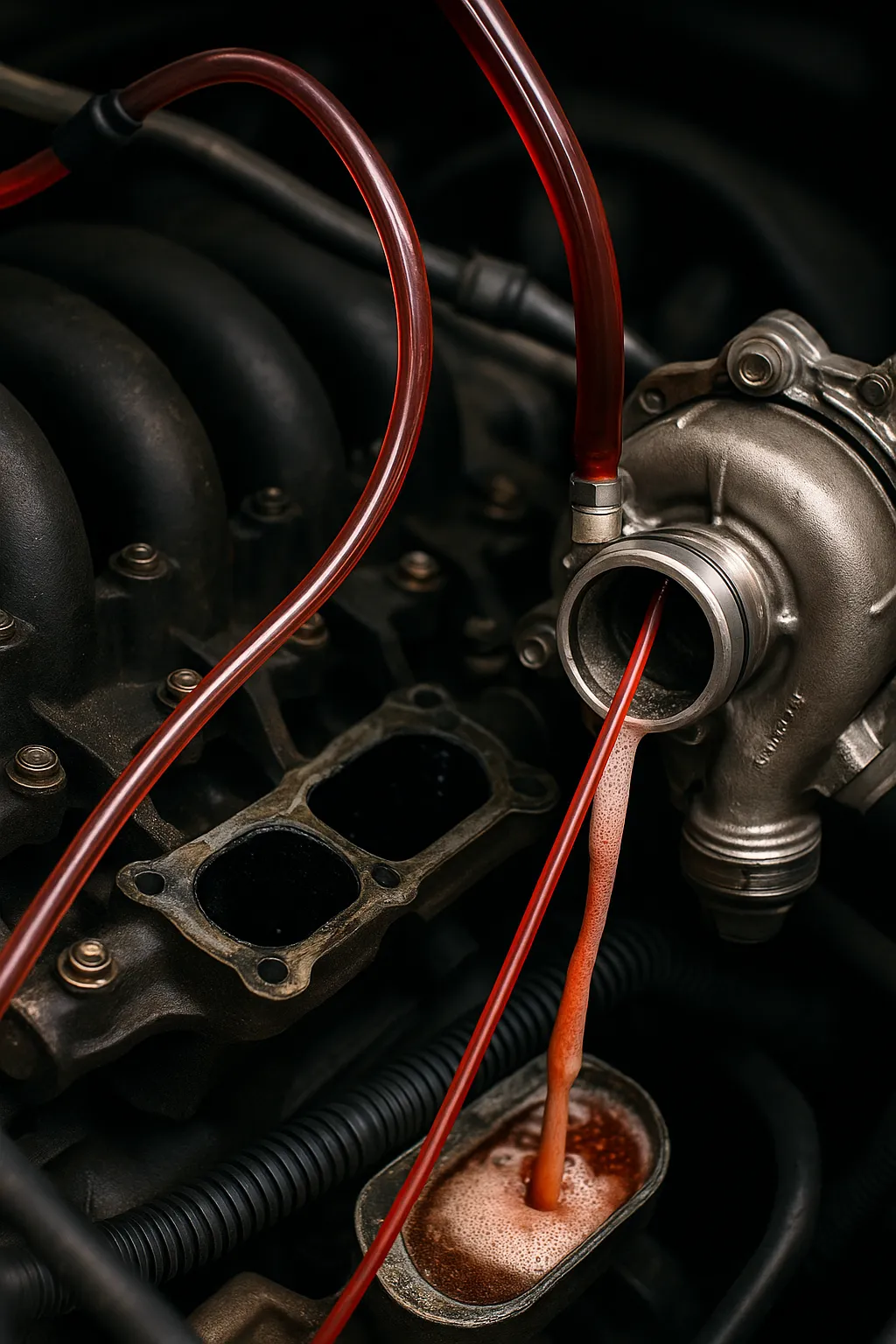
DPF cleaning additives are chemical compounds designed to lower the combustion temperature of diesel fuel, allowing trapped soot and carbon deposits to burn off more easily during regeneration cycles.
How DPF Additives Work
The theory:
- Additive is poured into fuel tank
- Chemical lowers ignition temperature of fuel (typically by 40-100°C)
- During regeneration, soot burns at lower temperature
- Deposits clear from the DPF filter
- Warning light goes off
The reality:
- Works only if your DPF can still regenerate
- Requires 50-500 miles of driving for effect
- Only effective for mild blockages (20-40%)
- Doesn’t address physical damage or severe buildup
Types of DPF Additives Available
1. Fuel Tank Additives
- Pour directly into fuel tank
- Cost: £15-£35
- Examples: Redex DPF Cleaner, Wynns DPF Cleaner
- Effectiveness: Low to moderate for mild blockage
2. Injector/Combustion Chamber Cleaners
- Added to fuel system
- Cost: £20-£40
- Designed to improve fuel burn efficiency
- Effectiveness: Very low for DPF blockage
3. Premium Diesel with Additives
- Some fuel stations offer enhanced diesel
- Cost: £5-£10 more per fill-up
- Marginal benefit for DPF health
- Effectiveness: Minimal for existing blockage
4. Aftermarket DPF Cleaning Kits
- More comprehensive approach
- Cost: £30-£80
- Include multiple treatments
- Effectiveness: Still low for severe blockage
Popular DPF Additive Brands
- Redex DPF Cleaner – Most common, £20-£30
- Wynns DPF Cleaner – Premium option, £25-£40
- Liqui Moly DPF Cleaner – German brand, £30-£50
- BG DPF Cleaner – Professional grade, £40-£60
- Millers Diesel DPF Cleaner – Racing fuel specialist, £35-£50
How Professional DPF Cleaning Works
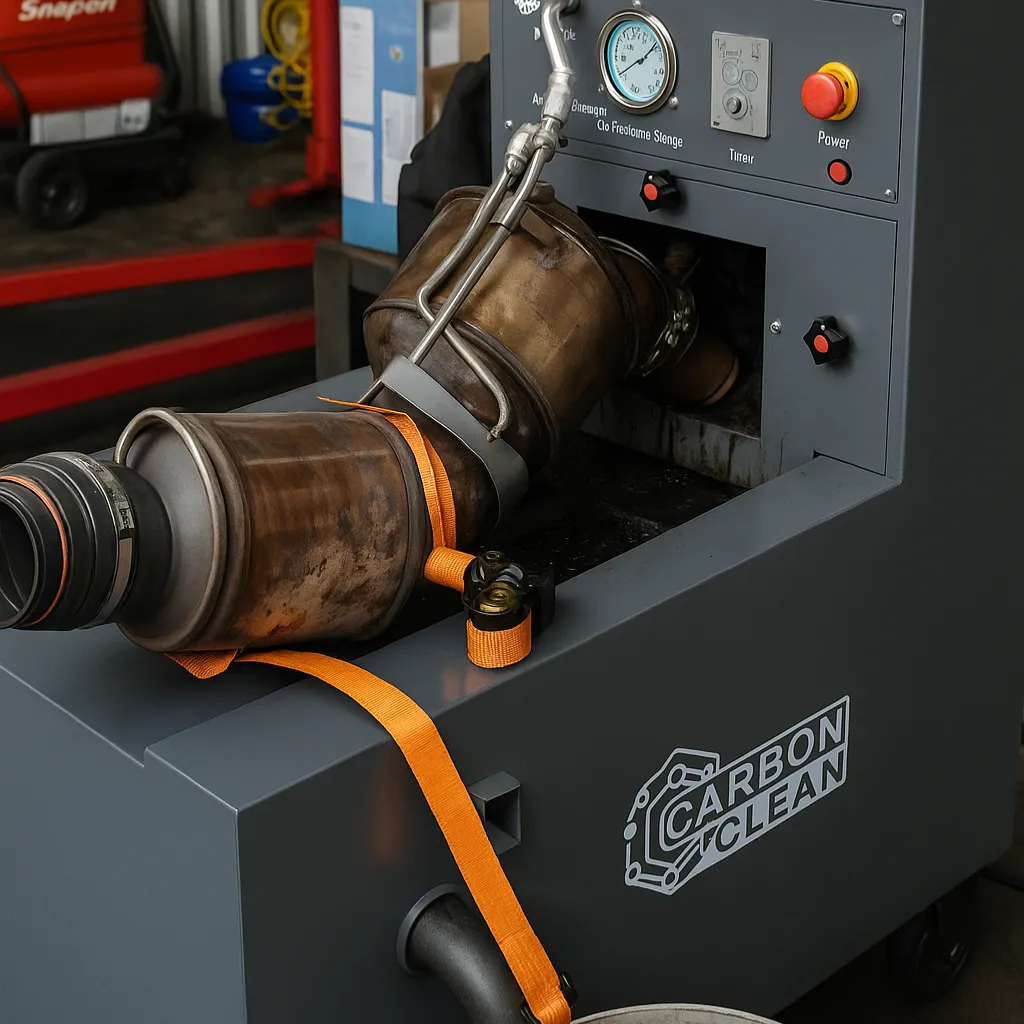
Professional DPF cleaning uses industrial-grade equipment and proven methods to remove stubborn carbon and soot deposits that additives can’t touch.
On-Car (Mobile) Professional Cleaning
Process:
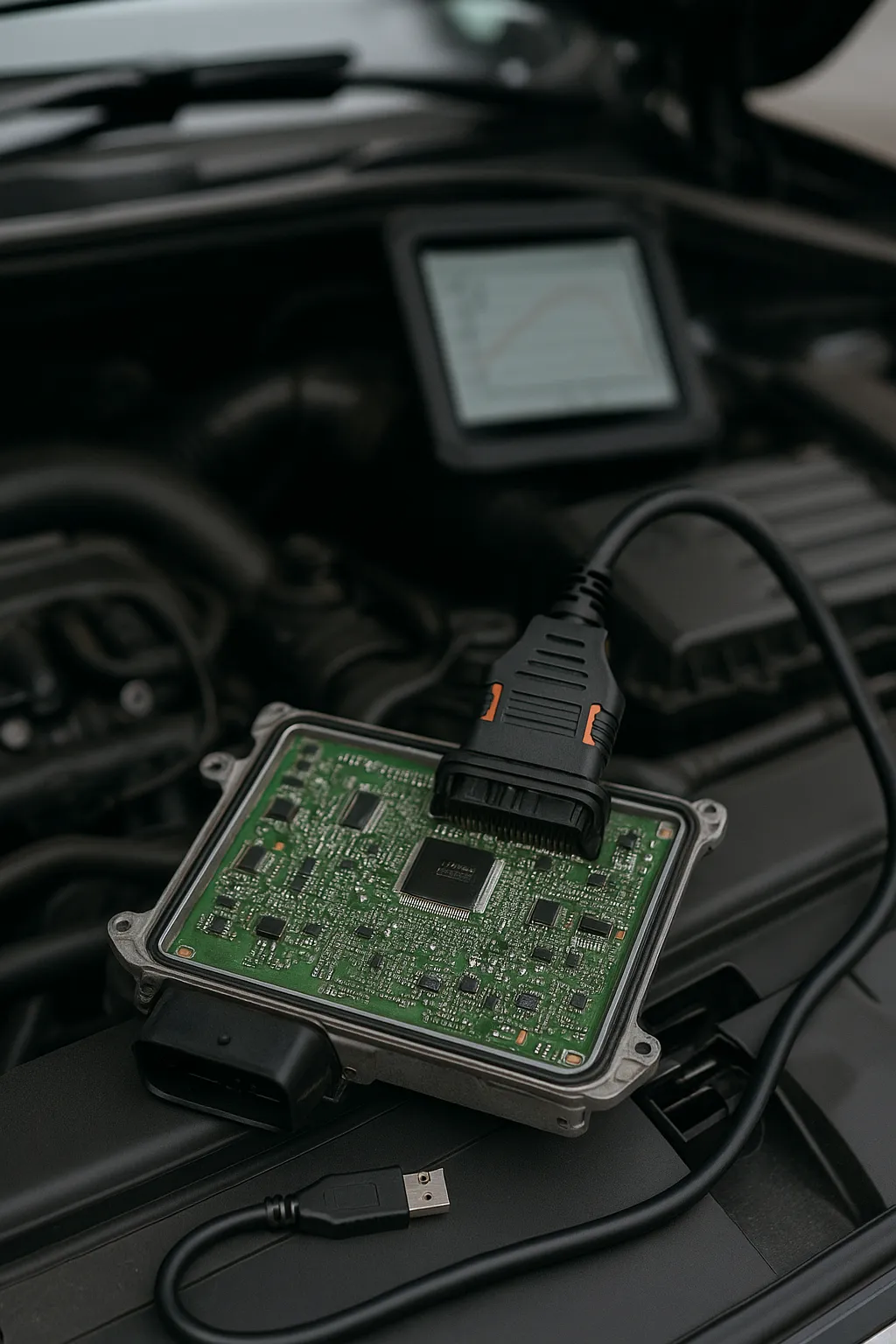
- Diagnostic scan – Assess DPF blockage percentage (typically 60-80%)
- Chemical flush – Industrial-strength cleaning solution forced through the DPF
- Thermal regeneration – Engine run at high temperature to burn off deposits
- Forced regeneration cycle – Controlled burn-off process
- Post-clean diagnostic – Verify blockage cleared
- Flow test – Measure DPF efficiency (reputable providers)
Equipment used:
- Professional diagnostic scanner
- High-pressure chemical injection system
- Temperature monitoring equipment
- Flow testing apparatus
Cost: £150-£350Time: 1-2 hoursSuccess rate: 70-80% for moderate blockage
Off-Car (Postal) Professional Cleaning
Process:
- DPF removal – Unbolted from exhaust system
- Ultrasonic or thermal cleaning – Deep industrial cleaning
- Flow testing – Before and after measurements
- Inspection – Check for physical damage
- Reinstallation – Refitted and verified
Equipment used:
- Ultrasonic cleaning baths (removes 99% of deposits)
- Thermal cleaning ovens (burns off stubborn carbon)
- Professional flow testing equipment
- Diagnostic verification
Cost: £180-£400Time: 2-5 daysSuccess rate: 85-95% (most thorough method)
Cost Comparison: Additives vs Professional Cleaning
DPF Additive Costs
Single treatment:
- Cost: £15-£50
- Fuel consumption during treatment: 50-500 miles
- Fuel cost: £10-£30 (depending on MPG)
- Total: £25-£80
Multiple treatments (if first fails):
- Typical: 2-3 treatments before giving up
- Total cost: £50-£240
- Time wasted: 2-4 weeks
- Still may not work
Hidden costs if additive fails:
- Continued poor fuel economy: £100-£200/month
- Engine damage from prolonged blockage: £500-£1,500
- Eventual professional cleaning still needed: £150-£400
- Real total: £750-£2,140
Professional Cleaning Costs
On-car cleaning (one-time):
- Cost: £150-£350
- Includes: Diagnostic, cleaning, testing, guarantee (Terms & Conditions Apply)
- Success rate: 70-80%
- Total: £150-£350
Off-car cleaning (one-time):
- Cost: £180-£400
- Includes: Removal, deep clean, flow test, reinstall, guarantee (Terms & Conditions Apply)
- Success rate: 85-95%
- Total: £180-£400
Value proposition:
- One-time cost with guarantee (Terms & Conditions Apply)
- 85-95% success rate
- No wasted time or fuel
- Professional equipment & expertise
- Peace of mind
Verdict: Professional cleaning costs more upfront but eliminates the risk of wasting money on failed additive treatments.
Success Rates: Do DPF Additives Actually Work?
Real-World Effectiveness Data
For mild blockage (20-40%):
- DPF additives: 30-40% success rate
- Professional cleaning: 95%+ success rate
- Winner: Professional cleaning (2-3x more effective)
For moderate blockage (40-70%):
- DPF additives: 5-10% success rate
- Professional cleaning: 85-90% success rate
- Winner: Professional cleaning (10x more effective)
For severe blockage (70%+):
- DPF additives: <1% success rate (essentially doesn’t work)
- Professional cleaning: 80-85% success rate
- Winner: Professional cleaning (only viable option)
Why DPF Additives Fail
1. Insufficient Heat Generation
- Additives lower combustion temperature by 40-100°C
- Most DPF blockages require much higher temperatures to clear
- Chemical effect is marginal compared to professional equipment
2. Incomplete Regeneration
- Additives only work during active regeneration cycles
- If your DPF is severely blocked, regeneration won’t initiate
- Catch-22: Filter too blocked to regenerate, additive can’t help
3. Physical Deposits
- Additives can’t remove ash or physical damage
- Only address carbon deposits
- Professional cleaning removes all types of buildup
4. Blocked Regeneration System
- If EGR valve or other components are clogged, additive won’t help
- Professional diagnostics identify root cause
- Additives treat symptom, not cause
5. Wrong Additive for Your Vehicle
- Different diesel engines respond differently
- Some vehicles’ DPF systems resist additive treatment
- Professional cleaning works on all vehicles
Case Study: Why Additives Fail
Scenario: Driver notices DPF warning light, buys £25 additive
Week 1: Adds to fuel, drives 100 miles – no changeWeek 2: Adds second treatment, drives another 150 miles – light still onWeek 3: Tries premium additive (£45), drives 200 miles – warning light still illuminatedWeek 4: Gives up, books professional cleaning (£250)Result: Professional cleaning clears 75% blockage in 2 hours
Total wasted: £70 on additives + 450 miles of fuel + 4 weeks of poor performance + £250 professional cleaning = £320+ and 4 weeks of frustration
If they’d gone professional immediately: £250, 2 hours, problem solved.
When DPF Additives Might Help
DPF additives aren’t completely useless – they have limited applications:
Scenario 1: Very Mild Blockage (20-30%)
Conditions:
- DPF warning light just appeared
- No loss of power or limp mode
- Recent high-mileage motorway driving
- Vehicle is relatively new (low mileage)
Why additive might work:
- Filter is only slightly restricted
- Regeneration cycles still functioning
- Additive can assist natural cleaning process
Success probability: 30-40%Recommendation: Try additive first (low cost), but don’t wait more than 2 weeks. If no improvement, get professional cleaning.
Scenario 2: Preventative Maintenance
Conditions:
- No DPF warning light
- Want to maintain filter health
- Mostly city/short-distance driving
- Vehicle has 60,000+ miles
Why additive might help:
- Keeps deposits from accumulating
- Supports natural regeneration
- Cheaper than future professional cleaning
Success probability: Moderate (preventative, not curative)Recommendation: Use premium diesel + occasional additive treatment, but don’t rely on it as primary maintenance.
Scenario 3: Temporary Relief Before Professional Cleaning
Conditions:
- Booked professional cleaning appointment
- Want to improve driving experience in interim
- Already committed to professional solution
Why additive might help:
- Slight improvement in performance
- Reduces limp mode symptoms temporarily
- Psychological benefit while waiting
Success probability: Low (temporary only)Recommendation: Use additive as stopgap, but professional cleaning is the real solution.
Why Professional Cleaning Is Superior
Advantage 1: Proven Success Rate
- Additives: 5-15% success for moderate/severe blockage
- Professional: 85-95% success rate
- Difference: 6-19x more effective
Professional cleaning has decades of proven results. Thousands of vehicles successfully cleaned every year with documented before/after flow tests.
Advantage 2: Diagnostic Capability
Professional cleaning includes:
- Blockage percentage assessment
- Root cause identification (EGR issues, fuel quality, driving style)
- Damage detection (cracks, substrate collapse)
- Flow testing (proof of effectiveness)
Additives provide none of this information.
Advantage 3: Comprehensive Solution
Professional cleaning addresses:
- Carbon deposits
- Ash accumulation
- Soot buildup
- Physical restrictions
- Related issues (EGR valve, sensors)
Additives only target carbon deposits and do so ineffectively.
Advantage 4: Guarantee & Warranty
Reputable professional services offer:
- 30-90 day guarantee (Terms & Conditions Apply) (Terms & Conditions Apply)
- Money-back guarantee (Terms & Conditions Apply) if cleaning fails
- Warranty on workmanship
- Flow test documentation
Additives offer no guarantee (Terms & Conditions Apply) whatsoever.
Advantage 5: Long-Term Value
Professional cleaning:
- One-time cost: £150-£400
- Success rate: 85-95%
- Lasts 80,000-120,000 miles
- Cost per mile: £0.002-£0.005
Repeated additive treatments:
- Cost per treatment: £25-£80
- Success rate: 5-15%
- Temporary relief only
- Requires repeat purchases
- Cost per mile: £0.05-£0.10 (10-50x more expensive)
DPF Additives vs Professional Cleaning: Head-to-Head
For a 70% Blocked DPF
Additive approach:
- Buy additive (£25)
- Add to fuel, drive 200 miles (£15 fuel)
- Warning light still on
- Buy second additive (£35)
- Drive another 200 miles (£15 fuel)
- Still blocked – book professional cleaning (£250)
- Total: £340 + 400 miles + 3 weeks
Professional approach:
- Book mobile cleaning (£250)
- Service completed in 2 hours
- Problem solved with guarantee (Terms & Conditions Apply)
- Total: £250 + 2 hours
Savings with professional: £90 + 398 miles + 3 weeks of frustration
For a 40% Blocked DPF
Additive approach:
- Buy additive (£25)
- Drive 300 miles (£18 fuel)
- 40% success chance – light goes off
- Total: £43 (if lucky)
Professional approach:
- Book mobile cleaning (£250)
- Service completed in 2 hours
- 95% success guarantee (Terms & Conditions Apply)
- Total: £250 + 2 hours
Additive wins on cost if it works, but 60% chance of failure means you’ll end up paying £250+ anyway.
Recommendation: For 40% blockage, try additive (low risk), but don’t wait more than 2 weeks. If no improvement, get professional cleaning.
FAQ: DPF Additives vs Professional Cleaning
Do DPF cleaning additives really work?
For very mild blockages (20-30%), DPF additives have a 30-40% success rate. For moderate to severe blockages (40%+), success rate drops to 5-15%. Professional cleaning has an 85-95% success rate regardless of blockage severity. Additives are cheap but unreliable for most blocked DPFs.
How long do DPF additives take to work?
Most DPF additives require 50-500 miles of driving to take effect. This typically takes 1-4 weeks depending on your driving habits. Professional cleaning works in 1-2 hours (on-car) or 2-5 days (postal), providing immediate results.
Can I use DPF additive and professional cleaning together?
Yes, but it’s unnecessary. Professional cleaning is thorough enough on its own. If you want to use additive after professional cleaning for preventative maintenance, that’s fine, but it won’t improve the cleaning results.
Are DPF additives safe for my engine?
Most quality DPF additives are safe for diesel engines. However, cheap or counterfeit additives can damage fuel injectors or the DPF itself. Stick to reputable brands (Redex, Wynns, Liqui Moly). Professional cleaning is safer because it uses proven industrial methods.
What’s the best DPF cleaning additive?
Redex DPF Cleaner and Wynns DPF Cleaner are the most popular and reliable options. However, even the best additive has a low success rate for moderate to severe blockages. Professional cleaning is more effective than any additive.
How much does professional DPF cleaning cost?
Mobile on-car cleaning: £150-£350. Postal off-car cleaning: £180-£400. This includes diagnostic, cleaning, testing, and typically a 30-90 day guarantee (Terms & Conditions Apply). It’s more expensive than additives but has 85-95% success rate.
Will professional DPF cleaning damage my engine?
No. Professional DPF cleaning is a standard maintenance service that doesn’t damage engines. It uses proven methods and doesn’t void your Warranty (Terms & Conditions apply). Thousands of vehicles are cleaned safely every year.
Can I clean my DPF myself without additives or professional service?
DIY DPF cleaning (removing and manually cleaning) is possible but requires mechanical skills, specialized equipment, and time. Most people don’t have the expertise or tools. Professional services are faster, safer, and more effective. Additives are the only true DIY option, but they rarely work.
How often do I need DPF cleaning?
Most DPFs need professional cleaning every 80,000-120,000 miles, depending on driving style. Short journeys and city driving accelerate blockage. If you mainly do motorway driving, you may not need cleaning for 150,000+ miles. Regular maintenance and quality fuel help prevent blockages.
Should I try additive before professional cleaning?
For very mild blockage (20-30% and warning light just appeared), you can try additive first – low cost, low risk. But don’t wait more than 2 weeks. If no improvement, get professional cleaning immediately. For moderate to severe blockage (40%+), skip the additive and go straight to professional cleaning.
The Bottom Line: Additives vs Professional Cleaning
Choose DPF Additive If:
- DPF warning light just appeared (very recent)
- You want to try the cheapest option first
- You’re willing to accept 5-15% success rate
- You have time to wait 2-4 weeks
- You understand you may waste money
Choose Professional Cleaning If:
- DPF is 40%+ blocked
- You want guarantee (Terms & Conditions Apply)d results (85-95% success)
- You need the problem solved quickly (1-2 hours)
- You want a Warranty (Terms & Conditions apply)/guarantee (Terms & Conditions Apply)
- You want to avoid wasting money on failed treatments
- You want your vehicle to pass MOT
- You want long-term value
Next Steps: Get Your DPF Sorted
Don’t waste time and money on additives that probably won’t work. Professional DPF cleaning is the reliable, proven solution.
Ready to book?
Mobile DPF Cleaning in Stoke-on-Trent & Staffordshire:
- Same-day service available
- From £150 for standard vehicles
- 1-2 hour service
- Flow tested and guarantee (Terms & Conditions Apply)d (Terms & Conditions Apply)
Postal DPF Cleaning (UK-Wide):
- 24-48 hour turnaround
- From £180 including return shipping
- Flow tested with before/after proof
- Guaranteed (Terms & Conditions Apply)
📞 Call us today for a free quote based on your vehicle🌐 Visit our contact page to book online
Don’t let a blocked DPF get worse. Get professional cleaning and solve the problem properly – the first time.
Learn more:
0 Comments