

DPF Cleaning Additives vs Professional Clean: Do They Really Work?
Walk into any motor factors or parts aisle and you’ll see shelves full of DPF cleaning additives promising to clear your filter “without dismantling anything”. They’re cheap, quick to pour into the tank and sound far easier than booking a proper DPF clean.
But how do these additives really compare to a professional on‑car DPF cleaning service or our postal DPF cleaning? In this guide we’ll look at when fuel additives can help, when they’re a waste of money, and when they can actually make things worse.
What Are DPF Cleaning Additives?
DPF cleaning additives are chemicals you pour into the fuel tank. The idea is simple:
- The additive mixes with diesel in the tank.
- During combustion it changes the way soot burns in the DPF.
- Regeneration is supposed to happen more easily and at lower temperatures.
On the bottle you’ll usually see claims like “helps clear blocked DPF”, “restores performance” or “prevents expensive repairs”. The reality is a bit more complicated.
When DPF Additives Can Help
In our experience running a dedicated DPF workshop, additives can sometimes help in very specific situations:
- Preventative use on a healthy filter – occasional use on a car that already does regular motorway mileage can help keep soot levels lower.
- Mild soot loading – if the DPF is only lightly loaded and there are no other engine faults, an additive plus a long, hot run can help a regeneration complete.
- As part of a professional clean – some garages use specialist chemicals in combination with a controlled clean, not as a magic fix on their own.
Used like this, a bottle of additive isn’t necessarily a bad idea – as long as you understand its limits.
What DPF Additives Can’t Do
This is where a lot of the marketing quietly glosses over the detail. Fuel additives:
- Do not remove ash – they only help burn soot. Ash from oil additives and wear metals still builds up in the filter over time.
- Can’t fix underlying faults – if you have injector problems, EGR issues, boost leaks or sensor faults, no bottle in the tank will cure them.
- Won’t save a heavily blocked DPF – once soot loading is high and the ECU has disabled regeneration, additives rarely achieve anything useful.
That’s why we see so many cars arrive at our workshop after the owner has already tried “two or three different DPF cleaners” with no lasting improvement.
Risks of Relying on Additives Instead of a Proper Clean
Using a bottle of additive isn’t usually dangerous in itself, but relying on it instead of dealing with the real problem can be expensive:
- Delayed diagnosis – while you keep trying new bottles, soot loading rises and other components (turbo, EGR, sensors) are under more stress.
- Higher exhaust temperatures – some additives encourage hotter regens. If the DPF is already overloaded, this can increase the risk of damage.
- Money wasted on repeat bottles – we regularly see customers who’ve spent £60–£100 on additives before finally paying for a proper clean.
If your DPF warning light is on and you’re not sure what’s causing it, our article on engine faults that cause DPF blocking is a better starting point than another bottle from the shelf.
Professional DPF Cleaning: What’s Different?
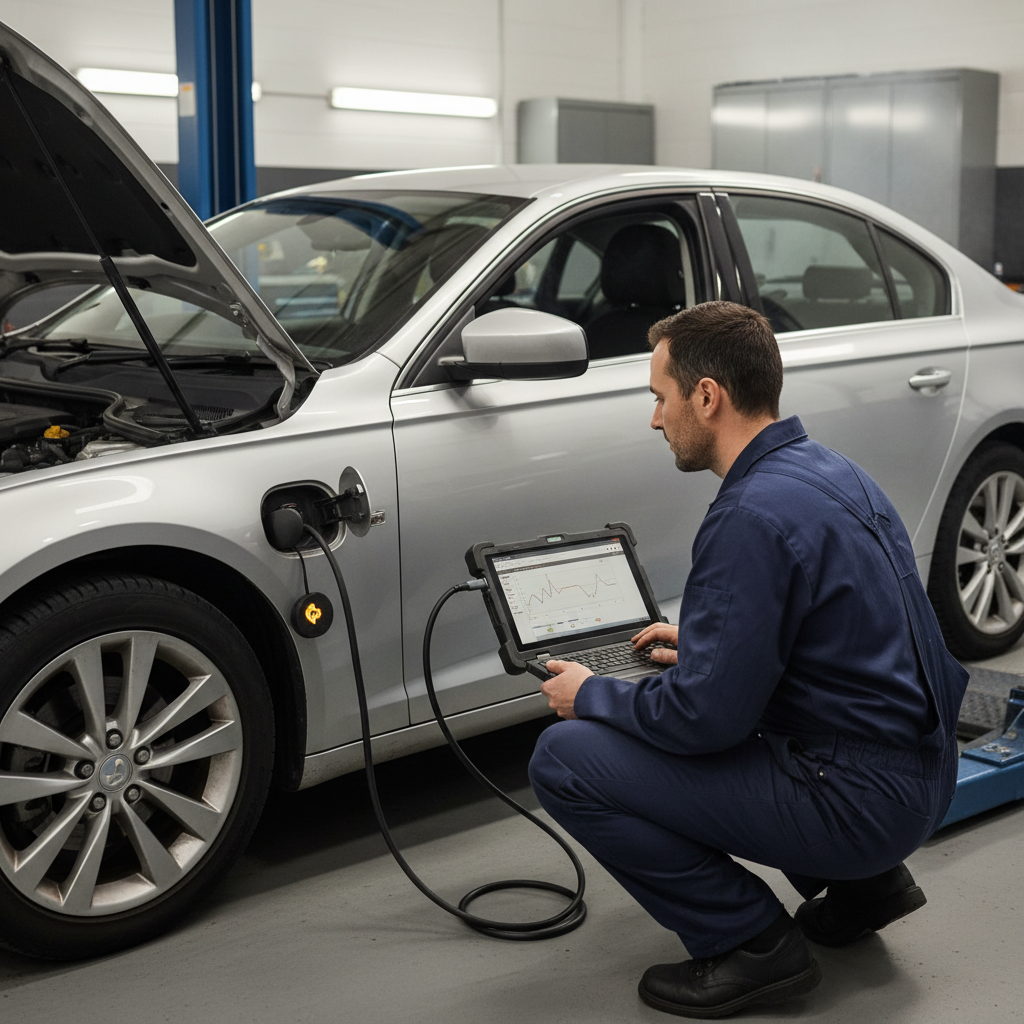
When we talk about a professional DPF clean, we mean a controlled process with diagnostics, chemicals and flow testing – not just “additive in the tank and hope”. At DPF Cleaner UK, a typical on‑car clean includes:
- Full diagnostic scan to check for engine and sensor faults.
- Live data check of DPF soot loading, backpressure and temperatures.
- Injection of specialist cleaning chemicals directly into the DPF system.
- Controlled regeneration and flush to remove soot and ash.
- Flow test before and after cleaning to prove the result.
For filters removed from the vehicle, our off‑car and postal DPF cleaning uses specialist machinery to flush the filter and measure flow on the bench.
Cost Comparison: Additives vs Professional Clean
On paper, additives look cheap. In practice, the numbers often work out differently:
- DPF additive bottle: £15–£30 each, often multiple bottles tried.
- Professional on‑car DPF clean: typically a few hundred pounds, including diagnostics and flow testing.
Once you’ve bought three or four different products and still have a warning light, you’re usually close to the cost of a proper clean anyway – but with more soot and ash in the filter than when you started. Our DPF cleaning cost UK price guide has a full breakdown by vehicle type and service.
When to Try an Additive – and When to Skip It
Reasonable times to try a DPF additive
- The car is not yet showing a DPF warning light, but you mainly do short trips.
- You’ve had a one‑off warning that cleared after a good motorway run.
- Diagnostics show low to moderate soot loading and no other active faults.
Times to skip additives and book a clean
- The DPF light has been on for a while or keeps returning.
- There are other fault codes (EGR, injectors, boost, sensors).
- You’ve already tried one or more additives with no lasting result.
- Live data shows high soot loading or “regeneration not possible”.
In these cases, a proper clean – plus fixing the underlying issue – is almost always cheaper than chasing the problem with bottles.
How to Use a DPF Additive Safely (If You Decide To)
If you do choose to use a fuel additive, follow safe practice:
- Only use products that are specifically labelled for DPF‑equipped diesels.
- Follow the dosage instructions exactly – more is not better.
- Plan a long, hot drive after adding it (dual carriageway or motorway, 30–40 minutes where safe).
- Never ignore new noises, smoke or warning lights – stop and get the car checked.
For a step‑by‑step walkthrough, see our dedicated guide on using DPF cleaning additives safely.
So, Do DPF Cleaning Additives Really Work?
The honest answer is: sometimes, a bit, for the right car at the right time. They’re not total snake oil – but they’re not a magic cure for a badly blocked filter either.
If your DPF is only lightly loaded and you mainly want to help future regenerations, an occasional additive can be part of your maintenance routine. But if you’re already seeing repeated warnings, limp mode or turbo issues, the best thing you can do for your wallet is to stop experimenting and book a proper clean.
To understand your options and likely costs, start with:
- DPF cleaning cost UK – 2025 price guide
- DPF regeneration myths and truths
- DPF cleaning vs replacement costs
Need a professional opinion? If you’re in Staffordshire or happy to use our postal service, send your vehicle details and fault codes via the contact page. We’ll tell you honestly whether an additive is worth a try – or whether a proper clean will save you time, fuel and stress.


0 Comments