
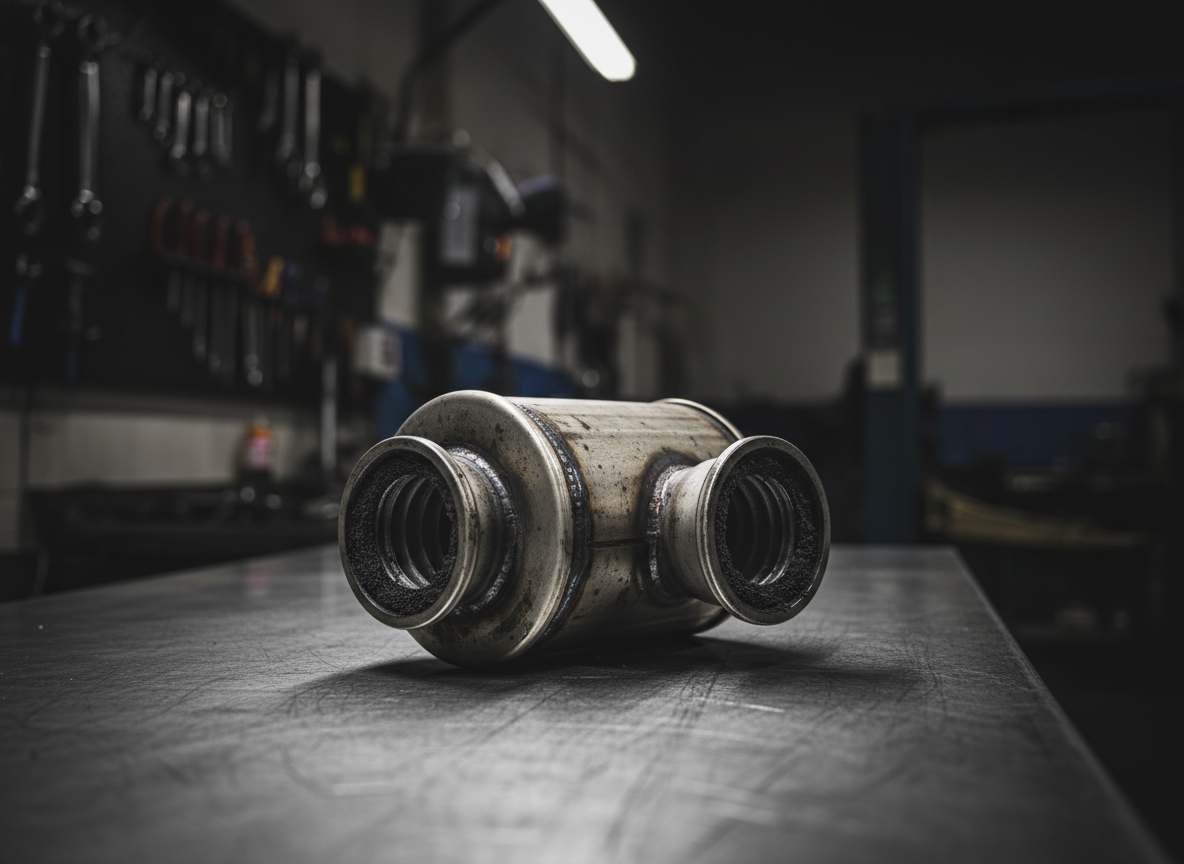

How Often Should You Get Your DPF Cleaned? The Real Answer
There’s no single universal answer — but there are clear patterns. How you drive, what vehicle you own, and how the DPF behaves are all factors. Here’s how to work out what’s right for your car.
Most diesel drivers only think about DPF cleaning when a warning light appears. But understanding how often your filter actually needs attention — based on how you drive — can save you from more serious problems and give you a clearer picture of what to expect.
There’s no fixed interval like an oil change. A well-maintained DPF in a car driven regularly on longer runs may never need professional cleaning — it self-cleans through passive and active regeneration. But for drivers doing frequent short trips, older vehicles, or those with high soot-producing faults, a professional clean every 1–3 years is a realistic expectation. The DPF’s behaviour (frequency of warning lights, limp mode events, regeneration cycles) is the best guide.
In This Guide
How a DPF Cleans Itself — and When It Can’t
Your DPF is designed to be largely self-maintaining. It captures soot particles as they leave the engine, holds them in the filter, and periodically burns them off during a process called regeneration. When regeneration works properly, the DPF stays clean and the warning light never appears. That’s the intended operation.
There are two types of regeneration. Passive regeneration happens automatically during normal driving when exhaust temperatures are high enough — typically on faster roads at sustained speeds. The soot burns off without any driver involvement. Active regeneration is triggered by the ECU when the soot load reaches a certain threshold — it injects extra fuel to raise exhaust temperatures and force a burn-off. You might notice a slightly different engine note or a faint smell, but it’s usually invisible to the driver.
The problem is that both types of regeneration require conditions that short-trip drivers often can’t meet. Short stop-start driving keeps exhaust temperatures too low for passive regeneration. If an active regeneration starts and the driver switches the engine off before it completes, the soot load stays high and the process has to restart. Over time, incompletely burned soot accumulates and hardens — and at that point, the ECU can’t clear it through regeneration alone.
The short-trip problem: A 10-minute run to the shops doesn’t get exhaust temperatures high enough to burn soot. A few of those trips a week over months is the most common reason DPFs need professional cleaning. The car is being used for exactly the kind of driving a diesel engine isn’t designed to handle regularly.
How Driving Patterns Affect DPF Life
This is the single biggest factor. More than vehicle age, mileage, or engine size, how you actually use the car determines how frequently the DPF needs attention.
Mostly short local trips
If your day-to-day driving is short trips — school runs, town errands, short commutes under 20 minutes — the DPF is unlikely to complete many full passive regenerations. Active regeneration cycles will start more frequently, but if the car is switched off before they complete, partial soot loads accumulate. For this driving pattern, warning lights may appear within a year or two of the car being bought, particularly if it came from a previous owner who also drove it this way.
Mixed driving with regular motorway or A-road use
Drivers who cover a mix of town and faster road driving are in the best position. The motorway and A-road sections get exhaust temperatures up to the point where passive regeneration happens reliably. If you’re covering 30–40 minutes of faster driving a few times a week, the DPF is likely managing itself. Warning lights may appear occasionally — perhaps once every few years — and a single forced regeneration or on-car clean may be all that’s needed.
Mostly motorway or long-distance driving
Diesel engines on long runs perform well for the DPF. Extended motorway driving at consistent speed means sustained high exhaust temperatures and regular passive regeneration. For this driver type, the DPF may rarely or never need a professional clean — though ash accumulation (which regeneration doesn’t clear) will eventually build up over very high mileages.
Taxis, delivery drivers, and commercial users
This is the highest-risk category. Taxi and private hire drivers spend long hours at slow urban speeds, often idling. Delivery drivers make constant short stops. For these drivers, the DPF is under almost constant strain — regeneration conditions are rarely met, and the filter loads up with soot quickly. Professional DPF cleaning may be needed annually or even more frequently in extreme cases.
Vehicle Type and Engine Size
Not all DPFs are equal. The size of the filter, the design of the exhaust system, and the calibration of the ECU all affect how well the DPF manages itself.
Larger engines — vans, SUVs, pickup trucks — produce more soot per mile than smaller diesel cars. The DPF on a 3.0-litre diesel Land Rover has more work to do than the DPF on a 1.6-litre diesel hatchback. Larger vehicles used on short trips are therefore more likely to need professional cleaning sooner.
Some makes and models are also known to have DPF issues more than others — not because of poor design, but because they’re popular choices for short-trip urban driving. Vehicles like the Ford Focus TDCi, Vauxhall Astra CDTi, and various BMW diesel models appear frequently for DPF work simply because of how many of them are in use in urban environments.
Older diesel vehicles — particularly those made before stricter emissions standards — may have DPFs with different regeneration management. Some earlier systems are less aggressive about forcing regeneration, which means the driver gets less warning before the soot load becomes a problem.
Signs It’s Time for a Professional Clean
Rather than waiting for a set interval, watch for these indicators that the DPF needs attention:
- The DPF warning light comes on and doesn’t clear: A warning light that clears after a longer drive is a sign the regen worked. One that stays on — or comes back within days — suggests the DPF can’t self-clean anymore.
- The car enters limp mode: Restricted power and reduced RPM mean the soot load has reached a level the ECU treats as critical. This always needs professional attention — it won’t resolve itself.
- Frequent active regeneration attempts: If you’re noticing the car running differently at idle regularly, or the forced-regen smell comes back frequently, the DPF is working very hard to stay clean.
- Power loss or poor throttle response: A blocked DPF restricts exhaust flow, which affects engine breathing. Sluggishness is a common symptom before warning lights appear.
- Warning light clears but returns quickly: The DPF managed a regen but the underlying blockage is severe enough that it blocks up again fast. A professional clean removes what the regen couldn’t.
Don’t wait for limp mode: Limp mode means the ECU has reached a safety threshold. The DPF has usually been struggling well before this point. If the first sign you notice is limp mode, the filter has been overdue attention for a while.
Practical Interval Guide by Driver Type
| Driver type | Typical DPF cleaning need | Key risk factors |
|---|---|---|
| Short-trip urban only | Every 1–2 years | Failed regeneration, soot accumulation |
| Mixed town/A-road/motorway | Every 2–4 years | Occasional blocked cycle, ash build-up long term |
| Mostly motorway/long distance | May not be needed — ash check at high mileage | Ash accumulation over 100k+ miles |
| Taxi / private hire | Every 6–18 months | Constant stop-start, extended idling |
| Van / commercial vehicle | Every 1–2 years | Higher soot output, heavier use |
| High-mileage any driver | Ash check at 80–100k miles regardless | Ash can’t be removed by regeneration |
Remember ash: Soot burns off during regeneration, but ash doesn’t. Ash is the residue of oil additives and other non-combustibles — it accumulates in the DPF permanently. At high mileages, ash restriction can cause the same symptoms as a sooted-up filter. An off-car clean can remove ash; regeneration alone cannot.
What Professional DPF Cleaning Involves
When the DPF has reached a point where self-cleaning isn’t working, there are different professional options depending on how blocked the filter is and what the diagnostic data shows.
Forced regeneration with monitoring
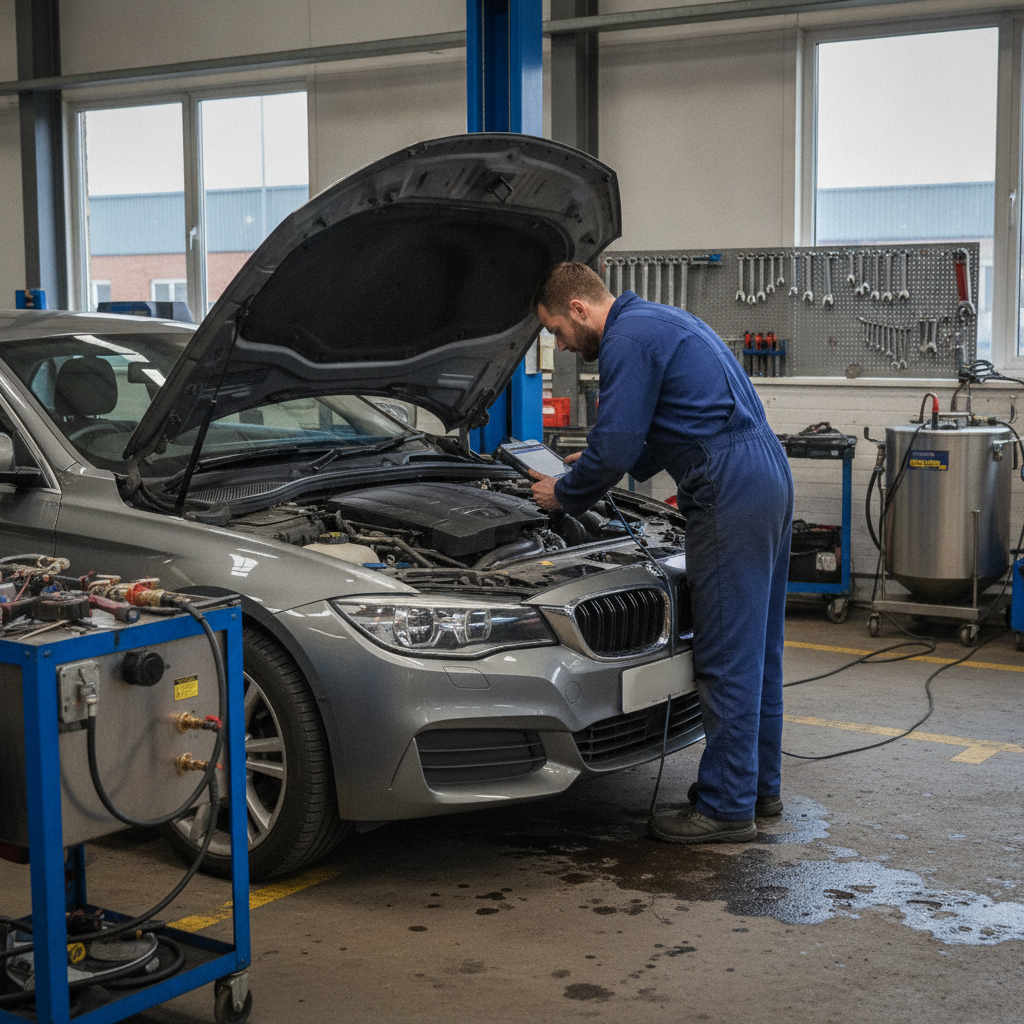
If soot loading is elevated but not extreme, and the filter hasn’t physically blocked, a specialist can perform a forced regeneration on diagnostic equipment — monitoring live back-pressure and soot load data throughout to confirm it’s working. This is a controlled version of what the car attempts to do automatically, with the advantage that the technician can confirm whether the DPF has actually cleared or if a deeper clean is needed.
On-car DPF cleaning
A more thorough process involving specialist cleaning agents introduced directly into the DPF while it’s still fitted to the vehicle, followed by a monitored regeneration cycle. Effective for filters with heavier soot loading where a simple forced regen hasn’t achieved enough improvement. No removal of the filter is required.
Off-car DPF cleaning
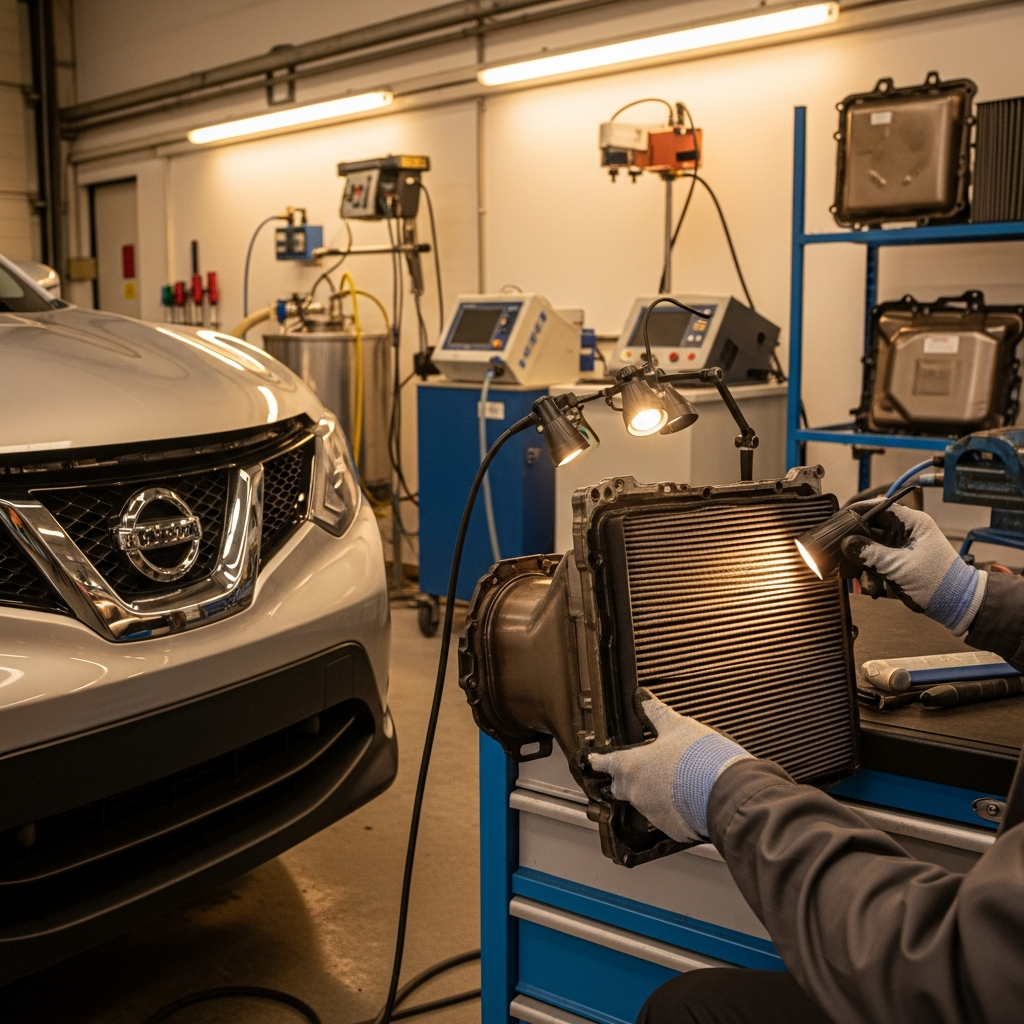
The filter is removed from the vehicle, thermally cleaned, and pressure-tested for flow rate before and after. This is the most thorough option — it removes both soot and ash — and is appropriate for heavily blocked filters or those with ash accumulation from high mileage. A before-and-after flow test gives objective data on how much the cleaning has improved the filter’s performance.
At DPF Cleaner in Stoke-on-Trent, the diagnostic always determines which route is appropriate. There’s no benefit in jumping straight to an off-car clean if a forced regen would solve the problem — and there’s no point doing a forced regen if the live data shows the filter needs more than that can deliver.
Postal DPF cleaning
For customers outside the local area, the filter can be removed, packaged, and sent to the workshop. It’s cleaned, flow-tested, and returned. This option is available UK-wide — the same cleaning process, just without the vehicle being present.
From £150: DPF cleaning from DPF Cleaner starts from £150 — prices vary depending on the vehicle, the method required, and the condition of the filter. This isn’t a quote — contact us for a proper assessment based on your specific situation.
Can You Extend the Interval Between Cleans?
Yes — by changing how you drive. If your DPF has just been cleaned and your driving pattern is what caused the problem, the same thing will happen again at the same pace if nothing changes. A few practical adjustments can meaningfully extend how long the DPF stays clear:
- After short local trips, take a longer run of at least 15–20 minutes at motorway or A-road speed to allow passive regeneration to complete.
- Don’t switch off the engine immediately if you think a regeneration is in progress — you’ll notice the idle change or feel slightly different throttle response. Let it complete before parking.
- Service the vehicle regularly, including air filter changes and EGR checks. A dirty air filter or a gummed-up EGR valve increases soot production, which accelerates DPF loading.
- Use the correct engine oil specification — low SAPS oil reduces ash deposits in the DPF over time. Check your handbook for the right grade.
If short-trip driving is unavoidable — you live in a city and rarely have cause to go on faster roads — it’s worth being realistic that the DPF will need attention periodically. That’s not a fault with the vehicle; it’s a design tension between diesel engine efficiency and urban driving patterns. Knowing this in advance means you can catch the warning signs early rather than reaching the point of limp mode or severe blockage.
Not Sure Whether Your DPF Needs Attention?
We’ll run the data and tell you honestly. Back-pressure, soot load, regeneration history — you’ll know exactly what’s happening with your filter before any cleaning is booked.
Helpful Next Reads
FAQs
Is there a mileage interval for DPF cleaning?
No universal one. Unlike oil changes, there’s no set mileage. It depends on your driving pattern. A city driver doing 10,000 miles a year of short trips may need a clean within 2 years. A motorway driver doing the same mileage may go many years without one. The DPF’s behaviour — warning lights, limp mode, regeneration frequency — is the real indicator.
Can I make my DPF last longer?
Yes. Taking regular longer drives at faster road speeds allows passive regeneration to work properly. Avoiding switching the engine off mid-regen helps too. Using the correct low-SAPS engine oil, keeping the EGR and air filter serviced, and not ignoring early warning signs all contribute to a longer-lasting filter.
What’s the difference between soot cleaning and ash cleaning?
Soot is combustible and can be burned off during regeneration. Ash is the permanent residue of combustion — it doesn’t burn and accumulates permanently in the DPF over time. A forced regen or on-car clean handles soot. Off-car cleaning is needed to remove ash, which is why high-mileage vehicles often need a more thorough process even if they’re not blocked with soot.
My DPF light came on once and went off — do I still need cleaning?
If it came on and cleared after a longer drive or a motorway run, the DPF likely managed a successful regeneration and you don’t need immediate action. If it keeps coming back, or came on and didn’t clear, that’s a different situation and needs a diagnostic to understand why regeneration isn’t working fully.
How long does professional DPF cleaning take?
On-car cleaning typically takes a few hours. Off-car cleaning takes longer depending on the condition of the filter and the cleaning process required. If you’re sending via postal cleaning, factor in transit time. We can give you a more specific timeframe once we know what your vehicle needs.
0 Comments