

Can a Blocked DPF Damage Your Turbo or Engine?
If your diesel’s DPF warning light is on, it’s not just the filter you need to worry about. A badly blocked DPF can put your turbo and engine at risk too – and those repairs are far more expensive than a professional clean.
In this guide we’ll explain how a clogged DPF affects the rest of the engine, the warning signs to watch for, and when you should stop driving and get help. For a deeper dive into related issues, see our article on blocked DPF, turbo and injector problems.
How a DPF Works – and Why Backpressure Matters
Your diesel particulate filter sits in the exhaust system and traps soot. During regeneration, that soot is burned off so the filter can keep flowing. When the DPF blocks up with soot and ash, exhaust backpressure rises.
High backpressure makes it harder for exhaust gases to leave the engine. That extra resistance is what starts to put strain on the turbo and other components.
Can a Blocked DPF Damage the Turbo?
Yes – a badly blocked DPF can contribute to turbo damage. Here’s how:
- Increased exhaust pressure – the turbo has to work harder to push gases through a clogged filter.
- Higher exhaust temperatures – repeated failed regens and high backpressure raise temperatures around the turbo.
- Oil contamination – fuel dilution from failed regens can thin the engine oil, reducing lubrication to the turbo bearings.
Over time this can lead to turbo bearing wear, oil leaks or complete turbo failure. Our dedicated guide on how a blocked DPF affects turbos and injectors covers real‑world examples we see in the workshop.
Can a Blocked DPF Damage the Engine?
While the DPF itself is in the exhaust, the knock‑on effects of a blockage can definitely harm the engine:
- Excessive cylinder pressures – if exhaust gases can’t escape freely, cylinder pressures and temperatures can rise.
- Fuel dilution of engine oil – repeated failed regenerations can leave diesel in the sump, thinning the oil.
- Overheating of components – high exhaust temperatures can stress valves, manifolds and gaskets.
Left long enough, this can contribute to head gasket issues, injector problems and general engine wear. That’s why it’s so important not to ignore early blocked DPF symptoms.
Warning Signs Your Turbo or Engine Is Being Affected
Alongside the usual DPF warning light, watch for:
- Whining or siren noise from the turbo, especially on boost.
- Blue or grey smoke from the exhaust (possible oil burning).
- Loss of power even after a motorway run.
- Rising engine oil level on the dipstick or oil level warnings.
- Repeated limp mode and multiple warning lights.
If you’re seeing these symptoms as well as a DPF warning, it’s time to stop driving hard and get proper diagnostics. Continuing to push the car can turn a fixable DPF problem into a full turbo or engine rebuild.
How Quickly Can a Blocked DPF Cause Damage?
There’s no exact mileage, because it depends on:
- How badly the DPF is blocked.
- How often the car attempts regeneration.
- Whether there are underlying engine faults causing DPF blocking.
- How hard the car is driven while the light is on.
However, once you’re in limp mode with high soot loading, every extra journey is adding stress. We regularly see vehicles where a few weeks of “just driving it” after the first warning light has turned a straightforward clean into a much bigger job.
Why Repeated Forced Regens Can Make Things Worse
Forced regenerations have their place, but they’re not a cure‑all. If the DPF is already heavily loaded, repeated regens can:
- Push exhaust temperatures even higher around the turbo.
- Increase fuel dilution of the oil.
- Delay the decision to carry out a proper clean or fix underlying faults.
Our article on DPF regeneration myths and truths explains when a regen is worth trying – and when it’s time to stop and book a clean instead.
How Professional DPF Cleaning Protects the Turbo and Engine
A proper on‑car or off‑car DPF clean, like the services we offer at DPF Cleaner UK, helps protect the rest of the engine by:
- Reducing backpressure – once soot and ash are removed, exhaust gases can flow freely again.
- Lowering exhaust temperatures – less strain on the turbo and exhaust valves.
- Identifying and fixing underlying faults – we use diagnostics to find issues that caused the blockage.
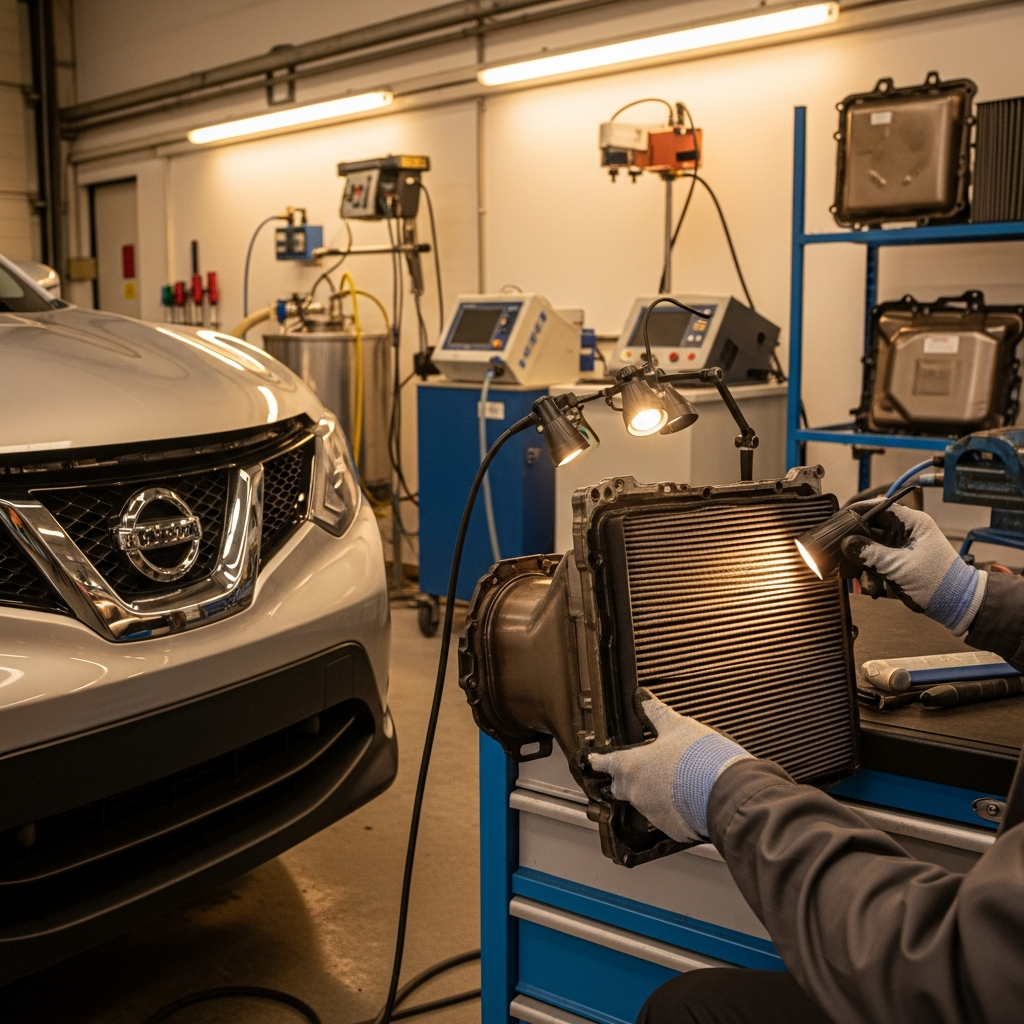
- Providing before/after data – our flow testing process proves how well the filter is breathing before the car leaves.
In many cases, cleaning the DPF and sorting the root cause early can save a turbo that would otherwise have failed if the blockage had been ignored.
When You Should Stop Driving Immediately
Whatever the inconvenience, it’s time to stop driving and seek help if:
- You hear loud turbo whining or grinding.
- You see thick blue smoke or clouds of white/grey smoke from the exhaust.
- The car is in severe limp mode and struggles to reach normal speeds.
- The oil level is above the maximum mark on the dipstick.
At this point, continuing to drive can turn a repairable problem into a full turbo or engine failure.
Next Steps: Protect Your Turbo and Engine
If you suspect your DPF is blocked and you’re worried about the turbo or engine, start with:
- Blocked DPF symptoms – early warning signs
- DPF cleaning cost UK – 2025 price guide
- DPF cleaning vs replacement costs
Need a specialist to look at your car? If you’re in Staffordshire or happy to use our postal service, send your vehicle details, mileage and any fault codes via the contact page. We’ll tell you honestly how serious the blockage is, whether your turbo or engine are at risk, and whether a professional DPF clean can get you back on the road before bigger damage occurs.
0 Comments